2026.09.14 (월) 12:52




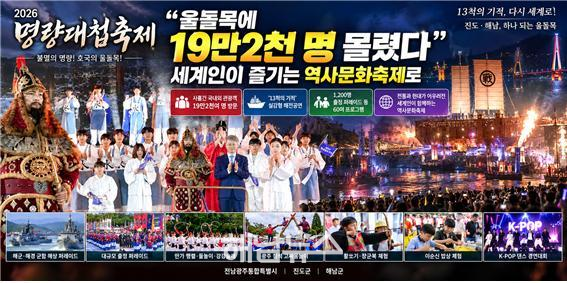 명량대축제 폐막식/ 사진제공=ai이미지 |
울돌목을 뜨겁게 달군 ‘2026 명량대첩축제’가 사흘간 19만2천여 명의 국내외 관광객을 불러 모으며 막을 내렸다.
1597년 단 13척의 배로 133척의 왜선을 물리친 명량대첩의 역사적 현장을 실감형 해전공연과 전통문화, 가족 체험 콘텐츠로 되살리면서 대한민국을 대표하는 역사문화축제로서의 경쟁력을 다시 한번 보여줬다는 평가다.
전남광주통합특별시에 따르면 진도·해남 울돌목 일원에서 지난 11일부터 13일까지 열린 ‘2026 명량대첩축제’에는 3일간 19만2천여 명의 국내외 관광객이 방문했다.
올해 축제는 ‘불멸의 명량! 호국의 울돌목!’을 주제로 역사와 문화, 공연과 체험을 결합한 60여 개 프로그램으로 진행됐다.
축제의 시작부터 규모가 컸다.
진도와 해남 등 8개 시·군 주민과 외국인 관광객, 해군 군악대 등 1천200여 명이 참여한 대규모 출정 퍼레이드가 울돌목 일대를 가득 채우며 축제의 막을 올렸다.
이어 역사학자 심용환의 역사토크쇼를 비롯해 드론라이트쇼와 전통문화 공연, 각종 체험 프로그램이 이어지면서 축제장을 찾은 관광객들에게 다양한 볼거리와 즐길거리를 제공했다.
■ 울돌목 위에서 되살아난 ‘13척의 기적’
축제의 핵심은 주제공연 ‘13척의 기적’이었다.
명량해전의 실제 무대였던 울돌목을 배경으로 판옥선 뱃머리를 형상화한 해상무대를 설치하고 특수무대 장치와 전투 액션을 결합해 429년 전 명량해전의 순간을 실감형 공연으로 재현했다.
단순히 역사를 설명하는 데 그치지 않고 관람객이 마치 해전 현장에 들어와 있는 것처럼 느낄 수 있도록 공연의 현장성과 몰입감을 높인 것이 특징이다.
해군과 해경 군함이 참여한 해상 퍼레이드 역시 울돌목이라는 공간적 특성을 살린 프로그램으로 가족 단위 관광객들의 눈길을 끌었다.
전통문화도 축제의 한 축을 담당했다.
진도 7개 읍·면 주민 2천여 명이 참여한 만가 행렬을 비롯해 들놀이와 강강술래 등이 펼쳐지면서 현대적 공연 콘텐츠와 남도의 전통문화가 한 공간에서 어우러졌다.
특히 전남광주 통합을 상징하는 의미로 광주 칠석 고싸움놀이가 울돌목에서 펼쳐져 전남과 광주가 하나 되는 화합의 의미도 더했다.
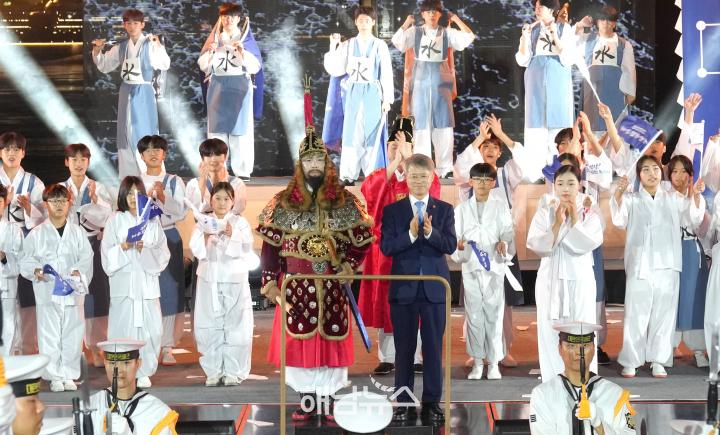 명량대첩축제 / 사진제공=전남광주특별시 |
■ 보는 축제에서 직접 참여하는 축제로
관광객이 직접 참여하는 프로그램도 확대됐다.
K-POP 댄스 경연대회와 손헌수가 진행한 ‘빵빠레 노래방’을 비롯해 충무공 활쏘기 체험, 이순신 밥상 체험, 장군복 체험, 조선 수군 체험 등이 축제장 곳곳에서 진행됐다.
어린이와 청소년, 가족 단위 관광객까지 직접 참여할 수 있는 콘텐츠를 늘리면서 역사축제가 자칫 무겁고 정적인 행사에 머물 수 있다는 한계를 보완했다.
올해 명량대첩축제는 명량해전이라는 역사적 자산에 실감형 공연과 해상 콘텐츠, 전통문화, 현대 공연, 가족 체험을 결합하면서 축제 콘텐츠의 폭을 한층 넓혔다는 평가를 받고 있다.
민형배 전남광주통합특별시장은 “명량대첩축제는 국내뿐 아니라 세계인이 함께 즐기는 대표 역사문화축제로 성장하고 있다”며 “불가능을 가능으로 바꾼 명량대첩의 승리를 통합특별시의 승리로 이어가도록 320만 시민의 역량을 모으겠다”고 말했다.
■ 19만2천 명 방문…이제는 ‘지역에 얼마나 남겼나’도 봐야
다만 축제의 실질적인 성과를 평가하기 위해서는 방문객 19만2천여 명이라는 숫자와 함께 지역경제 파급효과를 구체적으로 분석할 필요가 있다.
해남과 진도에 관광객이 각각 얼마나 머물렀는지, 축제 기간 숙박시설 이용률과 음식점·전통시장 등 지역 상권 매출이 얼마나 증가했는지, 관광객의 평균 체류시간과 1인당 소비액은 어느 정도였는지 등을 객관적인 지표로 공개한다면 축제의 경제적 가치를 보다 명확하게 평가할 수 있다.
특히 진도와 해남이 공동으로 개최하는 축제인 만큼 관광객과 소비 효과가 양 지역에 어떻게 분산됐는지도 향후 축제 발전 방향을 결정하는 중요한 자료가 될 수 있다.
‘몇 명이 왔는가’를 넘어 ‘관광객이 얼마나 머물고 지역에 무엇을 남겼는가’까지 확인할 수 있을 때 명량대첩축제의 성과도 더욱 분명해질 수 있다.
명량대첩축제는 1597년 정유재란 당시 이순신 장군이 13척의 배로 133척의 왜선을 물리친 명량대첩을 기념하고, 이순신 장군과 이름 없이 전투에 참여한 민초들의 호국정신을 기리기 위해 매년 가을 진도·해남 울돌목 일원에서 열리는 역사문화축제다.
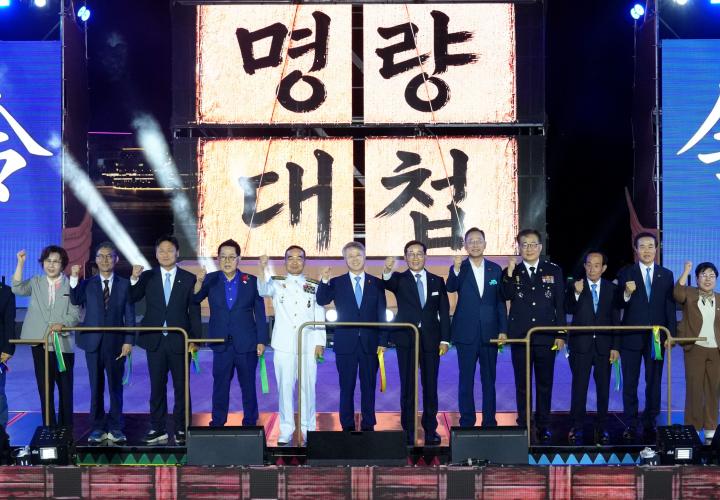 명량대첩축제 / 사진제공=전남광주특별시 |
“192,000 Visitors Flock to Uldolmok”… Myeongnyang Great Victory Festival Emerges as a Global Historical and Cultural Celebration
192,000 domestic and international visitors attend over three days, filling the Uldolmok area
More than 60 programs, including the immersive “Miracle of 13 Ships” naval battle performance and a 1,200-person departure parade
Naval battle recreated with a panokseon-inspired floating stage and dynamic combat action, drawing enthusiastic response
Traditional culture takes center stage with Navy and Coast Guard ship parades, manga procession, field performances and Ganggangsullae
Gwangju Chilseok Gossaum Nori symbolizes unity and harmony between Jeonnam and Gwangju
Family-friendly programs include K-pop dance, traditional archery, Yi Sun-sin’s table, general’s costume and Joseon naval forces experiences
Beyond the 192,000 visitors, analysis of lodging, local business sales and visitor stay duration remains a key task
[Jeonnam-Gwangju = AI Honam News] aihnnews@kakao.com
The 2026 Myeongnyang Great Victory Festival, which brought Uldolmok to life with history, culture and spectacular performances, concluded after attracting more than 192,000 domestic and international visitors over three days.
By recreating the historic Battle of Myeongnyang—where Admiral Yi Sun-sin defeated a vastly larger Japanese fleet with only 13 ships in 1597—through immersive naval battle performances, traditional cultural events and family-oriented activities, the festival once again demonstrated its potential as one of Korea’s leading historical and cultural festivals.
According to the Jeonnam-Gwangju Special Metropolitan Government, the 2026 Myeongnyang Great Victory Festival was held from September 11 to 13 around Uldolmok, spanning Jindo and Haenam, and attracted approximately 192,000 visitors over the three-day period.
Under the theme “Immortal Myeongnyang! Patriotic Uldolmok!”, this year’s festival featured more than 60 programs combining history, culture, performances and hands-on experiences.
The festival opened on a grand scale.
Approximately 1,200 participants—including residents from eight cities and counties such as Jindo and Haenam, international visitors and members of the Republic of Korea Navy Band—joined a large-scale departure parade that filled the Uldolmok area and marked the beginning of the festivities.
The festival also featured historian Sim Yong-hwan’s history talk show, a drone light show, traditional cultural performances and a wide range of interactive programs, providing visitors with diverse attractions and experiences.
■ The “Miracle of 13 Ships” Comes Alive on Uldolmok
At the heart of the festival was the signature performance, “The Miracle of 13 Ships.”
Against the backdrop of Uldolmok—the actual site of the Battle of Myeongnyang—a floating stage inspired by the bow of a panokseon, a traditional Joseon warship, was combined with special stage effects and dynamic battle action to recreate the dramatic moments of the historic naval battle 429 years ago.
Rather than simply recounting history, the performance was designed to give spectators the sensation of being present on the battlefield itself, enhancing both realism and immersion.
A maritime parade featuring vessels from the Republic of Korea Navy and Korea Coast Guard also drew strong interest, particularly from families, while taking full advantage of Uldolmok’s unique maritime setting.
Traditional culture was another major pillar of the festival.
Around 2,000 residents from Jindo’s seven eup and myeon districts participated in a traditional manga procession, while field performances and Ganggangsullae, Korea’s traditional circle dance, brought together contemporary festival content and the cultural heritage of the Honam region.
The Gwangju Chilseok Gossaum Nori, a traditional folk game presented as a symbol of Jeonnam-Gwangju integration, was also performed at Uldolmok, adding significance to the festival as a celebration of unity and harmony between the two regions.
■ From a Festival to Watch to a Festival to Experience
Programs allowing visitors to participate directly were also expanded this year.
A K-pop dance competition, the “Bbangppare Karaoke” program hosted by comedian Son Heon-su, traditional archery inspired by Admiral Yi Sun-sin, a recreation of Yi Sun-sin’s meal table, general’s costume experiences and Joseon naval forces activities were offered throughout the festival grounds.
By expanding interactive programs for children, teenagers and families, organizers sought to move beyond the potentially solemn and static nature of a traditional historical festival and create an event in which visitors could actively participate.
This year’s festival combined the historical legacy of the Battle of Myeongnyang with immersive performances, maritime content, traditional culture, contemporary entertainment and family-oriented experiences, significantly broadening the range of attractions available to visitors.
Min Hyung-bae, Mayor of the Jeonnam-Gwangju Special Metropolitan Government, said, “The Myeongnyang Great Victory Festival is growing into a leading historical and cultural festival enjoyed not only by Koreans but by people from around the world.”
“We will bring together the strength of our 3.2 million citizens so that the spirit of victory at Myeongnyang—which turned the impossible into the possible—can lead to the success of our integrated special metropolitan government,” Min added.
■ 192,000 Visitors—But How Much Did the Festival Leave Behind for the Local Economy?
Despite the strong turnout, a more comprehensive assessment of the festival’s success will require detailed analysis of its economic impact alongside the headline figure of 192,000 visitors.
Key indicators include how many visitors stayed in Haenam and Jindo respectively, how much hotel and accommodation occupancy increased during the festival, changes in sales at restaurants and traditional markets, average visitor stay duration and per-capita spending.
Publishing such objective data would provide a clearer picture of the festival’s actual economic value to the region.
Since the festival is jointly hosted by Jindo and Haenam, it will also be important to determine how visitor traffic and economic benefits were distributed between the two areas. Such data could serve as an important benchmark for shaping the future direction of the festival.
Ultimately, the success of the Myeongnyang Great Victory Festival should be measured not only by “how many people came,” but also by “how long they stayed and what they left behind for the local economy.”
The Myeongnyang Great Victory Festival is held every autumn around Uldolmok in Jindo and Haenam to commemorate the historic Battle of Myeongnyang of 1597, during the Japanese invasion of Korea, when Admiral Yi Sun-sin defeated 133 Japanese vessels with only 13 ships.
The festival also honors the patriotic spirit of Admiral Yi and the countless ordinary people who joined the struggle to defend their homeland.
 해남뉴스 박충배 편집/논설 news@hbcnews.kr