2026.04.17 (금) 15:30



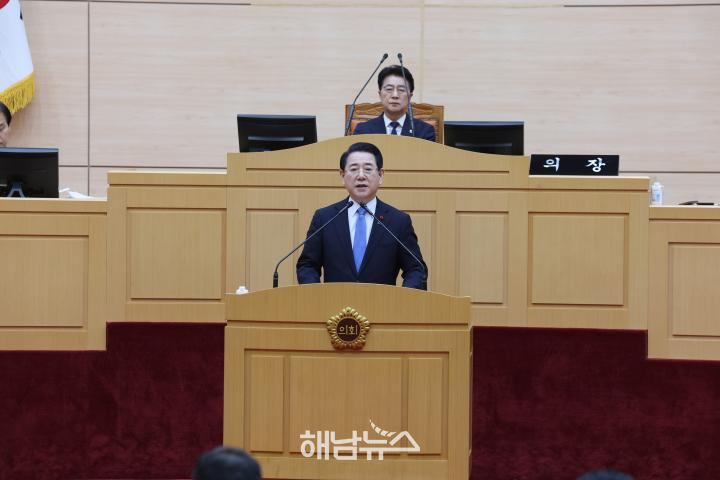 전라남도의회 제396회 임시회 2차 본회의 / 사진제공=전라남도 |
전남·광주 행정통합이 지방의회의 최종 관문을 통과하며 본격적인 입법 국면으로 진입했다.
전라남도는 전남도의회에 제출한 ‘전라남도와 광주광역시 통합에 대한 의견 청취의 건’이 4일 찬성 의결됐다고 밝혔다.
이로써 전남·광주 행정통합은 선언과 논의를 넘어 국회 입법을 향한 직진 단계에 들어섰다.
전남도의회는 이날 제396회 임시회 제2차 본회의를 열고 해당 안건을 상정해 표결에 부쳤다.
표결 결과는 찬성 52명, 기권 1명. 대다수 도의원이 통합에 동의하며 강력한 지지 의사를 분명히 했다.
같은 시각 열린 광주시의회 본회의에서도 행정통합 의견 청취 안건이 찬성 의결되면서, 양 시·도의 지방의회 절차는 모두 마무리됐다.
이번 의결은 「지방자치법」 제5조 제3항에 따른 필수 절차다.
지방자치단체를 합치기 위해서는 해당 지방의회의 의견 청취가 선행돼야 하며, 전남도는 지난 1월 30일 관련 안건을 제출했다.
한 달도 채 되지 않아 양 의회의 동시 찬성 결론이 나온 것은, 통합을 둘러싼 지역 정치권의 공감대가 그만큼 공고해졌음을 보여준다.
김영록 전남도지사는 제안 설명에서 행정통합의 배경과 목표를 분명히 했다.
김 지사는 “전남·광주 행정통합은 AI·에너지 대전환 시대에 정부의 파격적 지원을 이끌어내 지역 대 부흥으로 이어가기 위한 절박한 선택”이라며 “산업을 일으켜 기업과 일자리가 늘고, 청년이 돌아오는 균형발전의 선순환 구조를 만드는 것이 통합의 명확한 목적”이라고 강조했다.
이어 “300여 개 특례가 담긴 특별법을 통해 27개 시군구 모두가 성장의 결실을 나누는 상생의 대통합을 이루겠다.”며 “청년이 고향에서 미래를 펼칠 수 있도록 전남과 광주가 하나 돼 첨단산업과 일자리가 넘치는 ‘400만 전남광주특별시 대부흥 시대’를 열어가겠다”고 밝혔다.
전남도의회를 향해서는 “통합을 완주하는 든든한 선도자가 돼 달라”고 호소했다.
전남도는 앞으로 광주시와 함께 국회 상임위원회 법안 심사와 본회의 의결, 법률 공포까지 2월 내 완주를 목표로 총력 대응에 나선다.
이를 위해 지역 국회의원들과 긴밀한 ‘원 팀’ 협력 체계를 구축해 국회 심의 과정에 빈틈없이 대비할 방침이다.
특히 386개 조문에 담긴 핵심 특례와 발의 과정에서 누락된 조항들이 최종 법안에 반영되도록 행정 역량을 집중한다는 계획이다.
도민 소통도 병행된다.
전남도는 오는 13일까지 전남 동부권·서부권·광주근교권·광주 등에서 총 5차례의 타운홀 미팅을 열어 시·도민과 직접 소통한다.
도의회와 22개 시군과의 협의도 이어가며, 대한민국 제1호 통합 지방정부 출범을 위한 사회적 공감대와 실행 기반을 다진다는 구상이다.
전남·광주 행정통합은 이제 선택의 문제가 아니다.
지방의회 의결을 통해 정치적 결단의 문을 열었고, 국회 입법이라는 마지막 관문만을 남겨두고 있다.
통합의 시계는 이미 움직이기 시작했다.
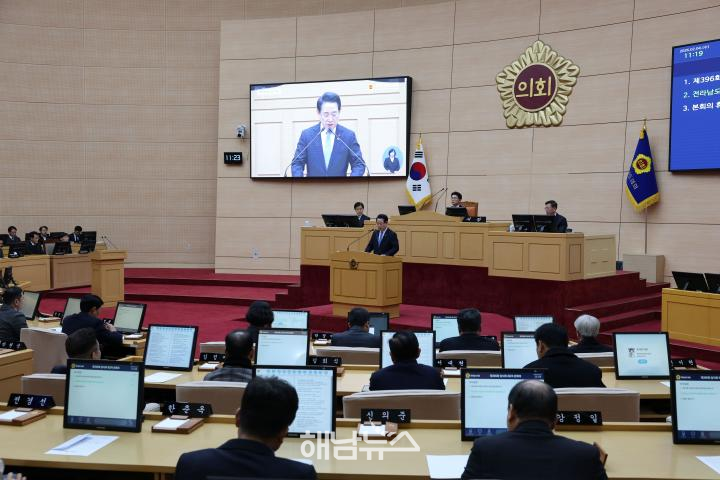 전라남도의회 제396회 임시회 2차 본회의1 |
[Jeonnam = Haenam News] haenamnews@kakao.com
**“Integration Has Become a Decision”
Jeonnam–Gwangju Administrative Merger Clears Provincial Assembly, Heads Straight for Legislation**
The administrative integration of Jeonnam Province and Gwangju Metropolitan City has passed its final provincial assembly hurdle, formally entering a full-scale legislative phase.
Jeonnam Province announced on the 4th that the Provincial Assembly approved the motion titled “Hearing of Opinions on the Integration of Jeonnam Province and Gwangju Metropolitan City.”
With this approval, the Jeonnam–Gwangju integration moves beyond declaration and discussion into a direct push toward National Assembly legislation.
On the same day, the Jeonnam Provincial Assembly convened the second plenary session of its 396th extraordinary session and put the motion to a vote.
The result was 52 votes in favor and one abstention, with an overwhelming majority of assembly members expressing clear support for the integration.
At the same time, the Gwangju Metropolitan Council also approved its own opinion-hearing motion on administrative integration during its plenary session, completing all required deliberative procedures at both provincial and metropolitan levels.
This approval process is a mandatory step under Article 5, Paragraph 3 of the Local Autonomy Act, which requires consultation with local councils when merging local governments.
Jeonnam Province submitted the motion on January 30, and the fact that both assemblies reached approval in less than a month demonstrates the solid consensus that has formed within regional political circles.
Governor Kim Young-rok of Jeonnam Province clearly outlined the background and objectives of the integration during his proposal explanation.
“Jeonnam–Gwangju integration is an urgent and responsible choice to usher in a new era of regional resurgence by attracting bold national-level support amid the AI and energy transition,” Kim said.
“The clear purpose of this integration is to create a virtuous cycle of balanced development—revitalizing industry, expanding businesses and jobs, and bringing young people back to the region.”
He added, “Through a special law containing more than 300 special provisions, we will achieve a grand, mutually beneficial integration in which all 27 cities and counties share in the fruits of growth.”
“Our goal is to open a new era of prosperity for a 4-million-population Jeonnam–Gwangju Special Metropolitan City, where advanced industries flourish and jobs abound, enabling young people to build their futures in their hometowns.”
Governor Kim also appealed to the Provincial Assembly to “serve as a steadfast leader in seeing the integration through to completion.”
Going forward, Jeonnam Province, together with Gwangju, plans an all-out response to complete the process within February, encompassing National Assembly standing committee reviews, plenary approval, and promulgation of the law.
To this end, the province will establish a close “one-team” cooperation system with local members of the National Assembly to ensure thorough preparation throughout the legislative process.
In particular, administrative capacity will be 집중적으로 mobilized to ensure that key special provisions across 386 articles, as well as clauses omitted during the initial proposal stage, are fully reflected in the final bill.
Public communication will proceed in parallel.
Jeonnam Province plans to hold five town-hall meetings by the 13th across eastern and western Jeonnam, areas near Gwangju, and Gwangju itself, engaging directly with residents.
Consultations with the Provincial Assembly and all 22 cities and counties will also continue, laying the groundwork for broad public consensus and execution toward the launch of Korea’s first integrated local government.
The Jeonnam–Gwangju administrative integration is no longer a matter of choice.
With provincial assembly approval, the door to political decision-making has been opened, leaving only the final gateway of National Assembly legislation.
The clock of integration has already begun to move.
 해남뉴스 박충배 편집 및 논설위원 haenamnews@kakao.com