2026.04.17 (금) 05:42




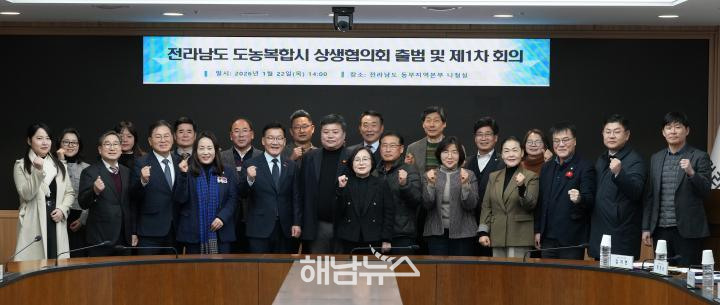 도농복합시 상생협의회 / 사진제공=전라남도 |
전라남도가 도농복합시 안에서 반복돼 온 도시–농촌 격차 문제를 정면으로 다루는 공식 협의기구를 출범시켰다.
인구는 줄고 재정 지원에서는 빠져 왔던 읍면 농촌을 제도 안으로 끌어들이겠다는 분명한 메시지다.
전남도는 지난 22일 동부청사에서 도농복합시 상생협의회 위촉식과 제1차 정기회의를 열고, 도농 간 균형발전과 상생협력을 위한 공식 논의를 시작했다.
이번 협의회 출범은 지난해 11월 시행된 ‘전라남도 도농복합시 상생협의회 구성 및 운영 조례’에 따른 것으로, 그동안 구조적 한계로 지적돼 온 도농복합시의 불균형 문제를 제도적으로 풀어가겠다는 취지다.
전남의 도농복합시는 여수·순천·나주·광양 4개 시다.
도시와 농촌이 하나의 행정구역에 묶여 있지만, 정책과 예산은 도시 중심으로 설계되면서 읍면 농촌은 상대적 소외를 겪어 왔다는 비판이 지속돼 왔다.
인구 감소는 읍면에서 더 심각한데도, 지원 기준은 시·군·구 단위에 머물러 있어 재정과 사업에서 배제되는 구조가 반복됐다.
이날 회의에는 강위원 전남도 경제부지사와 기획조정실장, 4개 시 부시장, 도의회·시의회 추천 위원과 전문가 등 25명이 참석했다.
위촉장 수여에 이어 협의회의 기능과 운영 방향이 공유됐고, 실질적 제도 개선을 전제로 한 토론이 이어졌다.
핵심 쟁점은 세 가지였다.
첫째, 도농복합시 상생협의회 운영 방안. 협의회는 정책 발굴 단계부터 예산 편성, 사업 계획 수립 과정까지 관여해 도농 형평성을 높이는 역할을 맡는다.
둘째, 인구감소지역 지정 범위의 읍면동 확대. 현행 제도로는 읍면 농촌의 위기가 통계와 정책에서 가려진다는 문제의식이 공유됐다.
셋째, 전남형 균형발전지표의 개선이다. 현재 시군 단위로 적용되는 지표가 도농복합시 내 읍면의 낙후도를 충분히 반영하지 못한다는 지적에 따라, 가점 산정 단위를 읍면 단위로 세분화해 도 공모사업에 확대 적용하기로 했다.
전남도는 이미 인구감소지역 지정 기준을 읍면까지 확대하는 법 개정을 국회와 중앙정부에 지속 건의해 왔다.
그 결과, 지난해 12월 ‘지방자치분권 및 지역균형발전에 관한 특별법’ 일부개정법률안이 대표 발의되며 제도 개선의 물꼬가 트였다.
법안은 인구감소지역과 인구감소관심지역을 시·군·구뿐 아니라 도농복합시의 읍·면까지 지정할 수 있도록 하는 내용을 담고 있다.
강위원 경제부지사는 “위원들은 도의회와 시의회, 지역 주민을 대표하고 도농 정책에 대한 경험과 식견을 갖춘 분들”이라며 “현장의 목소리와 전문성이 정책으로 연결되도록 전남도가 적극 뒷받침하겠다.”고 밝혔다.
이어 “협의회 논의가 형식에 그치지 않고 재정 지원과 사업 확대 등 눈에 보이는 변화로 이어지게 하겠다.”고 강조했다.
도농복합시 상생협의회의 출범은 선언이 아니라 방향 전환이다.
도시의 성장 뒤편에 가려졌던 읍면 농촌을 정책의 중심으로 되돌려 놓겠다는 신호다.
인구 감소의 최전선에 있는 읍면이 더 이상 ‘행정의 사각지대’로 남지 않을 수 있을지, 이번 협의회의 행보에 지역의 시선이 쏠리고 있다.
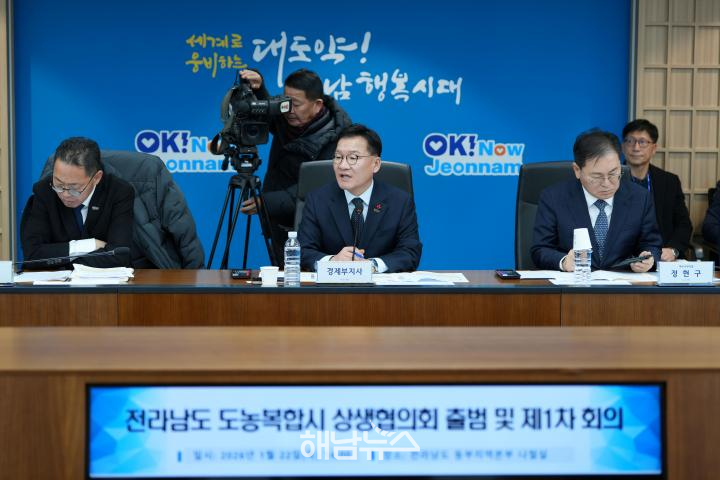 도농복합시 상생협의회 / 사진제공=전라남도 |
[Jeonnam = Haenam News] haenamnews@kakao.com
“Eup and Myeon Are Not the City’s Fringe”
Jeonnam Province Launches Urban–Rural Coexistence Council… Moves to Extend Population-Decline Designation to Eup/Myeon
Jeonnam Province has launched an official consultative body to directly confront the long-standing urban–rural disparities within urban–rural integrated cities. The move sends a clear message: rural eup and myeon areas—where populations are shrinking but fiscal support has lagged—will be brought fully into the policy framework.
On the 22nd, Jeonnam Province held the appointment ceremony and the first regular meeting of the Urban–Rural Integrated Cities Coexistence Council at the Eastern Provincial Office, marking the start of formal discussions aimed at balanced development and mutual growth between urban and rural areas.
The council was established pursuant to the Ordinance on the Composition and Operation of the Urban–Rural Integrated Cities Coexistence Council of Jeonnam Province, which came into effect in November last year. The initiative seeks to address structural imbalances that have persisted in integrated cities by providing an institutional platform for solutions.
In Jeonnam, the four urban–rural integrated cities are Yeosu, Suncheon, Naju, and Gwangyang. Although urban and rural areas share a single administrative boundary, policies and budgets have largely been designed with urban centers in mind, drawing sustained criticism that rural eup and myeon areas have been left behind. Population decline has been more severe in these rural areas, yet support criteria have remained limited to city, county, or district units—repeatedly excluding eup and myeon communities from fiscal assistance and development programs.
The meeting was attended by Vice Governor for Economic Affairs Kang Wi-won, the Head of the Planning and Coordination Office, vice mayors from the four cities, and 25 appointed members including representatives from the provincial and city councils and subject-matter experts. Following the presentation of appointment certificates, participants shared the council’s functions and operating principles and engaged in substantive discussions focused on concrete institutional reforms.
Three key issues anchored the agenda:
First, the operational framework of the Coexistence Council. The council will be involved from the early stages of policy design through budget allocation and project planning, with the aim of improving urban–rural equity.
Second, expanding the scope of population-decline designations to include eup and myeon. Participants agreed that under the current system, the crisis facing rural areas is obscured in statistics and policy, underscoring the need for designation criteria beyond city, county, and district units.
Third, improving Jeonnam’s balanced development indicators. As the current indicators are applied only at the city and county level, they fail to capture the degree of underdevelopment within eup and myeon areas of integrated cities. In response, the province decided to subdivide bonus-point calculations to the eup and myeon level and apply them more broadly to provincially administered competitive grant programs.
Jeonnam Province has consistently urged the National Assembly and the central government to revise relevant laws to extend population-decline designations to eup and myeon areas. These efforts gained momentum last December with the introduction of a partial amendment to the Special Act on Local Autonomy and Balanced Regional Development. The bill allows population-decline and population-decline concern areas to be designated not only at the city, county, and district level, but also at the eup and myeon level within urban–rural integrated cities.
Vice Governor Kang Wi-won stated, “The council members represent the provincial and city councils as well as local residents, and bring extensive experience and insight into urban–rural policy. Jeonnam Province will actively support efforts to ensure that voices from the field and expert knowledge translate into concrete policy outcomes.” He added, “We will make sure the council’s discussions lead to tangible changes—such as expanded fiscal support and projects—rather than remaining merely formalities.”
The launch of the Urban–Rural Integrated Cities Coexistence Council marks not a declaration, but a shift in direction. It signals a determination to place rural eup and myeon areas—long overshadowed by urban growth—back at the center of public policy.
As eup and myeon communities stand on the front line of population decline, attention across the region is now focused on whether this council can ensure they are no longer left as blind spots in administration and development policy.
 해남뉴스 박충배 편집 및 논설위원 haenamnews@kakao.com