2026.09.23 (수) 19:45




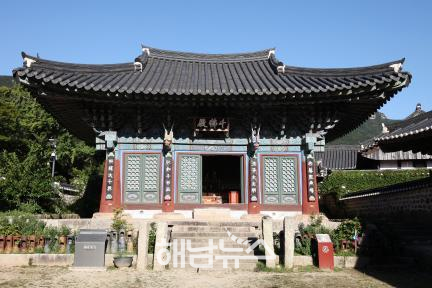 해남대흥사 천불전 전경 / 사진제공=해남뉴스 |
박충배 편집/칼럼/논설
Ⅰ. 서론 — 천불전은 단순한 법당이 아니라 ‘사상적 구조물’이다
보물 제1807호 대흥사 천불전(千佛殿)은 조선 후기 사찰 건축의 집약된 특징 속에 풍수적 입지, 불교적 세계관(미학), 공간 구성 원리가 긴밀히 결합된 전각이다.
건축사가들이 천불전을 주목하는 이유는 단순히 건물의 외형이나 구조적 완성도 때문이 아니라, “공간 배치 자체가 불국토(佛國土)를 구현하는 사고의 체계”이기 때문이다.
천불전은 건축물(Architecture)이면서 동시에 우주론(Cosmology), 풍수(Geomancy), *수행학(Soteriology)*을 결합한 복합적 사상 구조물로 이해해야 한다.
Ⅱ. 건축사적 분석 — 조선 후기 다포식 불전의 정제된 완성도
1. 건축 형식의 개요
정면 5칸 × 측면 3칸, 다포식 공포(多包式), 익공 계열의 단정한 처마선, 내부에 천불(千佛) 배치, 조선 후기 불전은 지나친 장식을 지양하고, 비례·선형·구조미를 중시했는데, 천불전은 이 흐름을 대표하는 사례로 꼽힌다.
2. 다포식 공포의 기능과 상징
다포식 공포는 단순한 하중 분산 장치가 아니라, 상부 세계(天)의 질서를 목조건축으로 모델링한 구조이다.
공포의 반복 = 우주 법계의 질서, 층단 구조 = 계율·법계의 단계,
처마 아래의 음영 = 번뇌에서 지혜로 넘어가는 경계
즉, 천불전의 공포는 건축적 요소이면서 불교 우주론을 구조화한 ‘형태적 교리’이다.
3. 내부 공간 구성의 건축사적 특징
전각 내부를 가득 채운 천불상(千佛像) 배치는 조선 후기 천불신앙의 확산과 함께 등장하는 공간 형식이다.
천불상은 벽면을 따라 수평·수직으로 정렬되며, 이는 불국토의 무한 확장성을 입체적으로 표현한 배치법이다.
Ⅲ. 풍수학적 해석 — 두륜산의 용맥이 모여드는 ‘회룡고조(回龍顧祖)’
대흥사가 자리한 두륜산(頭輪山)은 팔봉(八峰)이 연꽃잎처럼 펼쳐진 독특한 산세를 가진다.
천불전의 입지는 그중에서도 풍수학적으로 가장 강한 자리다.
1. 지형 분석
두륜산의 용맥이 크게 원을 그리며 돌아오는 회선부, 산맥이 안으로 휘감아 ‘기(氣)를 모으는 지점’, 사찰 중심부에서 ‘기운이 귀결되는 축선(軸線)’상에 위치, 이런 자리를 회룡고조(回龍顧祖)라 하는데, 이는 산의 용맥(龍)이 뿌리로 회귀하여 생명력을 완성하는 공간이다.
→ 천불전이 수행·사유의 중심 전각으로 자리한 이유가 명백해진다.
2. 풍수적 구조의 핵심
풍수는 건물의 입지를 단순한 “자리”가 아니라, 우주적 기(氣)가 모여 인간의 정신을 강화하는 장치로 이해한다.
천불전은 바로 그 ‘장치’에 최적화된 전각이다.
Ⅳ. 불교미학적 해석 — 천불전의 공간은 “반조(返照)”를 구조로 만든 것이다
불교미학에서 천불전의 가장 중요한 기능은 ‘마음의 거울화’이다.
천불은 “천 개의 외부 부처”가 아니라 “마음의 천 개 작용이 스스로 드러난 형상”이다.
따라서 천불전의 미학은 “관찰적 미학”이 아닌 ‘내면 현현(顯現)의 미학’이다.
내부 미학 요소
좌우 대칭 → 평등성지(平等性智)
천불의 반복 → 무량무변(無量無邊)의 법계
중앙 불감 → 세계의 중심축(須彌山) 모델링
천장·공포의 중첩 → 우주적 층위의 표현
Ⅴ. 문자 기반 다이어그램 — 천불전 공간 구조 시각화
???? 1. 천불전 정면 구조(다포식) 간략 ASCII
┌──────────── 처마(영락의 경계) ────────────┐
┌──┴──┬──┴──┬──┴──┬──┴──┬──┴──┐
│ 공포 │ 공포 │ 공포 │ 공포 │ 공포 │ ← 다포식 공포(천계의 구조)
┌─┴────┴────┴────┴────┴────┴─┐
│ 천 불 전 정 면 5 칸 │
└─────────────────────────────┘
???? 2. 천불전 내부 공간의 천불 배치 구조
┌──────────────────────────────────────┐
│ █ █ █ █ █ █ █ █ █ █ ← 상단 천불열 (법계의 확장) │
│ █ █ █ █ █ █ █ █ █ █ │
│ █ █ █ █ █ █ █ █ █ █ │
│ │
│ [ 불 감 ] │
│ (수미산 중심축 · 혈성) │
│ │
│ █ █ █ █ █ █ █ █ █ █ │
│ █ █ █ █ █ █ █ █ █ █ │
│ █ █ █ █ █ █ █ █ █ █ │
└──────────────────────────────────────┘
???? 3. 대흥사 중심축 속 천불전의 배치 (사찰 전체 맥락)
두륜산(용맥)
▲
│
┌───────────────┼────────────────┐
│ │ │
(산문)→ 일주문 → 해탈문 → 천불전 → 대웅보전 → 응진전
│
(혈·기운의 집약점)
천불전이 사찰 중심축의 중간에 위치한 이유가 명확해진다.
‘바깥 세계 → 수행 → 깨달음’으로 이어지는 순서에서 천불전은 수행과 사유의 심층 단계에 해당한다.
Ⅵ. 결론 — 천불전은 ‘공간을 통한 사유’가 실현된 대표적 한국 사찰 건축
대흥사 천불전은 다음 세 요소가 구조적으로 결합한다.
1) 건축사
조선 후기 다포식 불전의 완성도, 비례·절제·질서가 이루는 구조미.
2) 풍수지리
두륜산의 용맥이 모이는 회룡고조, 자연과 건축의 에너지 흐름이 하나로 통합.
3) 불교미학
천불의 반복을 통한 무량세계 표현, 불감 중심의 우주론적 모델링, 공간 자체가 수행의 장치로 작동, 이 세 가지는 단순 병치가 아니라 ‘천불전이라는 공간을 통해 구현된 총체적 세계관’이다.
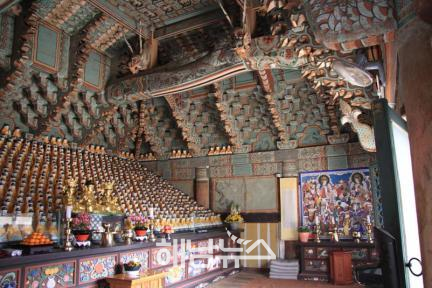 해남대흥사 천불전 내부 / 사진제공=해남뉴스 |
[Haenam = Haenam News] haenamnews@kakao.com
By Editor/Columnist/Editorial Writer Park Chung-bae**
I. Introduction — Cheonbuljeon Is Not a Mere Buddhist Hall but a “Structure of Thought”
Treasure No. 1807, the Cheonbuljeon (Hall of One Thousand Buddhas) of Daeheungsa, is a hall in which architectural features of the late Joseon dynasty, geomantic principles, Buddhist cosmology, and spatial composition operate in profound and integrated harmony.
Architectural historians focus on Cheonbuljeon not simply for its appearance or structural refinement, but because:
“Its spatial organization itself materializes the conceptual framework of the Buddhist Pure Land.”
Cheonbuljeon must therefore be understood as architecture, cosmology, geomancy, and even soteriology—a composite intellectual structure that embodies a multilayered Buddhist worldview.
II. Architectural Analysis — The Refined Completion of a Late-Joseon Multi-Bracket Hall
1. Basic Architectural Form
Cheonbuljeon follows a plan of five bays by three bays, employs a multi-bracket (dapo) system, maintains an understated ikgong-style roofline, and contains the iconic arrangement of one thousand Buddha statues.
Late Joseon Buddhist halls avoided excessive decoration and instead emphasized proportion, line, and structural clarity.
Cheonbuljeon stands as an exemplary representation of this aesthetic.
2. Function and Symbolism of the Multi-Bracket System
The multi-bracket system (dapo) is not simply a structural device distributing weight.
It serves as a wooden architectural model of the celestial order.
Repetition of brackets → cosmic law and universal order
Stepped bracket layers → levels of discipline and realms of dharma
Shadows beneath the eaves → the threshold between delusion and awakening
In this sense, the bracket system is both a technical component and a “doctrinal form” visualizing Buddhist cosmology.
3. Interior Spatial Composition
The interior arrangement—rows of Buddha statues aligned horizontally and vertically—is characteristic of the widespread rise of the Thousand-Buddha cult during the late Joseon dynasty.
This layout expresses the infinite expansion of the Buddhist cosmos in architectural and visual terms.
III. Geomantic Interpretation — Cheonbuljeon at the Convergence of the “Returning Dragon” of Duryunsan
Daeheungsa lies on Mt. Duryun, where eight peaks unfold like lotus petals.
Cheonbuljeon occupies the geomantically strongest point of this landscape.
1. Topographical Analysis
Its location corresponds to:
The curving return point of the mountain’s dragon-vein (yongmaek)
A place where the terrain turns inward, gathering qi
A central axial line where the temple’s energetic flow converges
This is known in geomancy as hoeryong-gojo (回龍顧祖)—
a site where the dragon-vein circles back to its ancestral root, completing its life-giving force.
→ This clearly explains why Cheonbuljeon became the center of contemplation and spiritual introspection within Daeheungsa.
2. Core of the Geomantic Structure
Geomancy does not view a building site as merely physical land but as:
A device through which cosmic energy concentrates to strengthen human spirituality.
Cheonbuljeon is constructed as a hall precisely optimized for this function.
IV. Buddhist Aesthetics — A Space Constructed as “Reflexive Illumination (返照)”
In Buddhist aesthetics, the essential function of Cheonbuljeon is to serve as a mirror of the mind.
The thousand Buddhas do not represent “a thousand external beings” but:
“A thousand manifestations of the mind projected outward.”
Accordingly, the aesthetics of Cheonbuljeon is not observational but phenomenological and introspective, centering on the internal revelation of the practitioner.
Key Aesthetic Elements
Left–right symmetry → the Wisdom of Equality (平等性智)
Repetition of Buddhas → the boundless dharma realm
Central Buddha altar → a model of Mt. Sumeru, the cosmic axis
Layered brackets and ceiling → expression of multi-tiered cosmological realms
V. Text-Based Diagrams — Visualizing the Spatial Structure of Cheonbuljeon
1. Front Elevation (Multi-Bracket System)
┌──────────── Eaves — Boundary of Enlightenment ────────────┐
┌──┴──┬──┴──┬──┴──┬──┴──┬──┴──┐
│ Br. │ Br. │ Br. │ Br. │ Br. │ ← Multi-bracket structure (Heavenly order)
┌─┴────┴────┴────┴────┴────┴─┐
│ Front Elevation of Cheonbuljeon (5 bays) │
└──────────────────────────────────────────────────────────────┘
2. Interior Arrangement of Thousand Buddhas
┌────────────────────────────────────────────────────┐
│ █ █ █ █ █ █ █ █ █ █ ← Upper rows (expansion of dharma realm) │
│ █ █ █ █ █ █ █ █ █ █ │
│ █ █ █ █ █ █ █ █ █ █ │
│ │
│ [ Main Buddha Altar ] │
│ (Sumeru axis · energetic core) │
│ │
│ █ █ █ █ █ █ █ █ █ █ │
│ █ █ █ █ █ █ █ █ █ █ │
│ █ █ █ █ █ █ █ █ █ █ │
└────────────────────────────────────────────────────┘
3. Cheonbuljeon within the Temple’s Central Axis
Mt. Duryun (Dragon vein)
▲
│
┌───────────────────┼───────────────────┐
│ │ │
Entrance → Iljumun → Liberation Gate → Cheonbuljeon → Main Hall → Arhat Hall
│
(Convergence of qi · Spiritual core)
Cheonbuljeon occupies the midpoint of the axis linking the outer world to the sanctum—
precisely where contemplation deepens and inner transformation begins.
VI. Conclusion — Cheonbuljeon as an Exemplary Korean Architectural Realization of “Thought Through Space”
Cheonbuljeon integrates three major dimensions into one coherent system:
1) Architectural History
Mastery of late-Joseon multi-bracket technique
Proportional clarity and structural discipline
2) Geomancy
Located at the returning dragon point of Mt. Duryun
Integration of natural energy flows with architectural space
3) Buddhist Aesthetics
Thousand-Buddha repetition as visualization of the infinite
Sumeru-centered layout expressing cosmic order
Space functioning as a device for introspection and awakening
These are not separate layers but a unified worldview manifested through architecture.
Cheonbuljeon is thus more than a cultural property;
it is a rare architectural expression in which Korean geomancy, Buddhist cosmology, and late-Joseon aesthetics converge into a single contemplative universe.
 해남뉴스 박충배 편집 및 논설위원 haenamnews@kakao.com