2026.08.09 (일) 14:07




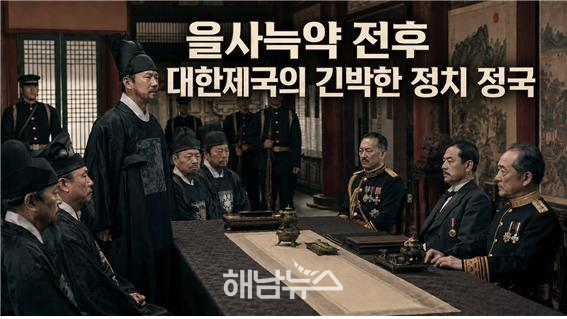 을사늑약전후 대한제국의 긴박한 정치적 정국 / 사진제공=AI호남뉴스 |
【AI호남뉴스】 aihnnews@kakao.com
8월 15일 광복절은 일제 식민지배에서 벗어나 나라를 되찾은 날이다. 그러나 광복의 기쁨만 기억하고 나라를 빼앗긴 과정과 원인을 잊는다면 역사는 언제든 다른 모습으로 반복될 수 있다.
일본은 오늘날 한국에 우호와 협력의 손길을 내밀고 있다. 동북아시아 안보와 경제, 인적 교류를 위해 한일 간 대화와 협력이 필요한 것도 현실이다.
하지만 우리는 일본 정부가 내미는 손을 아무런 의심 없이 잡아서는 안 된다. 외교적 미소와 우호적인 말 뒤에 어떤 국가적 계산이 숨어 있는지 냉정하게 살펴야 한다.
일본이 과거 대한제국에 접근할 때도 처음부터 ‘나라를 빼앗겠다’고 말하지 않았다. 개혁과 독립을 돕겠다며 손을 내밀었고, 동양의 평화와 조선의 보호를 내세웠다. 그러나 그 결과는 외교권 강탈과 군대 해산, 국권 침탈, 강제병합이었다.
역사는 일본 국민 개개인의 속성을 단정하라고 가르치는 것이 아니다. 우리가 경계해야 할 대상은 일본인 전체가 아니라, 침략의 역사를 축소·왜곡하고 국가적 필요에 따라 말과 행동을 바꾸어온 일본 정부와 정치세력의 이중적 태도다.
민영환의 삶과 죽음은 바로 그 위험성을 보여주는 뼈아픈 역사적 증거다.
세계를 보고 대한제국의 위기를 깨닫다
민영환은 1861년 태어나 고종의 신임을 받으며 여러 관직을 지냈다. 명성황후와 가까운 가문 출신으로 황실의 핵심 관료로 성장했지만, 그의 역사적 의미는 단순한 황실 외척이라는 신분에 있지 않다.
그는 해외 사절로 세계 여러 나라를 방문하며 국제정세와 근대문명을 직접 경험한 보기 드문 관료였다.
1896년 러시아 황제 니콜라이 2세의 대관식에 참석하기 위해 특명전권공사로 파견됐고, 러시아와 유럽 각국을 둘러보며 군사시설과 산업, 교육, 교통, 행정제도를 살폈다.
당시 세계는 군사력과 경제력을 앞세운 제국주의 열강의 각축장이었다. 힘이 약한 나라는 외교권과 영토를 빼앗기고 강대국의 지배를 받았다.
민영환은 대한제국이 독립국가로 살아남으려면 낡은 군사제도와 행정체계를 개혁하고, 외세에 의존하지 않는 자주국방 역량을 갖춰야 한다고 판단했다.
그에게 근대화는 서양의 옷이나 건물을 모방하는 일이 아니었다. 국가의 주권과 국민의 생존을 지키기 위한 절박한 선택이었다.
일본은 ‘독립 지원’을 말했지만 지배를 준비했다
일본은 조선에 영향력을 확대하는 과정에서 침략이라는 본심을 노골적으로 드러내지 않았다.
청일전쟁 당시에는 조선의 독립을 돕겠다고 주장했다. 조선의 낡은 제도를 개혁하고 동양의 평화를 지키겠다는 명분도 내세웠다. 그러나 일본이 원한 것은 조선의 진정한 독립이 아니라 청나라와 러시아의 영향력을 제거하고 자신이 한반도를 지배하는 것이었다.
일본은 조선의 개혁을 돕는다는 명분으로 내정에 개입했고, 군대를 주둔시키며 왕궁을 위협했다. 명성황후를 시해한 을미사변 이후에도 침략의 책임을 회피하고 사건의 진실을 축소하려 했다.
러일전쟁 때는 대한제국의 독립과 영토를 보장하는 것처럼 행동했다. 하지만 전쟁이 시작되자 군사적 필요를 이유로 한반도의 통신시설과 요충지를 장악했다.
1904년 한일의정서를 강요했고, 제1차 한일협약을 통해 대한제국의 재정과 외교에 일본인 고문을 앉혔다. 1905년에는 을사늑약을 강제로 체결해 외교권을 빼앗았으며, 1907년에는 고종을 강제로 퇴위시키고 대한제국 군대마저 해산했다.
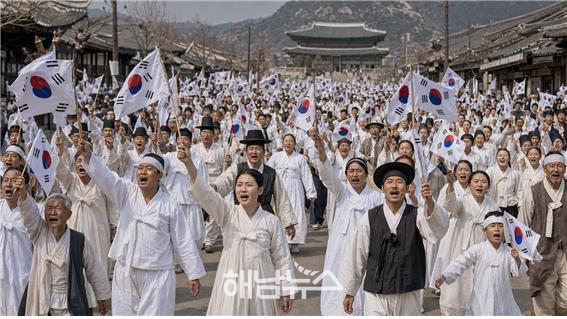 3.1 만세운동 / 사진제공=AI호남뉴스 |
1910년에는 끝내 대한제국을 강제로 병합했다.
‘독립 지원’이 ‘내정 간섭’으로 바뀌었고, ‘보호’가 ‘통감정치’가 됐으며, 마침내 ‘병합’과 식민지배로 이어졌다.
앞에서는 우호와 협력을 말하고 뒤에서는 지배와 침탈을 준비했던 일본 제국주의의 행적을 역사는 분명히 기록하고 있다.
자주국방을 추진했지만 시간이 부족했다
대한제국 출범 이후 민영환은 군부대신과 내부대신, 궁내부 특진관 등 주요 직책을 맡아 군제와 행정 개혁을 추진했다.
그는 신식 군대를 편성하고 근대적인 훈련체계를 도입해야 한다고 주장했다. 전문 장교를 양성하고 군사교육을 강화하는 한편 국가 재정과 행정제도도 함께 정비해야 한다고 보았다.
국가의 주권은 선언이나 외교문서만으로 지켜지지 않는다. 스스로를 방어할 군사력과 안정된 재정, 유능한 인재와 책임 있는 행정이 뒷받침돼야 한다는 판단이었다.
그러나 대한제국의 현실은 녹록지 않았다.
국가 재정은 취약했고 조정 내부의 갈등은 극심했다. 러시아와 일본을 비롯한 외세의 간섭이 거세졌으며, 개혁을 둘러싼 기득권 세력의 반발도 이어졌다.
위기를 알면서도 개혁을 제대로 실행하지 못하는 사이 일본은 군사력과 외교력을 동원해 대한제국의 숨통을 단계적으로 조였다.
민영환이 구상했던 군사·행정 개혁은 충분한 성과를 거두지 못했다. 대한제국에는 변화의 필요성을 깨닫는 사람은 있었지만, 이를 끝까지 추진할 정치적 결단과 국가역량이 부족했다.
을사늑약은 협상이 아니라 강탈이었다.
1904년 러일전쟁을 일으킨 일본은 한반도에 대한 지배력을 급속히 확대했다.
일본은 전쟁에서 승리한 뒤 1905년 11월 군대와 무력을 앞세워 대한제국의 외교권을 빼앗는 을사늑약을 강제로 체결했다.
고종은 조약 체결을 승인하지 않았고 정식 국새도 찍히지 않았다. 국가 최고 통치권자의 동의가 없었음에도 일본은 조약이 성립됐다고 일방적으로 선언했다.
그것은 두 나라가 대등하게 체결한 정상적인 외교협정이 아니었다. 무력으로 한 나라의 주권을 빼앗은 강탈이었다.
민영환은 을사늑약을 국가의 존립을 무너뜨린 불법적인 폭거로 규정했다.
그는 조병세를 비롯한 여러 대신과 함께 고종에게 상소를 올려 을사늑약의 즉각적인 폐기와 조약 체결에 협력한 을사오적의 처벌을 요구했다. 일본의 강압과 조약의 부당성을 국제사회에 알려야 한다고도 주장했다.
하지만 일본의 압력 아래 있던 조정은 그의 요구를 받아들이지 못했다. 상소와 항의에 참여한 인사들에 대한 감시와 탄압도 이어졌다.
민영환은 살아서 자신의 뜻을 실현할 길이 막혔다고 판단했다.
“나는 죽어도 죽지 않는다”
1905년 11월 30일, 민영환은 국민과 각국 외교사절에게 유서를 남기고 스스로 목숨을 끊었다. 향년 44세였다.
그가 국민에게 남긴 유서에는 자신은 죽더라도 나라를 되찾으려는 정신만은 사라지지 않을 것이라는 결연한 뜻이 담겼다.
민영환은 국민이 마음과 힘을 모아 자유와 독립을 회복해 달라고 호소했다. 자신의 죽음을 절망의 끝이 아니라 국민적 각성과 저항의 시작으로 삼아 달라는 유언이었다.
그의 순국 소식은 전국에 큰 충격을 줬다.
조병세를 비롯한 여러 인사가 뒤이어 순국하거나 항일투쟁에 나섰고, 의병항쟁과 애국계몽운동도 확산됐다. 민영환의 죽음은 일본이 강요한 을사늑약을 결코 인정할 수 없다는 민족적 저항의 상징이 됐다.
그는 군대를 지휘해 전장에서 싸우지는 못했다. 그러나 대한제국의 외교권을 빼앗은 조약의 부당함을 자신의 생명으로 고발했다.
그의 마지막 선택은 일본의 침략뿐 아니라 나라가 무너지는 순간에도 책임을 회피한 권력자와 관료들을 향한 준엄한 질책이었다.
일본의 손짓에 경계를 늦춰서는 안 된다
광복 81주년을 맞은 오늘 일본은 경제와 안보, 문화교류를 앞세워 한국에 협력의 손을 내밀고 있다.
국가 간에 영원한 적도, 영원한 우방도 없다는 말처럼 외교는 현실적이어야 한다. 한국과 일본이 인접 국가로서 대화하고 필요한 분야에서 협력하는 것은 불가피하다.
그러나 현실적인 협력이 역사적 망각을 의미해서는 안 된다.
일본 정부가 진정한 미래지향적 관계를 원한다면 먼저 식민지배와 침략전쟁의 역사를 정직하게 인정해야 한다. 일본군 ‘위안부’ 피해자와 강제동원 피해자의 고통을 외면해서는 안 되며, 독도에 대한 부당한 영유권 주장도 중단해야 한다.
야스쿠니신사 참배와 역사교과서 왜곡, 식민지배 책임을 축소하는 정치권의 발언이 계속되는 상황에서 ‘미래로 가자’는 말만 반복하는 것은 진정한 화해가 아니다.
사과와 반성은 말 한마디로 끝나는 행위가 아니다. 그 진정성은 이후의 행동과 교육, 정책의 일관성으로 증명돼야 한다.
과거사를 부정하면서 경제와 안보 협력만 요구한다면 그것은 화해의 손길이 아니라 자국의 필요에 따른 외교적 접근일 수 있다.
우리는 바로 이 점을 냉정하게 살펴야 한다.
과거 일본 제국주의도 조선의 독립과 동양 평화를 말했지만 실제 행동은 침략과 지배로 이어졌다. 오늘날 일본 정부의 모든 외교적 제안을 과거의 침략과 동일시할 수는 없지만, 말보다 행동을 확인해야 한다는 역사의 교훈만큼은 결코 버려서는 안 된다.
일본 국민과 역사왜곡 세력을 구분해야 한다
일본의 침략 역사를 비판한다고 해서 일본 국민 전체를 적대하거나 민족적 속성을 단정해서는 안 된다.
일본에도 식민지배와 침략전쟁을 반성하고, 한국인 피해자들과 연대하며, 역사적 진실을 지키기 위해 노력하는 시민과 학자, 언론인들이 있다.
우리가 비판하고 경계해야 할 대상은 일본인이라는 이유만으로 특정 국민 전체가 아니다. 침략을 미화하고 과거사를 부정하며, 필요에 따라 우호와 압박을 번갈아 사용하는 일본 정부 내 일부 세력과 극우 정치세력이다.
역사적 경계심은 혐오와 달라야 한다.
혐오는 사람을 국적과 민족으로 묶어 적으로 만들지만, 역사적 경계심은 정부의 정책과 정치인의 발언, 국가의 실제 행동을 근거로 판단한다.
일본인을 무조건 불신하는 것은 올바른 역사 인식이 아니다. 반대로 일본 정부가 내미는 손을 선의로만 해석하고 과거의 기록을 지워버리는 것도 위험하다.
냉정한 비판과 열린 교류를 함께 유지하는 것이 주권국가의 성숙한 자세다.
굴종도 배척도 아닌 당당한 외교가 필요하다
대한민국의 대일외교는 감정적인 배척이나 일방적인 굴종 가운데 어느 하나를 선택하는 일이 돼서는 안 된다.
협력할 것은 협력하되 따질 것은 분명히 따져야 한다.
경제·안보·기후위기·감염병·문화교류 등 공동의 이익이 있는 분야에서는 대화할 수 있다. 그러나 역사적 진실과 피해자의 권리, 독도 영유권, 국가의 존엄과 주권은 외교적 편의를 위해 거래할 수 있는 대상이 아니다.
일본의 말이 아니라 행동을 확인하고, 합의가 제대로 이행되는지 검증하며, 국가적 이익과 국민의 권리를 기준으로 판단해야 한다.
무조건적인 반일도 해답이 아니지만 근거 없는 낙관론은 더 위험하다.
외교에서 신뢰는 상대방이 내민 손의 모양으로 결정되지 않는다. 과거의 잘못을 어떻게 인식하는지, 약속을 지키는지, 말과 행동이 일치하는지를 오랜 시간 지켜보며 형성되는 것이다.
역사를 잊지 않는 것은 과거에 갇히기 위해서가 아니다. 같은 실패를 되풀이하지 않고 더 안전한 미래로 나아가기 위해서다.
민영환의 순국이 오늘 우리에게 묻는다.
2026년 8월 15일, 대한민국은 광복 81주년을 맞는다.
오늘 우리는 주권국가에서 자유와 권리를 누리고 있다. 그러나 광복은 과거에 완성돼 박물관 속에 보관된 사건이 아니다. 국가의 자주성과 민주주의, 국민의 안전과 존엄을 끊임없이 지켜야 하는 현재의 과제다.
민영환의 삶은 오늘의 공직자와 정치 지도자들에게 묻는다.
국가가 위기에 처했을 때 자신의 자리와 이익보다 국민과 역사를 먼저 생각할 수 있는가. 외부의 압력 앞에서 국익을 지킬 원칙과 전략을 갖추고 있는가. 상대국의 외교적 수사에 흔들리지 않고 말 뒤에 숨은 의도와 실제 행동을 냉정하게 판단할 수 있는가.
그가 순국으로 남긴 뜻을 오늘날 그대로 따라야 한다는 의미는 아니다.
민주공화국에서 필요한 것은 죽음이 아니라 살아 있는 책임이며, 개인의 희생이 아니라 제대로 작동하는 제도다.
국가적 위기를 막는 가장 확실한 방법은 지도자 한 사람의 결단에 모든 것을 맡기는 것이 아니다. 투명한 행정과 엄정한 법치, 강한 국방과 균형 잡힌 외교, 사실을 말하는 언론과 깨어 있는 시민사회가 함께 작동해야 한다.
민영환의 비극은 위기를 알고도 제때 개혁하지 못한 국가가 어떤 대가를 치르는지 보여준다.
광복은 기억에서 끝나서는 안 된다
광복절마다 태극기를 게양하고 순국선열을 추모하는 일은 중요하다. 하지만 기념식과 구호만으로 광복의 정신이 계승되는 것은 아니다.
나라를 잃었던 원인을 냉정하게 돌아보고, 다시는 국민의 주권이 위협받지 않도록 국가의 기초를 튼튼히 하는 것이 진정한 광복의 계승이다.
일본이 우호와 협력의 손을 내밀 때 우리는 그 손을 무조건 거부할 필요도, 아무런 조건 없이 잡을 필요도 없다.
먼저 물어야 한다.
일본 정부는 식민지배의 역사를 진심으로 반성하고 있는가. 피해자의 상처를 존중하고 있는가. 독도와 역사교과서 문제에서 책임 있는 행동을 하고 있는가. 과거의 사과를 뒤집는 정치적 발언을 막을 의지가 있는가.
말과 행동이 다르다면 신뢰할 수 없다.
앞에서는 우호를 말하면서 뒤에서는 침략의 역사를 부정한다면 우리는 단호히 대응해야 한다. 경제적 이익이나 일시적인 외교 성과를 위해 역사적 진실과 국가의 존엄을 양보해서도 안 된다.
민영환이 세계를 돌아보며 깨달았던 것도 결국 하나였다.
힘없는 독립은 오래 지속될 수 없으며, 준비하지 않는 국가는 외세의 각축 속에서 자신의 운명을 스스로 결정할 수 없다는 사실이다.
그가 마지막 순간 국민에게 남긴 것은 패배와 절망이 아니었다. 언젠가 자유와 독립을 되찾을 수 있다는 믿음과, 그날을 위해 국민이 깨어 있어야 한다는 당부였다.
민영환이 순국한 지 120여 년이 지났다. 대한민국은 식민지배를 이겨내고 광복을 맞았으며 산업화와 민주화를 이뤘다. 하지만 역사의 경고까지 사라진 것은 아니다.
국가는 국민을 위해 존재해야 하고, 공직자는 권력이 아니라 역사 앞에 책임져야 한다. 주권은 한 번 얻었다고 영원히 보장되는 권리가 아니라 세대마다 지키고 가꾸어야 할 공동의 책무다.
광복 81주년, 민영환의 마지막 외침을 다시 새긴다.
나라는 일시적으로 빼앗길 수 있어도 독립을 향한 국민의 뜻까지 빼앗을 수는 없다.
일본의 우호적인 말에 현혹되지 말되 일본 국민 전체를 적으로 돌리지 않는 냉철함, 협력의 문을 열어두되 역사와 주권 앞에서는 한 치도 물러서지 않는 당당함이 필요하다.
민영환의 순국을 기억하는 것은 과거의 충신을 기리는 데 그쳐서는 안 된다.
역사를 잊지 않고, 외교적 미소 뒤의 이해관계를 살피며, 대한민국의 주권과 국민의 존엄을 스스로 지키겠다고 다짐하는 일이 돼야 한다.
과거를 반성하지 않는 일본의 손짓에 경계를 늦춰서는 안 된다.
역사는 잊는 순간 되풀이될 수 있기 때문이다.
【AI호남뉴스 역사칼럼】
August 15 Liberation Day Historical Column]
Min Yeong-hwan’s Final Warning: Look to the Historical Record Before Trusting Japan’s “Friendly Overtures”
Japan seized the Korean Empire’s diplomatic sovereignty through the Eulsa Treaty; Min Yeong-hwan exposed the injustice of the aggression through his death
Japan spoke of “protection and cooperation,” but behind those words lay its ambition for colonial rule
On the 81st anniversary of Korea’s liberation, vigilance must not be relaxed while sincere reflection on the past remains absent
Korea-Japan cooperation is necessary, but historical truth and national sovereignty must never be compromised
【AI Honam News】 aihnnews@kakao.com
August 15, Korea’s National Liberation Day, commemorates the day the Korean people regained their country from Japanese colonial rule. Yet if we remember only the joy of liberation while forgetting how and why the nation was lost, history may repeat itself in a different form.
Japan today is extending gestures of friendship and cooperation toward South Korea. Dialogue and cooperation between the two countries are indeed necessary for Northeast Asian security, economic relations and people-to-people exchanges.
However, South Korea must not accept the Japanese government’s outstretched hand without careful scrutiny. We must examine calmly what national calculations may lie behind diplomatic smiles and friendly words.
When Japan approached the Korean Empire in the past, it did not initially declare that it intended to seize the country. It claimed that it would help Korea achieve reform and independence, while invoking the peace of East Asia and the protection of Korea. The eventual result, however, was the seizure of diplomatic sovereignty, the disbandment of the Korean military, the destruction of national sovereignty and forced annexation.
History does not teach us to assign an inherent character to every individual Japanese person. The proper object of scrutiny is not the Japanese people as a whole, but the double standard displayed by Japanese governments and political forces that have minimized or distorted the history of aggression and altered their words and actions according to national interests.
The life and death of Min Yeong-hwan provide painful historical evidence of that danger.
He Saw the World and Recognized the Crisis Facing the Korean Empire
Born in 1861, Min Yeong-hwan served in numerous government positions under the confidence of Emperor Gojong. He came from a family closely connected to Empress Myeongseong and rose to become a senior official at the heart of the imperial court. His historical importance, however, extends far beyond his status as a member of a powerful royal family.
Min was one of the rare Korean officials of his time to experience international affairs and modern civilization firsthand through diplomatic missions abroad.
In 1896, he was dispatched as a minister plenipotentiary to attend the coronation of Russian Emperor Nicholas II. He subsequently traveled through Russia and several European countries, observing their military institutions, industry, education, transportation and administrative systems.
The world at the time was an arena of imperial competition in which powerful states relied on military and economic strength. Weaker countries lost their diplomatic sovereignty and territory and were brought under the domination of stronger powers.
Min concluded that the Korean Empire could survive as an independent state only by reforming its outdated military and administrative systems and developing the capacity for self-reliant national defense.
For him, modernization did not mean simply imitating Western clothing or architecture. It was an urgent necessity for protecting national sovereignty and the survival of the people.
Japan Spoke of “Supporting Independence” While Preparing for Domination
As Japan expanded its influence over Korea, it did not openly disclose its intention to invade and dominate the country.
During the First Sino-Japanese War, Japan claimed that it was helping Korea secure its independence. It also invoked the reform of Korea’s outdated institutions and the preservation of peace in East Asia.
Japan’s true objective, however, was not Korea’s genuine independence. It sought to remove Chinese and Russian influence from the Korean Peninsula and replace it with its own domination.
Japan intervened in Korea’s domestic affairs under the pretext of supporting reform. It stationed troops in the country and threatened the royal palace. Even after the assassination of Empress Myeongseong in the Eulmi Incident, Japan attempted to evade responsibility and minimize the truth of what had occurred.
During the Russo-Japanese War, Japan acted as though it would guarantee the independence and territorial integrity of the Korean Empire. Once the war began, however, it seized Korea’s communication facilities and strategic locations in the name of military necessity.
Japan forced the Korean Empire to sign the Japan-Korea Protocol in 1904. Through the First Japan-Korea Agreement, it placed foreign advisers in positions that allowed them to influence Korea’s financial and diplomatic affairs.
In 1905, Japan forcibly imposed the Eulsa Treaty and deprived the Korean Empire of its diplomatic sovereignty. In 1907, it forced Emperor Gojong to abdicate and disbanded the Korean imperial military.
Finally, in 1910, Japan forcibly annexed the Korean Empire.
“Support for independence” became interference in domestic affairs. “Protection” became rule through the Japanese Residency-General, and ultimately led to annexation and colonial domination.
History clearly records the conduct of Japanese imperialism, which spoke publicly of friendship and cooperation while preparing privately for domination and seizure.
He Pursued Self-Reliant National Defense, but Time Was Running Out
Following the establishment of the Korean Empire, Min Yeong-hwan served in several important posts, including minister of the military, minister of home affairs and special official of the Imperial Household. In these positions, he pursued military and administrative reforms.
He called for the organization of a modern military and the introduction of up-to-date training systems. He emphasized the professional education of military officers and stronger military instruction, while also arguing that national finances and administrative institutions had to be reformed.
National sovereignty cannot be protected by declarations and diplomatic documents alone. Min believed it required the support of military strength, stable finances, capable personnel and responsible administration.
The reality confronting the Korean Empire, however, was deeply unfavorable.
The state’s finances were fragile, while conflict within the royal court was severe. Foreign interference—particularly from Russia and Japan—grew increasingly aggressive, and entrenched interests resisted reform.
While Korea recognized the crisis but failed to carry out reforms effectively, Japan used its military and diplomatic power to tighten its grip on the Korean Empire step by step.
Min’s plans for military and administrative reform did not produce sufficient results. Some officials understood the need for change, but the Korean Empire lacked the political determination and national capacity required to carry reform through to completion.
The Eulsa Treaty Was Not Negotiation, but an Act of Seizure
After launching the Russo-Japanese War in 1904, Japan rapidly expanded its control over the Korean Peninsula.
Following its victory, Japan used military force and coercion in November 1905 to impose the Eulsa Treaty, which deprived the Korean Empire of its diplomatic sovereignty.
Emperor Gojong did not approve the treaty, and the official state seal was not affixed to it. Despite the absence of consent from the country’s supreme sovereign, Japan unilaterally declared that the treaty had been concluded.
It was not a normal diplomatic agreement freely negotiated between two equal states. It was the seizure of one country’s sovereignty through military force.
Min Yeong-hwan regarded the Eulsa Treaty as an unlawful outrage that destroyed the very existence of the state.
Together with Jo Byeong-se and other senior officials, he submitted petitions to Emperor Gojong demanding the immediate nullification of the treaty and punishment of the five ministers who had cooperated in its conclusion, later condemned as the “Five Eulsa Traitors.”
Min also argued that the international community had to be informed of Japan’s coercion and the illegitimacy of the treaty.
The Korean court, operating under Japanese pressure, was unable to accept and act upon his demands. Surveillance and repression were directed against those who participated in petitions and protests.
Min came to believe that every path through which he might realize his convictions while alive had been closed.
“Even in Death, I Shall Not Be Dead”
On November 30, 1905, Min Yeong-hwan took his own life after leaving final messages to the Korean people and the foreign diplomatic community. He was 44 years old.
His final message to the people expressed his determination that although he might die, the spirit of recovering the nation must never perish.
Min appealed to the Korean people to unite their hearts and strength and restore their freedom and independence. His death was not intended as the end of despair, but as the beginning of national awakening and resistance.
The news of his death shocked the entire country.
Jo Byeong-se and other patriots subsequently took their own lives or joined the anti-Japanese struggle. Righteous army resistance and patriotic enlightenment movements also spread. Min’s death became a symbol of national resistance and of the Korean people’s refusal to recognize the Eulsa Treaty imposed by Japan.
He did not command troops on a battlefield. Yet he used his own life to expose the injustice of a treaty that stripped the Korean Empire of its diplomatic sovereignty.
His final act was a stern rebuke not only of Japanese aggression, but also of the rulers and officials who avoided responsibility while the nation was collapsing.
We Must Not Lower Our Guard in Response to Japan’s Overtures
As South Korea marks the 81st anniversary of its liberation, Japan is again proposing cooperation in economic affairs, security and cultural exchange.
Diplomacy must be realistic. As neighboring countries, South Korea and Japan inevitably need to communicate and cooperate in areas of mutual necessity.
Practical cooperation, however, must not become historical amnesia.
If the Japanese government genuinely seeks a future-oriented relationship, it must first acknowledge honestly the history of colonial rule and aggressive war. It must not disregard the suffering of the victims of Japan’s wartime military sexual slavery or forced labor, and it must end its unjustified territorial claim over Dokdo.
When visits to Yasukuni Shrine, distortions in history textbooks and political statements minimizing responsibility for colonial rule continue, merely repeating that the two countries should “move toward the future” does not constitute genuine reconciliation.
Apology and reflection do not end with a single statement. Their sincerity must be demonstrated through consistent conduct, education and public policy.
If Japan denies the past while demanding economic and security cooperation, its approach may reflect its own diplomatic needs rather than a genuine commitment to reconciliation.
This is precisely what South Korea must examine calmly.
Japanese imperialism once spoke of Korean independence and peace in East Asia, while its actions led to invasion and domination. We cannot equate every diplomatic proposal from today’s Japanese government with the aggression of the past. Nevertheless, we must never abandon the historical lesson that words must be tested against actions.
The Japanese People Must Be Distinguished from Forces That Distort History
Criticizing Japan’s history of aggression does not justify hostility toward all Japanese people or sweeping judgments about an entire nationality.
There are Japanese citizens, scholars and journalists who reflect upon colonial rule and aggressive war, stand in solidarity with Korean victims and work to preserve historical truth.
The proper targets of criticism and scrutiny are not all people simply because they are Japanese. They are the political forces and elements within the Japanese government that glorify aggression, deny the past, and alternate between friendly overtures and pressure according to political necessity.
Historical vigilance must be distinguished from hatred.
Hatred treats people as enemies based on nationality or ethnicity. Historical vigilance evaluates government policies, political statements and state conduct on the basis of evidence.
Unconditional distrust of Japanese people is not a sound understanding of history. Yet it is equally dangerous to interpret every gesture from the Japanese government as an act of goodwill and erase the historical record.
Maintaining both clear-eyed criticism and open exchange is the responsible position of a mature sovereign state.
South Korea Needs Confident Diplomacy—Neither Submission nor Rejection
South Korea’s diplomacy toward Japan must not be reduced to a choice between emotional rejection and unilateral submission.
The two countries should cooperate where cooperation is beneficial, while addressing clearly what must be confronted.
They may hold dialogue in areas of shared interest, including the economy, security, the climate crisis, infectious diseases and cultural exchange. Historical truth, victims’ rights, sovereignty over Dokdo, national dignity and state sovereignty, however, cannot be traded away for diplomatic convenience.
South Korea must evaluate Japan by its actions rather than its words, verify whether agreements are properly implemented, and judge every issue according to the national interest and the rights of the Korean people.
Unconditional anti-Japanese sentiment is not the answer, but groundless optimism is even more dangerous.
Diplomatic trust is not determined by the appearance of an outstretched hand. It is built over time by observing how a country understands its past wrongdoing, whether it honors its promises, and whether its words and conduct remain consistent.
Remembering history does not mean remaining trapped in the past. It means avoiding the same failures and advancing toward a safer future.
Min Yeong-hwan’s Death Poses a Question to Us Today
On August 15, 2026, the Republic of Korea marks the 81st anniversary of national liberation.
South Koreans today enjoy freedom and civil rights in a sovereign state. Liberation, however, is not an event completed in the past and stored in a museum. Protecting national independence, democracy, public safety and human dignity remains a continuing responsibility.
The life of Min Yeong-hwan poses questions to today’s public officials and political leaders.
When the nation faces a crisis, can they place the people and history ahead of their own positions and interests? Do they possess the principles and strategies needed to protect the national interest from outside pressure? Can they look beyond another country’s diplomatic rhetoric and evaluate calmly the intentions, interests and conduct behind it?
This does not mean that people today must imitate the manner in which Min sacrificed his life.
What a democratic republic needs is not death, but living responsibility. It needs institutions that function properly, not the sacrifice of individuals.
The most reliable way to prevent a national crisis is not to entrust everything to the decision of a single leader. Transparent administration, the rule of law, strong national defense, balanced diplomacy, a press committed to facts and an alert civil society must all function together.
Min Yeong-hwan’s tragedy demonstrates the price paid by a nation that recognizes a crisis but fails to reform itself in time.
Liberation Must Not End with Remembrance
Raising the Taegeukgi and honoring the patriots who sacrificed their lives on Liberation Day are important. But ceremonies and slogans alone cannot carry forward the spirit of liberation.
True remembrance requires a clear examination of why the country was lost and the strengthening of the nation’s foundations so that the sovereignty of its people can never again be threatened.
When Japan extends a hand of friendship and cooperation, South Korea need neither reject it automatically nor accept it without conditions.
We must first ask:
Does the Japanese government sincerely reflect upon the history of colonial rule? Does it respect the suffering of the victims? Does it act responsibly regarding Dokdo and history textbook issues? Does it have the will to prevent political statements that reverse or undermine previous apologies?
If a country’s words and actions contradict each other, trust cannot be established.
If Japan speaks publicly of friendship while denying its history of aggression, South Korea must respond firmly. Historical truth and national dignity must never be surrendered for economic benefit or temporary diplomatic achievements.
What Min Yeong-hwan ultimately learned through his travels around the world was clear:
Independence without strength cannot endure. A nation that fails to prepare cannot determine its own destiny amid competition among foreign powers.
What he left to the Korean people in his final moments was not defeat or despair. It was the conviction that freedom and independence could one day be restored, and a plea that the people remain alert and prepared for that day.
More than 120 years have passed since Min Yeong-hwan’s death. The Republic of Korea overcame colonial rule, achieved liberation, industrialized and built a democracy. Yet the warnings of history have not disappeared.
The state must exist for its people, and public officials must be accountable not merely to those in power, but to history. Sovereignty is not a permanent right secured once and forever. It is a common responsibility that every generation must protect and cultivate.
On the 81st anniversary of liberation, we remember Min Yeong-hwan’s final appeal.
A country may temporarily be taken away, but the people’s determination for independence cannot be seized.
South Korea needs the clear judgment not to be misled by Japan’s friendly words while refusing to turn all Japanese people into enemies. It must keep the door open to cooperation while standing firm, without compromise, in defense of historical truth and national sovereignty.
Remembering Min Yeong-hwan must mean more than honoring a loyal official of the past.
It must mean remembering history, examining the interests behind diplomatic smiles and renewing our determination to protect the sovereignty of the Republic of Korea and the dignity of its people.
We must not lower our guard in response to overtures from political forces that refuse to reflect sincerely on the past.
History can repeat itself the moment it is forgotten.
【AI Honam News Historical Column】
 해남뉴스 박충배 편집 및 논설위원 news@hbcnews.kr