2026.09.21 (월) 08:53




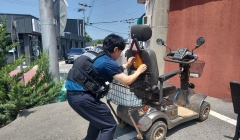
 온열질환자 배너 / 사진제공=AI호남뉴스 |
【해남=해남뉴스】 haenamnews@kakao.com
해남의 폭염 피해가 더는 ‘주의’나 ‘당부’로 넘길 수준이 아니다. 질병관리청 온열질환 응급실감시체계에 따르면 지난 7월 29일 기준 해남에서 발생한 온열질환자는 5명이다. 이는 거주지가 아니라 증상이 발생한 지역을 기준으로 집계한 잠정 통계다. 관련 보도
이보다 앞선 7월 28일 해남군은 군의회 긴급현안 간담회에서 온열질환자 3명이 발생했고 이 가운데 1명이 숨졌다고 보고했다. 지난 7월 25일 황산면에서는 폭염경보가 내려진 가운데 밭일을 하던 30대 태국인 노동자가 어지럼증을 호소한 뒤 쓰러져 숨졌다. 사고 당일 해남의 낮 최고기온은 33.7도였다. 사고 보도
두 통계가 다른 것은 응급실감시체계가 응급실 내원 환자를 중심으로 집계하고 응급실 도착 전 사망 사례는 제외할 수 있기 때문이다. 그러나 군민의 입장에서는 “환자가 3명인지 5명인지, 사망자가 포함된 것인지 아닌지” 혼란스러울 수밖에 없다. 해남군은 집계 기준과 조사 진행 상황을 명확히 설명하고, 온열질환 의심 사망사고를 포함한 지역 내 피해 현황을 투명하게 공개해야 한다.
더욱 심각한 문제는 피해가 특정 계층과 일터에 집중된다는 점이다. 해남은 고령 농업인과 야외 노동자가 많고, 농번기에는 외국인 계절근로자와 이주노동자들이 논과 밭, 축사, 건설현장에 투입된다. 폭염경보가 내려져도 작물 관리와 수확 시기를 놓칠 수 없어 일을 멈추기 어렵다. “더운 시간에는 쉬라”는 안내만으로는 생계와 작업 일정에 묶인 사람들을 보호할 수 없다.
해남군은 지난 7월 24일부터 재난안전대책본부를 비상 가동하고 현장점검, 마을방송, 문자 안내, 외국인 노동자를 위한 다국어 자료 배포 등을 추진하고 있다. 체감온도 33도 이상에서는 2시간 이내 20분, 35도 이상에서는 매시간 15분 이상 그늘에서 쉬도록 안내하고 있다. 해남군 긴급대책 보도
그러나 사람이 숨진 뒤에도 대책이 방송과 문자, 홍보물 배포에 머문다면 행정의 역할을 다했다고 할 수 없다. 현장에서는 휴식시간이 실제로 지켜지는지, 그늘막과 냉수가 있는지, 몸이 아플 때 작업을 거부할 수 있는지를 확인해야 한다. 특히 외국인 노동자가 고용주의 눈치를 보지 않고 작업중지권을 행사할 수 있도록 고용 농가와 사업주에 대한 지도·점검을 강화해야 한다.
첫째, 해남군은 체감온도와 폭염특보 단계에 따라 농작업과 야외작업을 조정하는 지역 차원의 실행기준을 마련해야 한다. 체감온도 35도 이상에서는 정오 전후의 농작업을 원칙적으로 중단하고, 38도 이상이나 폭염중대경보가 발령되면 군이 발주하거나 지원하는 공사·사업장의 옥외작업을 전면 중지해야 한다. 민간 농가와 사업장에도 작업시간 조정에 따른 손실을 일부 지원하는 방안을 검토해야 한다.
둘째, 고령 농업인과 독거노인, 장애인, 만성질환자, 외국인 노동자를 포함한 ‘폭염 고위험군 명부’를 구축하고 1대1 안부 확인체계를 가동해야 한다. 읍·면 직원과 이장, 생활지원사에게 책임만 맡길 것이 아니라 보건소 방문간호 인력과 통역 인력, 긴급 이송체계를 함께 보강해야 한다. 전화 확인에 그치지 말고 폭염특보 기간에는 실제 생활공간과 작업현장을 찾아야 한다.
셋째, 무더위쉼터의 숫자가 아니라 이용 가능성을 점검해야 한다. 경로당이 문을 닫았거나 냉방비가 부족하고, 거동이 불편한 주민이 이동할 수 없다면 쉼터는 있어도 없는 것과 같다. 야간 열대야에 대비해 쉼터 운영시간을 연장하고, 마을별 이동차량과 냉방비·전기료를 지원해야 한다. 시장과 버스정류장, 병원 주변, 천변로와 아파트 밀집지역에는 그늘막과 녹음공간을 확대해야 한다.
넷째, 온열질환 발생 현황을 읍·면별로 신속하게 공개해야 한다. 환자의 개인정보는 보호하되 발생 장소와 시간, 연령대, 작업 유형, 조치 결과를 분석해 위험지역과 위험시간을 알려야 한다. 환자가 발생했는데도 단순히 누계 숫자만 발표한다면 같은 조건에서 같은 사고가 반복되는 것을 막기 어렵다.
폭염은 가뭄과 농업용수 부족, 고수온, 가축 폐사, 양식생물 피해, 산불 위험까지 동시에 키운다. 해남군 내 저수지 374곳의 평균 저수율은 7월 말 기준 71%였지만, 저수율 30% 미만인 곳도 5곳이었다. 8월 말부터 배추 정식이 본격화하면 농업용수 수요가 급증할 수 있다. 폭염과 가뭄을 서로 다른 부서의 개별 업무로 나눠 대응해서는 안 되는 이유다.
해남군은 폭염·가뭄·고수온·집중호우를 하나의 연쇄적인 기후재난으로 보고 ‘해남형 기후재난 종합대책’을 수립해야 한다. 기후위험지도 작성, 읍·면별 취약계층과 농축수산업 피해 예측, 비상용수 확보, 축사·양식장 냉각시설 지원, 도시 그늘 길 조성, 재난 예비비 편성까지 중장기 계획으로 연결해야 한다.
이제 폭염은 여름철에 잠깐 견뎌야 하는 불편이 아니다. 질병관리청에 따르면 전국 온열질환자는 2023년 2천818명에서 2024년 3천704명, 2025년 4천460명으로 계속 증가했다. 2025년 환자의 79.2%가 실외에서 발생했고, 실외 작업장과 논밭이 대표적인 위험 장소였다.
군민에게 물을 자주 마시고 한낮에는 쉬라고 말하는 것만으로는 부족하다. 쉴 수 없는 노동환경을 바꾸고, 냉방비가 없어 쉼터를 이용하지 못하는 현실을 개선하며, 위험한 작업을 멈출 수 있도록 행정과 재정이 뒷받침돼야 한다.
온열질환자 5명과 노동자 사망사고는 해남군에 보내는 분명한 경고다. 해남군은 사고가 발생한 뒤 회의를 열고 현장을 점검하는 사후 대응에서 벗어나야 한다. 한 사람의 생명도 더 잃지 않도록 폭염을 ‘기상 현상’이 아닌 ‘생명 재난’으로 다뤄야 한다. 그것이 이상기후 시대에 지방정부가 져야 할 가장 기본적인 책임이다.
[Haenam News Editorial]
Five Heat-Related Illness Cases and a Fatality: Haenam Must Treat Extreme Heat as a Disaster
Five heat-related illness cases recorded in Haenam as of July 29, based on provisional place-of-occurrence data
Thai worker dies after working in a field in Hwangsan-myeon; pre-hospital deaths excluded from emergency-room statistics
County reported three patients and one death to the council, creating confusion over differing statistical standards
Recurring heat waves, tropical nights, drought and high sea temperatures turning extreme weather into an everyday compound disaster
One-on-one safety monitoring needed for elderly farmers, foreign workers and outdoor laborers
Midday farm work and county-commissioned outdoor construction should be effectively suspended when the apparent temperature reaches 35°C
Cooling-center hours should be extended, with support for electricity costs, transportation and overnight shelters
Heat-related illnesses and damage to livestock, aquaculture and crops should be disclosed daily by township
Haenam must establish a comprehensive climate-disaster plan covering extreme heat, drought, high sea temperatures and torrential rain
Telling residents simply to “drink water and take breaks” cannot protect their lives and livelihoods
【HAENAM=HAENAM NEWS】 haenamnews@kakao.com
The damage caused by extreme heat in Haenam can no longer be dismissed with warnings and repeated calls for caution. According to the Korea Disease Control and Prevention Agency’s emergency-room surveillance system, five cases of heat-related illness had occurred in Haenam as of July 29. This is provisional data based on where symptoms occurred, rather than where the patients lived.
A day earlier, on July 28, Haenam County told the county council during an emergency meeting that three heat-related illness cases had occurred and that one of the patients had died. On July 25, a Thai worker in his 30s collapsed and died after becoming dizzy while working in a field in Hwangsan-myeon under a heat-wave warning. Haenam’s daytime high reached 33.7°C that day.
The discrepancy stems from differences in statistical criteria. The emergency-room surveillance system primarily counts patients treated at participating emergency departments and may exclude people who die before reaching an emergency room. From the public’s perspective, however, confusion is inevitable over whether Haenam had three patients or five and whether the fatality was included.
Haenam County must clearly explain the standards used in each set of statistics and the progress of its investigation. It should also transparently disclose the full extent of local damage, including deaths suspected of being caused by heat-related illness.
An even more serious problem is that the risks are concentrated among particular groups and workplaces. Haenam has many elderly farmers and outdoor laborers. During the busy farming season, foreign seasonal workers and migrant laborers are deployed to rice paddies, crop fields, livestock farms and construction sites.
Even when a heat-wave warning is in effect, many workers find it difficult to stop because crops must be managed and harvested on schedule. Simply telling people to “take a break during the hottest hours” will not protect those whose livelihoods and working schedules prevent them from stopping.
Since July 24, Haenam County has operated its Disaster and Safety Countermeasures Headquarters under emergency conditions. It has conducted field inspections, issued village broadcasts and text alerts, and distributed multilingual safety materials to foreign workers. The county advises workers to rest in the shade for at least 20 minutes within every two-hour period when the apparent temperature reaches 33°C and for at least 15 minutes every hour when it reaches 35°C.
But if the county’s response remains limited to broadcasts, text messages and leaflets even after a person has died, the administration cannot claim to have fulfilled its responsibility.
Officials must verify whether rest periods are actually being observed, whether shade and cold drinking water are available and whether workers can refuse dangerous work when they feel unwell. In particular, the county must strengthen inspections and supervision of farms and businesses so foreign workers can exercise their right to stop work without fear of retaliation from employers.
First, Haenam County must establish locally enforceable standards for adjusting farming and outdoor work according to the apparent temperature and the level of heat alerts.
When the apparent temperature reaches 35°C, farm work around midday should be suspended in principle. If it reaches 38°C or an extreme heat emergency alert is issued, outdoor work at construction sites and workplaces commissioned or subsidized by the county should be halted completely.
The county should also consider financial assistance for private farms and businesses that incur losses after adjusting or suspending working hours for safety reasons.
Second, Haenam must establish a list of people at high risk from extreme heat and activate a one-on-one welfare-check system. The list should include elderly farmers, older people living alone, people with disabilities, residents with chronic illnesses and foreign workers.
The county must not simply place the burden on township officials, village heads and care workers. It should reinforce the system with public health center nurses, interpreters and emergency transportation services. During heat alerts, officials must go beyond telephone calls and visit people’s homes and workplaces in person.
Third, the county must assess cooling centers based not on how many exist but on whether residents can actually use them.
A cooling center is of little value if a senior center is closed, lacks sufficient funds for air conditioning or cannot be reached by residents with limited mobility. Operating hours should be extended during tropical nights, while villages should receive transportation assistance and support for air-conditioning and electricity costs.
More shade structures and tree-covered pedestrian routes are also needed around traditional markets, bus stops, hospitals, riverside roads and densely populated apartment areas.
Fourth, heat-related illness data must be disclosed promptly by township.
While protecting patients’ personal information, the county should analyze and publish the location and time of each incident, the patient’s age group, the type of work being performed and the measures taken afterward. Releasing only a cumulative total will do little to prevent similar incidents from recurring under the same conditions.
Extreme heat also intensifies drought, agricultural water shortages, high sea temperatures, livestock deaths, aquaculture losses and wildfire risks.
At the end of July, Haenam’s 374 reservoirs had an average storage rate of 71 percent. However, five reservoirs were below 30 percent. Agricultural water demand could rise sharply when the main season for planting winter cabbage begins in late August.
This is why extreme heat and drought cannot be managed as separate issues divided among different county departments.
Haenam County must view heat waves, drought, high sea temperatures and torrential rain as interconnected climate disasters and establish a comprehensive “Haenam Climate Disaster Response Plan.”
The county needs a long-term strategy covering climate-risk mapping, forecasts of vulnerable populations and agricultural, livestock and fisheries damage by township, emergency water supplies, cooling equipment for livestock and aquaculture facilities, shaded pedestrian routes and the allocation of disaster contingency funds.
Extreme heat is no longer a temporary summer inconvenience that residents must simply endure.
According to the Korea Disease Control and Prevention Agency, the nationwide number of heat-related illness cases continued to increase from 2,818 in 2023 to 3,704 in 2024 and 4,460 in 2025. In 2025, 79.2 percent of patients were exposed outdoors, with outdoor workplaces and agricultural fields among the most common locations.
It is not enough to tell residents to drink water frequently and avoid working during the hottest part of the day.
The county must change working environments in which people cannot take breaks, address situations in which residents cannot afford cooling costs and provide administrative and financial support so dangerous work can be stopped.
The five heat-related illness cases and the death of a worker are a clear warning to Haenam County.
The county must move beyond a reactive system in which meetings are held and inspections conducted only after an accident. To ensure that not one more life is lost, extreme heat must be treated not merely as a weather phenomenon but as a life-threatening disaster.
That is the most fundamental responsibility of a local government in the age of climate extremes.
 해남뉴스 박충배 편집 및 논설위원 news@hbcnews.kr