2026.09.23 (수) 13:08



 공무원노조 궐기대회 / 사진제공=ai호남뉴스 |
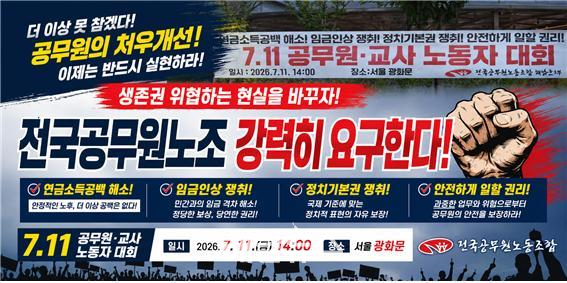
전국공무원노동조합 해남군지부가 게시한 '7월 11일 공무원 교사 노동자 대회' 홍보 현수막. 현수막에는 '연금소득공백 해소, 임금인상 쟁취, 정치기본권 쟁취, 안전하게 일할 권리' 등을 요구하며 7월 11일 오후 2시 서울 광화문에서 대회를 개최한다는 내용이 담겨 있다.
전국공무원노동조합이 공무원 처우 개선과 연금제도 보완 등을 요구하며 오는 7월 11일 서울 광화문에서 전국 규모의 총궐기대회를 예고했다.
해남지역에도 관련 현수막이 게시되면서 공무원 사회의 처우 개선 요구가 지역사회 관심사로 떠오르고 있다.
현수막에는 '연금소득공백 해소', '임금인상 쟁취', '정치기본권 쟁취', '안전하게 일할 권리' 등이 핵심 요구사항으로 제시됐다.
이번 집회는 단순한 임금인상 요구를 넘어 공직사회의 인력 유출과 낮아진 직업 매력도를 개선해야 한다는 문제의식을 담고 있다는 점에서 주목된다.
민간 대비 공무원 보수, 여전히 낮은 수준
공무원노조가 가장 강조하는 부분은 민간과의 임금 격차다.
인사혁신처의 민·관 보수 비교지표에 따르면 공무원 보수는 민간 100인 이상 사업체 사무관리직 임금을 기준으로 했을 때 약 83% 수준에 머무는 것으로 조사됐다. 이는 학력과 연령 등을 보정해 산출한 공식 지표로, 공무원 보수가 민간보다 낮은 수준이라는 점을 보여준다.
특히 최근 AI 산업과 반도체 산업 성장으로 대기업의 임금 수준이 크게 상승하면서 공무원과의 격차는 더욱 확대되고 있다는 분석이 나온다.
국내 주요 대기업의 경우 신입사원 초임이 5천만~7천만 원 수준에 형성되고 있으며, 성과급과 복리후생을 포함하면 총보수는 공무원보다 크게 높은 경우가 많다. 일부 공기업 역시 경영평가 성과급과 각종 수당을 포함하면 공무원 평균 보수보다 높은 수준을 유지하고 있다. 반면 공무원은 법정 보수체계에 따라 임금 상승 폭이 제한되고 있어 상대적인 박탈감이 커지고 있다는 것이 노조 측 주장이다.
신규 공무원 이탈도 증가
최근 몇 년 사이 신규 공무원의 조기 퇴직이 늘고 있는 점도 공직사회가 안고 있는 과제로 지적된다.
과거에는 안정적인 직장이라는 이유로 공무원 선호도가 높았지만, 최근에는 민간기업의 급여 상승과 다양한 근무환경 개선으로 인해 우수 인재들이 민간으로 이동하는 사례가 증가하고 있다.
공무원노조는 이러한 현상이 단순한 개인 선택의 문제가 아니라 국가 행정서비스의 질 저하로 이어질 수 있다고 주장한다.
연금 공백 문제도 핵심 요구
이번 집회의 또 다른 핵심 의제는 '연금소득 공백 해소'다.
공무원연금 제도 개편 이후 퇴직과 연금 수급 개시 시점 사이에 일정 기간 소득이 발생하지 않는 사례가 생기면서 일부 공무원들의 경제적 부담이 커졌다는 지적이 이어지고 있다.
노조는 이러한 제도적 공백을 개선해 안정적인 노후생활을 보장해야 한다고 요구하고 있다.
정치기본권 보장 요구도 포함
현수막에는 정치기본권 보장 요구도 포함됐다.
현행 국가공무원법은 공무원의 정치적 중립 의무를 규정하고 있으며, 정당 활동과 정치운동 등에 일정한 제한을 두고 있다.
노조는 국제노동기구(ILO) 기준과 민주주의 발전 수준 등을 고려해 정치적 표현의 자유를 확대해야 한다는 입장이지만, 이에 대해서는 공직사회의 정치적 중립성과 균형을 어떻게 유지할 것인지에 대한 사회적 논의도 함께 요구되고 있다.
"처우 개선은 행정 경쟁력과 직결"
전문가들은 공무원 처우 개선 문제를 단순한 임금 인상의 관점에서만 볼 것이 아니라 국가 경쟁력과 행정서비스의 질이라는 측면에서도 접근할 필요가 있다고 지적한다.
AI와 디지털 행정 시대에는 우수한 인재 확보가 국가 경쟁력을 좌우하는 중요한 요소가 되고 있다. 민간기업과 공공부문 간 보수 격차가 지나치게 확대될 경우 행정 전문성이 약화되고 우수 인재 확보에도 어려움이 발생할 수 있다는 우려가 제기된다.
다만 재정 건전성과 국민 부담, 민간과의 형평성도 함께 고려해야 하는 만큼 공무원 보수와 복지 수준에 대한 사회적 합의가 병행되어야 한다는 의견도 적지 않다.
전국공무원노동조합은 이번 7월 11일 집회를 통해 정부와 국회에 공무원 처우 개선과 제도 개선을 공식 요구할 계획이며, 향후 공무원 보수체계 개편 논의에도 적지 않은 영향을 미칠 것으로 전망된다.
【Society = AI Honam News】
aihnnews@kakao.com
National Government Employees' Union Warns of "Threat to Livelihood"... Nationwide Rally Scheduled for July 11
Calls for Ending Pension Income Gap, Raising Wages, and Guaranteeing Political Rights... Pay Gap with Private Sector Draws Attention
A promotional banner posted by the Haenam Branch of the Korean Government Employees' Union announces the "Public Officials, Teachers, and Workers' Rally" to be held on July 11. The banner calls for eliminating the pension income gap, securing wage increases, guaranteeing political rights, and ensuring the right to work safely, with the rally scheduled for 2:00 p.m. on July 11 at Gwanghwamun Square in Seoul.
The Korean Government Employees' Union (KGEU) has announced a nationwide rally in Seoul on July 11, demanding improvements in public servants' working conditions, wage increases, and reforms to the public pension system.
As similar banners have been displayed in Haenam, the issue of improving the treatment of public officials has become a growing topic of discussion within the local community.
The banner highlights four key demands:
Elimination of the pension income gap
Wage increases
Guarantee of political rights
The right to work in a safe environment
The upcoming rally is drawing attention because it goes beyond a simple demand for higher wages. It reflects growing concerns over the declining attractiveness of public service careers and the increasing outflow of experienced personnel.
Public Officials Continue to Earn Less Than Private-Sector Employees
One of the union's primary concerns is the widening wage gap between public officials and private-sector workers.
According to the Ministry of Personnel Management's public-private wage comparison index, the average salary of government employees is approximately 83 percent of that earned by office workers in private companies with more than 100 employees, after adjusting for age, education, and other factors.
The union argues that the gap has widened further as wages in large private corporations have risen sharply, driven by the rapid expansion of the AI, semiconductor, and advanced technology industries.
Entry-level salaries at major Korean corporations now commonly range from 50 million to 70 million won per year, while performance bonuses and extensive welfare benefits significantly increase total compensation. Many public corporations also offer generous incentives and performance-based bonuses that often exceed the average compensation of government employees.
By contrast, public officials are subject to a rigid statutory pay system, limiting salary growth and contributing to a growing sense of relative deprivation among civil servants.
Increase in Early Resignations Among New Public Officials
The rising number of newly recruited public officials leaving government service has also become a major concern.
While government employment was once regarded as one of Korea's most stable career paths, many talented young employees are now choosing private companies that offer higher salaries, faster promotion opportunities, and more flexible working environments.
The union argues that this trend is no longer merely an individual career choice but poses a broader challenge to the quality and sustainability of public administration.
Closing the Pension Income Gap
Another major issue raised by the union is the so-called "pension income gap."
Following reforms to the public officials' pension system, some retirees now face a period during which they receive neither a salary nor pension benefits between retirement and the commencement of pension payments.
The union insists that this institutional gap places unnecessary financial burdens on retirees and should be addressed to ensure stable retirement security.
Demand for Greater Political Rights
The banner also calls for expanding the political rights of public officials.
Under Korea's State Public Officials Act, civil servants are required to maintain political neutrality and are prohibited from engaging in certain political activities, including party membership and election campaigns.
The union argues that, in line with International Labour Organization (ILO) standards and democratic values, public officials should be granted broader freedom of political expression.
However, many observers maintain that any expansion of political rights must be carefully balanced with the constitutional principle of political neutrality in public service.
"Better Treatment Means Stronger Public Administration"
Experts argue that improving the treatment of public officials should not be viewed solely as a matter of wage increases but as an investment in national competitiveness and the quality of public services.
In the era of artificial intelligence and digital government, attracting and retaining highly qualified public servants is becoming increasingly important.
If the compensation gap between the public and private sectors continues to widen, experts warn that government agencies may struggle to recruit and retain talented professionals, potentially weakening administrative capacity.
At the same time, they emphasize that any reforms should also consider fiscal sustainability, taxpayers' interests, and fairness between the public and private sectors.
The Korean Government Employees' Union plans to formally present its demands for improved compensation and institutional reforms to the government and the National Assembly during the July 11 nationwide rally, a move that is expected to influence future discussions on restructuring Korea's public-sector compensation system.
 해남뉴스 박충배 편집 및 논설위원 news@hbcnews.kr