2026.09.23 (수) 13:05



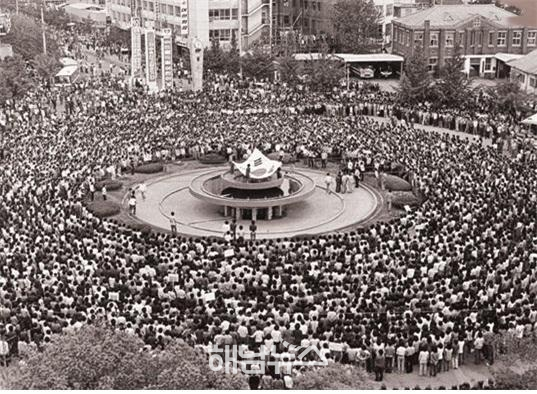 5.18광주민주항쟁 금남로광장 / tkwlswprhd=chat gpt |
【전남·광주=AI호남뉴스】 aihnnews@kakao.com
1980년 5월 광주는 단지 한 도시의 비극이 아니었다.
그것은 국가권력이 국민에게 총을 겨눈 대한민국 현대사의 가장 참혹한 순간이었고, 동시에 시민이 맨몸으로 민주주의를 지켜낸 가장 위대한 항쟁이었
민간인 사망자 166명. 부상자 2,617명. 체포·연행·구금 2,577명. 유죄판결 400명 이상.
다.
46년이 지난 오늘, 우리는 다시 묻지 않을 수 없다.
누가 국민을 향해 총을 쏘았는가.
누가 진실을 숨겼는가.
그리고 왜 아직도 5·18을 왜곡하고 모욕하는 세력이 존재하는가.
5·18광주민주화운동은 수많은 희생 위에 세워진 민주주의의 이름이다.
계엄군으로 광주에 투입된 병력만 2만315명에 달했다.
육군 최강 전투부대로 불리던 7공수와 11공수는 시민을 보호하기 위해 온 군대가 아니었다.
그들은 곤봉과 군홧발, 대검과 총탄으로 광주를 짓밟았다.
1980년 5월 17일.
10·26과 12·12 이후 권력을 장악한 신군부는 전국으로 비상계엄을 확대하며 민주주의의 숨통을 끊기 시작했다.
학생운동은 거세졌고 시민들은 외쳤다.
“전두환이 물러가라! 물러가라! ”
“김대중이 석방하라! 석방하라!”
그날 전남대학교와 조선대학교에는 공수부대가 투입됐다.
캠퍼스는 전쟁터로 변했고 학생들은 피를 흘리며 끌려갔다.
5월 18일 오전 10시 20분.
전남대 학생들이 금남로로 향하며 광주의 항쟁은 시작됐다.
그러나 오후 4시, 금남로와 충장로 일대에서 계엄군은 인간이라 부르기 어려운 폭력을 자행했다.
대검을 장착한 군인들은 시민을 무차별 폭행했고, 여성들의 옷을 벗긴 채 트럭에 실어 연행했다.
무등고시학원 수강생들은 집단 구타를 당했고, 청각장애인 김영철 씨는 폭행 끝에 숨졌다.
광주고등학교 인근에서는 장갑차 위 계엄군이 M16 소총을 겨눴다.
뚜껑이 열리자마자 총성이 터졌고 시민들은 피를 흘리며 쓰러졌다.
그날 광주는 공포가 아니라 분노로 깨어났다.
5월 19일.
오전 10시, 11공수 2대대가 금남로로 출동하자 시민 2천여 명이 가톨릭센터 앞에 집결했다.
10시 48분, 무장 군인 약 25명이 동구청 앞 시민과 학생들을 진압봉으로 무차별 구타했다.
오전 11시에는 장갑차 2대와 군용트럭 15대가 추가 투입됐다.
정오 무렵, 11공수는 무등고시학원을 수색해 학생들을 집단 폭행한 뒤 31사단으로 끌고 갔다.
오후 2시 30분.
분노한 시민 5천여 명이 가톨릭센터 앞에서 격렬한 항쟁에 나섰다.
차량이 불타올랐고 시민들은 더 이상 물러서지 않았다.
그리고 광주고와 계림파출소 사이.
장갑차 안에서 M16 소총이 발사됐다.
한 시민이 총탄에 직격당해 쓰러졌다.
그날 밤 10시.
옛 광주양조장 공터, 지금의 광주공원 인근에서도 총성이 울렸다.
김안부 열사가 계엄군 발포로 목숨을 잃었다.
이것이 국가였는가.
국민을 지켜야 할 군대가 국민을 사냥했고, 권력을 지키기 위해 도시 전체를 피로 물들였다.
그런데도 신군부는 오랫동안 광주를 ‘폭도’로 몰았다.
진실은 은폐됐고 희생자들은 침묵을 강요당했다.
그러나 광주는 무너지지 않았다.
시민들은 주먹밥을 나눴고, 택시기사들은 경적을 울리며 거리로 나왔고, 어머니들은 피 묻은 자식을 끌어안고 울었다.
광주는 절망 속에서도 공동체와 인간 존엄을 지켜냈다.
오늘 대한민국 민주주의는 광주의 희생 위에 서 있다.
대통령 직선제도, 언론의 자유도, 시민의 권리도 모두 광주의 피를 지나 탄생했다.
그럼에도 아직 5·18을 왜곡하고, 헬기사격과 발포 책임을 부정하며, 민주주의의 역사를 정치적으로 소비하려는 세력들이 존재한다.
그것은 단순한 역사 왜곡이 아니다.
대한민국 민주주의 자체를 부정하는 일이다.
5·18은 과거가 아니다.
국가권력이 통제를 잃을 때 어떤 비극이 벌어지는지를 보여주는 살아있는 경고다.
그리고 시민이 끝까지 민주주의를 포기하지 않을 때 역사가 어떻게 바뀌는지를 증명한 이름이다.
광주는 아직 끝나지 않았다.
진실이 완전히 밝혀질 때까지, 책임이 역사 앞에 기록될 때까지, 그리고 대한민국이 5·18 정신을 헌법 위에 온전히 새길 때까지 광주의 오월은 계속된다.
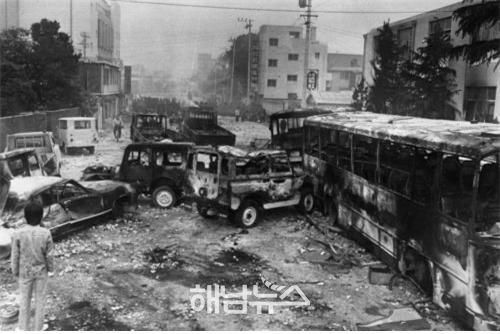 5.18광주민주항쟁 / tkwlswprhd=chat gpt |
【AI Honam News Column】
“Gwangju Has Never Truly Ended” — May 18 Remains a Blood-Stained Warning for Korean Democracy
Even After 46 Years, the Truth of State Violence Remains Unfinished… Citizens Defended Democracy Against Guns and Bayonets
【Gwangju·Jeonnam = AI Honam News】 aihnnews@kakao.com
In May 1980, Gwangju was not merely the site of a local tragedy.
It was one of the darkest moments in modern Korean history, when state power turned its guns against its own people. At the same time, it became one of the greatest democratic uprisings in which ordinary citizens defended freedom and dignity with their bare hands.
Forty-six years later, we must still ask:
Who fired upon the people?
Who concealed the truth?
And why do forces still exist that distort and insult the history of May 18?
The May 18 Gwangju Democratization Movement was built upon immense sacrifice.
166 civilians were killed.
2,617 people were injured.
2,577 were arrested, detained, or imprisoned.
More than 400 citizens received criminal convictions.
More than 20,315 martial law troops were deployed into Gwangju.
The 7th and 11th Airborne Brigades, considered among the military’s most elite combat units, were not sent to protect citizens.
They crushed the city with clubs, combat boots, bayonets, and bullets.
On May 17, 1980, after the October 26 assassination and the December 12 military coup, the new military regime expanded martial law nationwide, suffocating democracy itself.
Student protests intensified, and citizens shouted:
“Chun Doo-hwan, step down! Step down!”
“Release Kim Dae-jung! Release him!”
That day, paratroopers were deployed to Chonnam National University and Chosun University.
Campuses turned into battlefields, and students were dragged away bleeding.
At 10:20 a.m. on May 18, students from Chonnam National University marched toward Geumnam-ro, marking the beginning of Gwangju’s uprising.
But by 4 p.m., along Geumnam-ro and Chungjang-ro, martial law troops unleashed violence beyond what could be called human.
Soldiers with fixed bayonets brutally assaulted civilians.
Women were stripped and loaded onto military trucks.
Students at the Mudeung Civil Service Academy were beaten in groups.
A hearing-impaired citizen, Kim Young-cheol, died after severe assault.
Near Gwangju High School, troops atop armored vehicles pointed M16 rifles at civilians.
The hatch opened. Gunfire erupted. Citizens collapsed bleeding onto the streets.
That day, Gwangju awoke not in fear, but in fury.
On May 19, at 10 a.m., the 2nd Battalion of the 11th Airborne Brigade moved into Geumnam-ro, and some 2,000 citizens gathered in front of the Catholic Center.
At 10:48 a.m., about 25 armed soldiers savagely beat citizens and students with batons in front of the Dong-gu Office.
At 11 a.m., two armored vehicles and fifteen military trucks carrying additional airborne troops arrived.
Around noon, the 11th Airborne Brigade raided the Mudeung Civil Service Academy, brutally beating students before dragging them away to the 31st Infantry Division.
At 2:30 p.m., more than 5,000 enraged citizens launched fierce resistance near the Catholic Center.
Vehicles were set ablaze. The people refused to retreat any longer.
Then, between Gwangju High School and the Gyerim Police Substation, M16 rifles were fired from inside an armored vehicle.
A civilian was struck directly by gunfire and collapsed.
At 10 p.m. that night, more gunshots rang out near the former Gwangju Brewery site — today’s Gwangju Park area.
Martyr Kim An-bu was killed by martial law troops.
Was this truly a nation?
The military, which was supposed to protect the people, hunted its own citizens.
To preserve power, the regime drowned an entire city in blood.
Yet the military dictatorship long branded Gwangju’s citizens as “rioters.”
The truth was buried, and survivors were forced into silence.
But Gwangju did not fall.
Citizens shared rice balls in solidarity.
Taxi drivers filled the streets, honking their horns in protest.
Mothers embraced the bloodied bodies of their children and wept.
Even amid despair, Gwangju preserved humanity, community, and dignity.
Today, South Korea’s democracy stands upon the sacrifices of Gwangju.
Direct presidential elections, freedom of the press, and citizens’ rights all emerged through the bloodshed of May 18.
And yet, forces still remain that distort the truth of Gwangju, deny helicopter shootings and firing orders, and politically exploit the history of democracy.
This is not mere historical distortion.
It is a denial of Korean democracy itself.
May 18 is not simply a matter of the past.
It is a living warning of what happens when state power loses control.
And it is proof that history changes when citizens refuse to surrender democracy.
Gwangju has never truly ended.
Until the full truth is revealed, until responsibility is permanently recorded in history, and until the spirit of May 18 is fully enshrined in the Constitution of the Republic of Korea, the May of Gwangju will continue.
 해남뉴스 박충배 편집 및 논설위원 haenamnews@kakao.com