2026.05.12 (화) 20:20




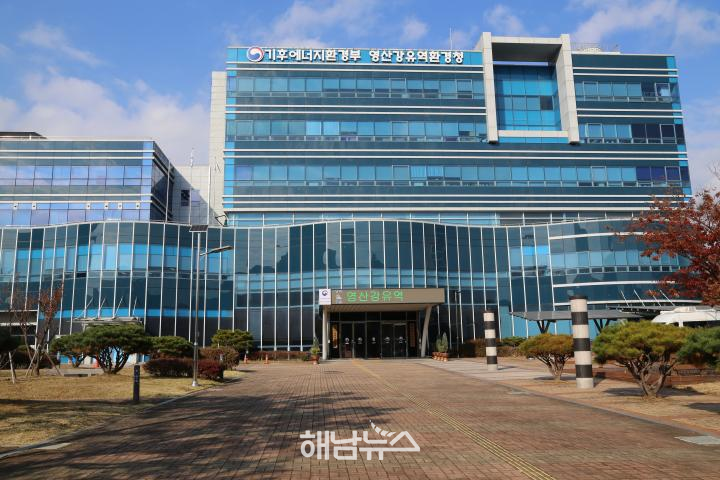 영산강청 전경 / 사진제공=영산강청 |
기후위기로 인해 녹조 발생이 매년 상시화되는 가운데, 영산강유역환경청이 보다 선제적이고 체계적인 녹조 대응체계 구축에 본격 나선다.
영산강유역환경청(청장 김영민)은 ‘2026년 조류경보제 실행계획’을 확정하고, 관계기관 공동 대응체계인 ‘조류경보제 관계기관 합동 추진단’을 구성해 오는 5월 12일 첫 회의를 개최한다고 밝혔다.
이번 추진단은 기존의 사후 대응 중심 관리에서 벗어나, 녹조 발생 이전 단계부터 오염원을 차단하는 예방적 관리체계로 전환하는 데 초점이 맞춰져 있다.
영산강과 섬진강 수계의 근본적인 수질 개선과 안정적인 상수원 보호를 위한 범정부·지자체 협력 플랫폼 역할도 수행하게 된다.
추진단은 김영민 영산강유역환경청장을 단장으로 광주광역시·전라남도·전라북도 등 지방자치단체와 한국수자원공사, 한국농어촌공사, 수질 분야 민간 전문가 등이 참여한다.
이들은 녹조 발생 현황을 실시간 공유하고, 기관별로 분산돼 있던 오염원 관리 체계를 통합 점검하는 한편, 현장 대응력을 강화하는 구심점 역할을 맡게 된다.
특히 이날 첫 회의에서는 지역 핵심 상수원인 주암호와 영산강 상류 보 구간 등 ‘녹조 중점관리지역’에 대한 집중 대응 방안이 중점 논의될 예정이다.
영산강유역환경청에 따르면 지난해 주암호에서는 지난 2011년 이후 14년 만에 조류경보 ‘관심 단계’가 28일간 발령됐다.
또 영산강은 담양·장성·광주·나주호 등 상류 4대 농업용댐(총 저수량 3억1천만톤)과 승촌보·죽산보 등 하천 구조물 영향으로 유속이 느려 녹조 발생 가능성이 높은 구조적 특성을 갖고 있다.
여기에 집중호우 이후 상류 오염물질 유입, 높은 수온, 물 흐름 정체 등이 복합적으로 작용하면서 녹조 확산 위험이 커지고 있다는 분석이다.
이에 따라 추진단은 사전 예방 중심의 대응 전략으로 ▲상수원 관리지역 내 무단 점유·경작 등 불법행위 예방 ▲하천 인근 야적퇴비 전수조사 및 수거 ▲오염물질 배출시설 관리 강화 ▲드론과 시민감시단을 활용한 사각지대 오염원 감시 등을 추진하기로 했다.
또 녹조 발생 시에는 ▲조류대응 상황실 운영 ▲조류경보 신속 발령 ▲댐·보·하굿둑 연계운영을 통한 환경대응용수 적기 활용 ▲녹조 제거장비 및 제거물질 즉시 투입 등 현장 대응체계도 강화할 방침이다.
특히 영산강청은 주암호와 영산강 상류 등 주요 상수원 지역에서 활동 중인 명예환경감시원 등 114명을 ‘녹조 시민감시단’으로 위촉해 현장 중심 감시체계를 운영할 계획이다.
시민감시단의 제보를 바탕으로 녹조 우심지역에 대해서는 관계기관 합동 원인 분석과 맞춤형 대책 수립도 병행한다.
김영민 영산강유역환경청장은 “이번 추진단 출범을 계기로 모든 유관기관의 역량을 결집해 영산강과 섬진강이 녹조 걱정 없이 건강하게 흐를 수 있도록 최선을 다하겠다.”고 밝혔다.
【Yeongsan River Basin Environmental Office = AI Honam News】 aihnnews@kakao.com
“From Reactive Response to Preventive Action Against Algal Blooms”
Yeongsan River Basin Environmental Office Launches Joint Task Force for Algae Warning System
Focused Management of Juam Lake and Upper Yeongsan River… Drones and Citizen Monitoring Teams to Block Pollution at the Source
As harmful algal blooms become a year-round issue due to climate change, the Yeongsan River Basin Environmental Office is stepping up efforts to establish a more proactive and systematic response system.
The Yeongsan River Basin Environmental Office, headed by Commissioner Kim Young-min, announced that it has finalized the “2026 Algae Warning System Action Plan” and will launch a “Joint Task Force for the Algae Warning System,” with its first meeting scheduled for May 12.
The task force aims to shift away from the existing post-response management approach and instead focus on preventive management that blocks pollution sources before algal blooms occur.
It will also serve as a cooperative platform among the central government, local governments, and related agencies to fundamentally improve water quality and ensure stable protection of major water sources in the Yeongsan and Seomjin River basins.
Led by Commissioner Kim Young-min, the task force includes representatives from local governments such as Gwangju Metropolitan City, Jeollanam-do, and Jeollabuk-do, along with the Korea Water Resources Corporation (K-water), Korea Rural Community Corporation, and private-sector water quality experts.
Participants will share real-time information on algal bloom conditions, integrate pollution management systems that had previously been handled separately by different agencies, and strengthen on-site response capabilities.
At the first meeting, participants are expected to focus on intensive management measures for key algae-prone areas, including Juam Lake—an important regional drinking water source—and upstream weir sections of the Yeongsan River.
According to the Yeongsan River Basin Environmental Office, Juam Lake last year experienced a Level 1 “Attention” algae warning for 28 days, marking the first such warning in 14 years since 2011.
The Yeongsan River is structurally vulnerable to algal blooms due to slow water flow caused by four upstream agricultural dams—Damyang, Jangseong, Gwangju, and Naju reservoirs—with a combined storage capacity of 310 million tons, as well as river structures such as Seungchon Weir and Juksan Weir.
In addition, pollutants washed downstream after heavy rainfall, rising water temperatures, and stagnant flow conditions are creating an environment highly favorable for algal bloom outbreaks.
To address these issues, the task force plans to implement preventive measures including:
▲ preventing illegal occupation and farming activities within water source protection zones
▲ conducting full inspections and removal of stockpiled manure near rivers
▲ strengthening management of pollutant discharge facilities
▲ monitoring blind spots using drones and citizen monitoring teams
The task force also plans to strengthen rapid response measures during algal bloom events through:
▲ operation of an algae response situation room
▲ rapid issuance of algae warnings
▲ timely use of environmental response water through coordinated dam-weir-estuary operations
▲ immediate deployment of algae removal equipment and treatment materials
In particular, the Environmental Office plans to appoint 114 honorary environmental monitors currently active around major water sources, including Juam Lake and the upper Yeongsan River, as members of a “Citizen Algae Monitoring Team” to enhance field-based monitoring.
Based on reports from these citizen monitors, the task force will conduct joint investigations into the causes of algae outbreaks and establish customized countermeasures for high-risk areas.
Commissioner Kim Young-min stated, “With the launch of this task force, we will bring together the capabilities of all related organizations to ensure that the Yeongsan and Seomjin Rivers can flow healthily without concerns over harmful algal blooms.”
 해남뉴스 박충배 편집 및 논설위원 haenamnews@kakao.com