2026.03.07 (토) 11:31




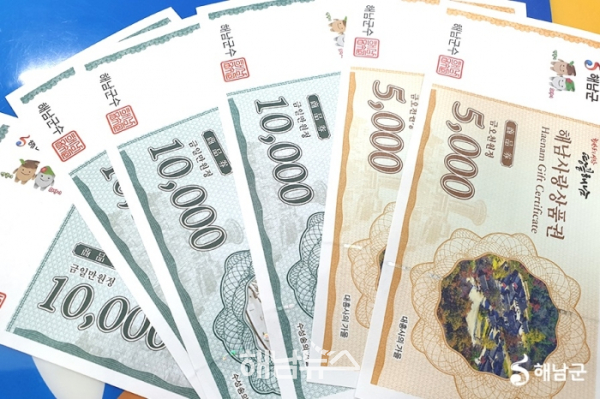 해남군 지역사랑 상품권 / 사진제공=해남뉴스 |
박충배 편집‧칼럼‧논설
〖사설〗
정부가 역대급 규모라는 지역사랑상품권 예산 1조 1,500억 원을 확보했다고 대대적으로 홍보하고 있다.
해남군도 이에 발맞춰 “군민 혜택 확대, 지역경제 활성화”라는 장밋빛 구호를 반복한다.
그러나 정작 군민들이 체감하는 현실은 ‘빛 좋은 개살구’에 불과하다.
■ 1. “월 70만 원 지급? 15% 할인?”
카드가 안 되는 재래시장에 무슨 소용인가.
지역사랑상품권은 월 70만 원 한도, 15% 할인이라는 언뜻 파격적인 조건을 내세운다.
그러나 실제 해남의 주요 소비지인 전통시장·농자재점·식자재점·소규모 상점에는 카드 단말기가 없다.
정부는 사용처 확대라며 규제를 풀었다고 자랑하지만, 카드 결제 기반이 없는 곳에 카드형 상품권을 쓴들 무슨 의미가 있는가.
70만 원 중 50만 원은 카드형 상품권, 20만 원만 종이상품권, 결과적으로 시장 이용이 많은 군민들은 종이상품권만 신청할 수밖에 없는 기형적 구조가 만들어졌다.
정책의 취지가 “지역경제 활성화”라면서 정작 지역 상권의 절반 이상을 차지하는 재래시장은 정책 설계에서 배제된 셈이다.
■ 2. “하나로마트·다이소·주유소·농자재점”
매출 30억 규제가 지역경제의 목을 조른다.
해남 군민들이 가장 많이 찾는 소비처는 다음과 같다.
하나로마트, 다이소, 농자재 판매점, 주유소, 건축자재 상점 등인데 그러나 이들 대부분은 ‘연 매출 30억 원 제한’에 걸려 카드형 지역화폐 사용이 불가하다.
군민들은 묻는다.
“지역화폐를 왜 발급했습니까? 쓸 수가 없는데요.”
“지역 상권 살리겠다면서 실제 상권이 다 제외돼 있습니다.”
정책의 목표는 지역 상권 활성화라면서, 실제 지역경제의 실질 기반이 되는 업종은 줄줄이 배제하는 정책적 모순이 심각하다.
■ 3. 종이상품권 축소?
행안부는 전국 전통시장을 외면하고 있다.
행안부는 디지털 전환이라는 명분을 내세워 종이상품권 비중을 대폭 줄였다.
그러나 전국 226개 지자체 중 70% 이상은 전통시장 비중이 압도적이며, 특히 해남 같은 농촌 지역은 실물 상품권 수요가 절대적이다.
카드형 전환은 도시 지역에서는 의미가 있을지 모르나 농촌·어촌·전통시장 중심의 지역에서는 실질적 피해만 양산한다.
종이상품권이 불편한 것이 아니라, 카드형 제도만 강요하는 정부가 현실과 동떨어진 것이다.
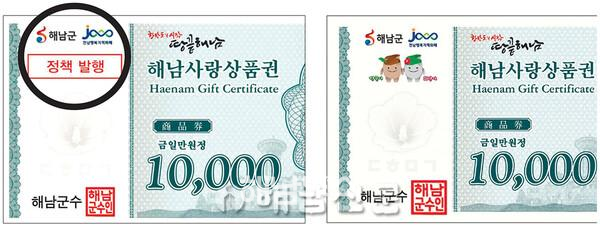 해남군 지역사랑 상품권 / 사진제공=해남뉴스 |
■ 4. ‘지역을 살린다.’는 구호
정작 지역은 망가지고, 군민은 불편해지고 있다.
정부는 성과를 자랑하고, 지자체는 예산 확보를 치적처럼 홍보한다.
그러나 군민들은 말한다.
“지역화폐가 지역을 살린다는 말은 이제 믿지 않는다.”
“현실과 동떨어진 정책 때문에 오히려 불편만 늘었다.”
“행정은 책상에서 만들고, 고통은 군민이 떠안는다.”
지역화폐는 지역경제를 살리기 위한 것이지 지자체의 홍보용 숫자를 채우는 장식품이 아니다.
■ 5. 해남군은 더 이상 정부 눈치 보지 말라
군민이 불편하다고 말하면, 그것이 ‘정답’이다.
해남군은 다음 두 가지에 즉시 나서야 한다.
① 매출 30억 제한 완화·업종 확대 요구
정부가 현장 실태를 모른다면 지자체가 강력하게 요구해야 한다.
지역경제 구조가 도시와 농촌이 다른데 서울 기준의 규제를 그대로 가져오니 정책이 작동할 리 없다.
② 종이상품권 비중 확대 및 탄력적 운영
전통시장 중심 지역에는 종이상품권 비율을 더 높여야 한다.
디지털 전환이 목적이라면 전통시장에 단말기 지원을 먼저 했어야 한다.
현장을 고려하지 않은 정책은 정책이 아니라 폐해다.
■ 결론
지역화폐 1조 1500억, 군민에게는 “사용 불가한 예산”.
해남군은 더 이상 변명의 여지가 없다.
정부도 지자체도 더 이상 책임을 회피해서는 안 된다.
예산을 얼마나 확보했는지가 중요한 것이 아니라, 군민이 실제로 사용할 수 있느냐가 지역정책의 기준이 되어야 한다.
지금의 지역사랑상품권 제도는 취지도, 구조도, 실행도 모두 실패한 전형적 탁상행정의 표본이다.
정부는 규제를 즉각 재검토하고, 지자체는 군민 불편을 해결할 세밀한 기준 완화와 종이상품권 체계 복원에 나서야 한다.
그렇지 않다면, 지역화폐는 지역경제를 살리기는커녕 군민의 신뢰를 잃고 지역정책 전체를 무너뜨리는 ‘또 하나의 실패한 제도’가 될 것이다.
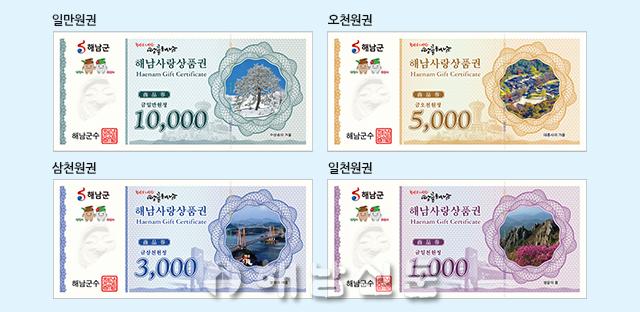 |
[Haenam = Haenam News] haenamnews@kakao.com
By Park Choong-bae, Editorial Writer / Columnist
〖Editorial〗
“1.15 Trillion Won for Local Currency? For Haenam Residents, It’s Nothing but an Empty Promise — The Government and Local Authorities Have Lost Touch with Reality”
— A tangled mess of paper vouchers, restricted merchants, and revenue caps… Far from revitalizing the local economy, the policy only increases inconvenience —
The government proudly announces that it has secured a record-breaking 1.15 trillion won in funding for the Local Love Gift Certificate program.
Haenam County echoes this, repeating bright slogans such as “expanded benefits for residents” and “revitalizing the local economy.”
But what residents actually experience tells a completely different story—
it is nothing more than a “glorified mirage.”
■ 1. “A monthly limit of 700,000 won? A 15% discount?”
What use is any of this when traditional markets cannot accept card payments?
The government advertises seemingly generous terms:
a monthly purchase limit of 700,000 won with a 15% discount.
Yet in reality, the primary shopping venues for Haenam residents—traditional markets, agricultural supply stores, food material shops, and small local stores—lack card terminals altogether.
The government boasts of “expanding eligible businesses,”
but what good is a card-based voucher system when the very places people shop cannot process card payments?
Of the 700,000 won monthly limit:
500,000 won is issued as card-type vouchers
Only 200,000 won is issued as paper vouchers
As a result, residents who rely heavily on traditional markets have no choice but to request only paper vouchers, creating a distorted and impractical system.
Though the policy claims to “revitalize the local economy,”
more than half of the real local economy—traditional markets—is excluded from its design.
■ 2. “Hanaro Mart, Daiso, gas stations, agricultural supply shops”
The 3-billion-won annual revenue cap chokes the real local economy
Haenam residents frequently shop at:
Hanaro Mart
Daiso
Agricultural and livestock supply stores
Gas stations
Construction materials shops
Yet most of these are excluded due to the 30-billion-won annual revenue cap, making card-type local currency unusable.
Residents are asking:
“Why issue local currency at all if we cannot use it?”
“You say it's to support local businesses, yet nearly all of the key businesses are excluded.”
A policy meant to strengthen the local economy is instead crippling the very businesses that form its backbone.
■ 3. The reduction of paper vouchers
The Ministry of the Interior and Safety is turning its back on traditional markets
The ministry, under the banner of “digital transition,” has sharply reduced the share of paper vouchers.
But more than 70% of Korea’s 226 municipalities are dominated by traditional markets.
In rural regions like Haenam, paper vouchers remain essential.
Card-based systems may work in metropolitan areas—but in rural, coastal, and traditional-market-centered economies, they create direct harm.
The problem is not paper vouchers.
The problem is a government that forces card-type systems onto communities that cannot support them.
■ 4. The slogan “revitalize the region”
In reality, the region weakens and residents suffer
The government boasts of its accomplishments, and local governments tout their budget achievements.
But residents say:
“We no longer believe local currency will revitalize anything.”
“Policies detached from reality only make our lives harder.”
“Policies crafted behind desks cause suffering borne only by residents.”
Local currency exists to serve the local economy,
not to inflate the political achievements of local officials.
■ 5. Haenam County must stop deferring to the central government
When residents say they are inconvenienced, that is the only truth that matters
Haenam must act on two fronts immediately:
① Demand the relaxation of the 3-billion-won revenue cap and expand eligible businesses
If the central government does not understand the reality on the ground,
the local government must strongly insist on change.
The economic structures of rural counties differ drastically from those of Seoul.
Policies designed for cities cannot ever function in places like Haenam.
② Increase the proportion of paper vouchers and operate the system flexibly
Regions reliant on traditional markets require more paper vouchers.
If digitalization was the goal, installing card terminals in traditional markets should have come first.
A policy detached from reality is not a policy—
it is a burden.
■ Conclusion
1.15 trillion won in local currency is nothing but “unusable money” for Haenam residents
Haenam County has no more excuses
Both the central and local governments must stop avoiding responsibility.
The critical question is not how much budget was secured,
but whether residents can actually use the system.
The current Local Love Gift Certificate program is a textbook example of policy failure—
failed in purpose, failed in design, and failed in execution.
Unless the government revises its regulations immediately
and local authorities restore a practical paper-voucher system with expanded flexibility,
local currency will not revive the economy—
it will become yet another failed policy that erodes residents’ trust and undermines local governance.
 해남뉴스 박충배 편집 및 논설위원 haenamnews@kakao.com