2026.03.18 (수) 10:28




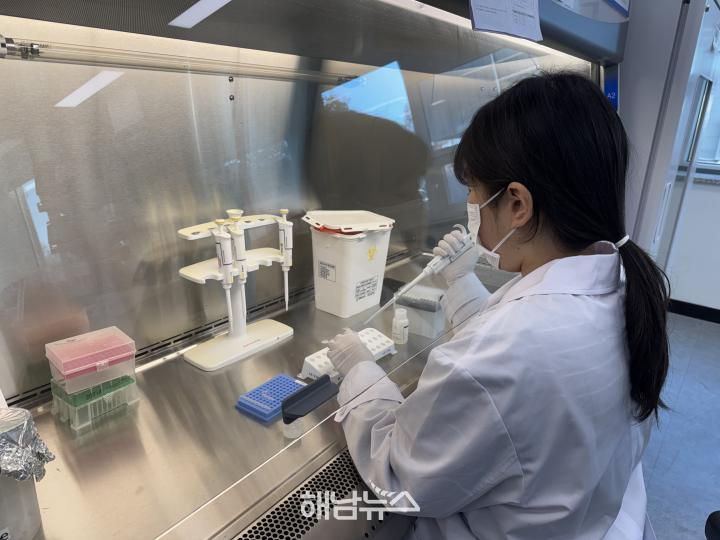 하수 유입수 병원체 바이러스 검사 / 사진제공=전라남도 |
박충배 편집/칼럼/논설
전라남도보건환경연구원(원장 안양준)은 2024년 하수 기반 감염병 감시 결과, 도내 11개 하수처리장 유입수에서 인플루엔자A 바이러스가 지속 검출되고 있다고 10일 밝혔다.
이는 전남 지역에서 인플루엔자 바이러스의 조기 확산 가능성이 높은 것으로 평가된다.
하수 기반 감염병 감시체계는 질병관리청과 지자체가 공동으로 수행하는 공중보건 감시 프로그램으로, 생활하수 내 바이러스 농도를 분석해 지역사회 감염병 발생 추세를 선제적으로 파악하는 기법이다.
인플루엔자와 코로나19, 노로바이러스 등 주요 병원체가 대상이며, 하수는 지역 단위의 감염 수준을 반영하는 ‘비식별 집단지표’로 활용된다.
전남보환연에 따르면 인플루엔자A는 올해 37주차(9월 8일)부터 검출되기 시작했으며, 이는 전년도 대비 약 두 달 빠른 시점으로 확인된다.
특히 최근 6주간의 감염병 표본감시 결과, 인플루엔자 바이러스 검출률이 동일 절기 대비 43.6% 증가한 것으로 분석돼 조기 유행 가능성이 더욱 높아지고 있다.
연구원은 이번 결과가 전남 지역의 인플루엔자 발생 위험이 실질적으로 상승했음을 의미한다고 설명했다.
하수 내 바이러스 농도 증가는 학교·직장 내 집단감염 발생 가능성, 지역사회 전파력 증가, 고위험군 건강위험 상승 등의 지표로 해석되기 때문이다.
김진영 전남보환연 감염병조사2과장은 “하수 내 바이러스 농도 증가는 지역사회 실제 감염 증가와 매우 높은 상관성을 보인다”며 “예방접종 참여율을 높이고, 마스크 착용·손씻기·기침예절 등 기본 방역수칙 준수가 반드시 필요하다”고 강조했다.
또한 그는 고열, 기침, 인후통 등 인플루엔자 의심 증상이 나타나면 지체 없이 의료기관을 방문해 신속항원검사 또는 PCR검사를 받을 것을 권고했다.
전남보환연은 향후에도 생활하수 기반 감시를 지속 확대해 감염병 유행 조기 탐지와 지자체 간 신속 대응 체계를 강화할 계획이다.
<>
[Jeonnam = Haenam News] haenamnews@kakao.com
By Park Chung-bae, Editorial Writer / Columnist
**Jeonnam Institute for Health & Environment Reports “Persistent Detection of Influenza in Municipal Wastewater”
Early Community Spread Signals Identified, Stronger Preventive Measures Urged**
The Jeonnam Institute for Health and Environment (Director Ahn Yang-jun) announced on the 10th that influenza A virus continues to be detected in influent wastewater samples from 11 wastewater treatment plants across the province, based on its 2024 wastewater-based infectious disease surveillance results.
This trend is being interpreted as a sign of potential early influenza transmission within local communities in Jeollanam-do.
The wastewater-based infectious disease surveillance system is a public health monitoring program jointly operated by the Korea Disease Control and Prevention Agency (KDCA) and local governments.
The system analyzes viral concentrations in municipal wastewater to detect and forecast infection trends in the community at an early stage.
Target pathogens include influenza, COVID-19, norovirus, and other major viruses. Wastewater signals serve as a non-identifiable, population-level indicator that reflects overall community infection levels.
According to the Jeonnam Institute for Health and Environment, influenza A virus began appearing in samples starting in Epidemiological Week 37 (September 8)—approximately two months earlier than the previous year.
In addition, infectious disease sentinel surveillance over the past six weeks shows that influenza virus detection rates have risen by 43.6% compared to the same period in the previous season, further strengthening concerns about early community spread.
The institute explained that the findings indicate a significant increase in influenza transmission risk across Jeollanam-do.
Rising viral concentration in wastewater is typically associated with
● increased likelihood of outbreaks in schools and workplaces,
● higher community transmission potential, and
● elevated health risks among vulnerable populations.
Kim Jin-young, Head of Infectious Disease Surveillance Division 2 at the Jeonnam Institute for Health and Environment, stated:
“An increase in viral load in wastewater is highly correlated with actual community-level infections.
Improving influenza vaccination coverage, wearing masks, practicing handwashing, and observing cough etiquette are essential preventive behaviors.”
He further advised individuals exhibiting symptoms such as high fever, cough, or sore throat to visit a medical institution promptly to receive a rapid antigen test or PCR test.
The Jeonnam Institute for Health and Environment plans to continue expanding its wastewater surveillance program to enhance early detection of infectious disease outbreaks and strengthen rapid response coordination with local governments.
 해남뉴스 박충배 편집 및 논설위원 haenamnews@kakao.com