2026.09.23 (수) 19:46




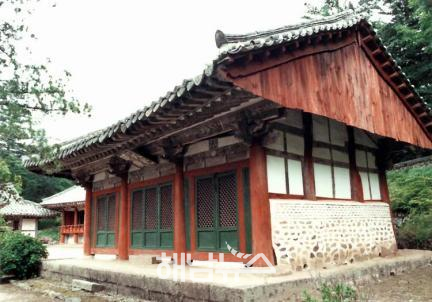 대흥사 대광명전 / 사진제공=해남뉴스 |
박충배 편집‧칼럼‧논설
Ⅰ. 서론 — 전각 하나에 스민 두 거장의 마음
대흥사 동국선원 뒤편, 숲을 가르며 낮게 앉은 대광명전(大光明殿). 1982년 10월 15일 전남 지방유형문화재 제94호로 지정된 이 전각은 겉으로는 평범해 보이지만,
그 탄생 배경을 들여다보면 조선 후기의 지성 두 사람—초의선사(草衣, 1786~1866)와 추사 김정희(秋史, 1786~1856)—의 깊고 간절한 우정이 고스란히 배어 있다.
대광명전 현판은 초의 스님의 친필로 전해지며, 이는 단순한 ‘현판의 글씨’가 아니라 한 친구를 향한 기원과 염원의 선언문이었다.
초의는 친구 추사가 제주 유배에서 무사히 돌아오기를 기도하며 이 전각을 발원했고, 그 마음은 지금도 목재에 스며 전각의 숨결이 되어 남아 있다.
Ⅱ. 초의와 추사 — 우정은 차향처럼 깊어지고
두 사람은 같은 1786년생, 같은 시대의 지성, 그리고 같은 외로움을 공유한 ‘정신적 동지’였다.
특히 녹차는 두 사람을 이어준 상징이었다.
초의가 일구어낸 다선(茶禪)의 세계는 추사에게 정신적 안식이 되었고, 추사가 초의에게 보낸 글씨와 사유는 다시 그의 수행에 깊이를 더했다.
둘의 편지는 한 시대의 문인·선승 교유의 정점으로 평가되는데, 그 내용은 때로는 예리하고, 때로는 간절하며, 때로는 절절하다.
Ⅲ. “친구여, 그대가 있는 곳에 빛이 가라앉는 법은 없소”
아래는 두 사람의 실제 편지 문구를 바탕으로 재구성한, 그 시대의 정서와 사실이 살아 있는 한 편의 서한이다.
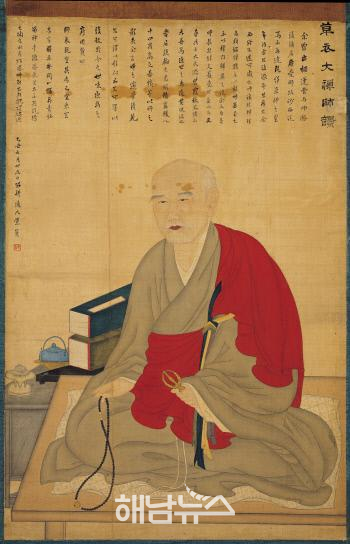 대흥사 제13대동사 초의 초상화 / 사진제공=해남뉴스 |
■ 초의 → 추사에게
“바람은 여전히 차갑고 산속의 길은 더 깊어졌습니다.
그러나 그대가 제주에서 겪는 외로움과 어느 것이 더 깊겠습니까.
매일 새벽 차를 달일 때마다
내 마음은 저 남쪽 바다를 향해 불립니다.
물이 끓는 소리 속에서 그대의 숨결을 듣고,
찻물 맑아지는 순간 그대의 마음도 맑아지기를 기원합니다.
벗이여, 부디 병환이 가벼워지시길.
그대의 무사 귀환을 위한 작은 전각 하나 지어 올리니
그 이름을 ‘대광명(大光明)’이라 했습니다.
그대의 걸음이 다시 북으로 향할 때,
그 길을 밝히는 빛이 되기를 바라면서.”
— 초의, 제주 귀향 중의 추사에게
■ 추사 → 초의에게
“그대의 차향이 아니었다면
이 황량한 섬에서 나는 벌써 마음을 잃었을 것이오.
초의여, 그대가 보내준 다엽을 뜯어 우려냈소.
한 잔을 들고 눈을 감으니
대흥사 솔바람이 코끝에 먼저 와 닿고
그대의 선한 눈빛이 찻물 위에 비치는 듯하오.
대광명전이라…
그대가 지었다 하니, 이 늙은 벗은 그 이름만으로도
천 길 낭떠러지에서 손을 붙잡힌 듯 정신을 차렸소.
내가 돌아가면,
그 전각 아래에서 그대와 함께 또 한 잔 차를 나누리다.”
— 추사, 제주 유배지에서
Ⅳ. 대광명전 — 기원이 전각이 되고 전각이 역사가 되다
초의 스님의 마음이 모여 지어진 대광명전은 단순한 불전이 아니다.
그 의미는 세 가지 층위로 더 깊어진다.
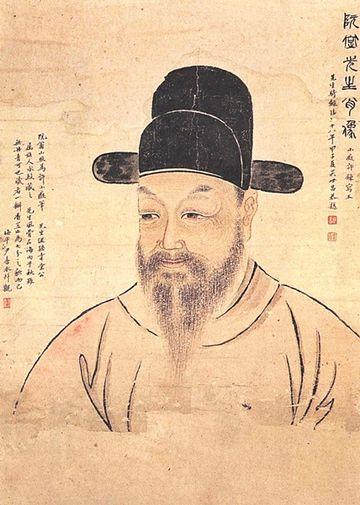 초의의 절친 추사 김정희의 초상 / 사진제공=해남뉴스 |
1. 우정의 전각
한 벗의 무사 귀환을 기원해 지어진 사례는 조선 불교사에서도 드물다.
전각의 이름마저 “지혜의 큰 빛”을 뜻하며 추사의 ‘다시 빛날 귀환’을 맺는다.
2. 문자의 전각
편액 글씨는 초의 스님의 필력으로, 추사의 서풍과 교류하며 완성된 남종문자향(南宗文字香)의 결정체다.
3. 차 문화의 전각
두 사람의 교유 핵심에는 ‘차’가 있었다.
대광명전은 단순한 수행 공간이 아니라 ‘차를 통한 수행과 교유’의 공간이기도 했다.
Ⅴ. 결론 — 전각은 말이 없지만, 그 안에 담긴 우정은 시대를 넘어 남는다
대광명전 앞에 서면, 전각은 조용하지만 그 안에는 두 사람의 대화가 아직도 살아 움직인다.
차향 속에서 서로를 위로하고, 글씨 속에서 서로를 격려하며, 전각 앞에서 서로의 안녕을 기원했던 두 지성의 마음이 오늘에도 남아 방문객의 걸음을 멈추게 한다.
초의와 추사가 남긴 것은 단지 편지와 글씨가 아니다.
그들은 우정이 얼마나 위대해질 수 있는가, 정신적 동반자가 한 삶을 어떤 빛으로 이끄는가를 보여주었다.
그 우정의 결실이 바로 대광명전이다.
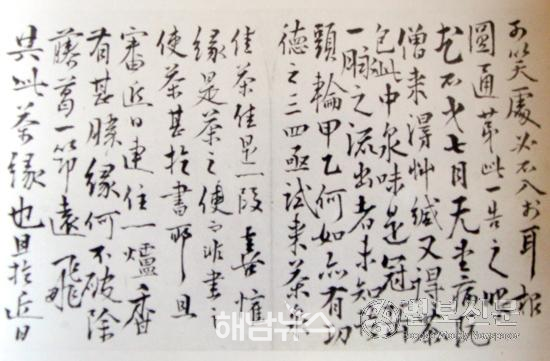 초의와 추사 김정희의 절절한 편지 / 사진제공=해남뉴스 |
[Haenam = Haenam News]
Edited & Column by Park Chung-bae
“A Cup of Tea Becomes a Hall, and a Hall Holds the Heart of an Era”
Revisiting the Story of Choui and Chusa Through Daegwangmyeongjeon,
Jeollanam-do Tangible Cultural Heritage No. 94 (Daeheungsa Temple)
Ⅰ. Prologue — A Hall Filled With the Hearts of Two Intellectual Giants
Behind the Dongguk Seonwon at Daeheungsa Temple rests a quietly seated building, its eaves brushing the forest air—Daegwangmyeongjeon (Hall of Great Radiance).
Designated on October 15, 1982, as Jeollanam-do Tangible Cultural Heritage No. 94, the hall may appear unassuming at first glance. Yet within its foundations lies the heartfelt story of two of late Joseon’s greatest minds:
Venerable Choui (1786–1866) and
Kim Jeong-hui, better known as Chusa (1786–1856).
The hall’s plaque is said to have been inscribed by Choui himself. It is more than a mere wooden sign—it is a written prayer, a declaration of earnest hope for a dear friend. Choui initiated the construction of Daegwangmyeongjeon while praying for Chusa’s safe return from exile on Jeju Island.
That devotion remains alive in the building’s breath even today.
Ⅱ. Choui and Chusa — A Friendship Deepened Like the Aroma of Tea
The two were born the same year, lived the same turbulent era, and shared similar loneliness as seekers of truth.
And above all, they were bound by tea—the symbol and medium of their spiritual friendship.
Choui’s development of Korea’s tea culture and his philosophy of “tea and Zen as one” offered Chusa solace during exile. Chusa’s letters and calligraphy, in turn, enriched Choui’s practice and artistic world.
Their correspondence is widely regarded as one of the highest peaks of monk–literati friendship in Joseon.
The letters are at times sharp, at times aching, and sometimes overwhelmingly sincere.
Ⅲ. Column — “My friend, darkness can never settle where you reside.”
The following reconstructed letters—based on surviving excerpts and the emotional truth of their correspondence—capture the voice, spirit, and longing of that era.
■ Choui → To Chusa
*“The wind remains cold, and the mountain paths grow deeper each day.
Yet none of this can compare to the solitude you must endure on Jeju.
Each dawn as I boil water for tea,
my heart is carried toward the southern sea.
In the sound of the bubbling water, I hear your breath;
in the moment the tea clears, I pray your mind clears with it.
My friend, may your illness grow lighter.
I have built a small hall to pray for your safe return,
and have named it ‘Daegwangmyeong’—Great Radiance.
When your steps once again lead northward,
may its light guide your way.”*
— Choui, writing to Chusa in exile on Jeju
■ Chusa → To Choui
*“Had it not been for the fragrance of your tea,
I would already have lost my spirit on this desolate island.
Choui, I brewed the leaves you sent.
As I lifted the cup and closed my eyes,
the pine winds of Daeheungsa touched my nose first,
and your gentle gaze shimmered on the surface of the tea.
A hall named Daegwangmyeong…
Knowing you built it,
this old friend feels as if he has been pulled back from the brink of a thousand-foot cliff.
When I return,
let us sit beneath that hall and share another cup together.”*
— Chusa, from his place of exile on Jeju
Ⅳ. Daegwangmyeongjeon — When a Prayer Becomes Architecture, and Architecture Becomes History
Daegwangmyeongjeon, born from the prayers of Venerable Choui, is far more than a Buddhist hall.
Its significance consists of three interwoven layers:
1. A Hall of Friendship
It is rare in Korean Buddhist history to find a hall built solely to pray for a friend’s safe return.
Its very name—Great Radiance—encapsulates Choui’s wish for Chusa’s renewed brilliance after hardship.
2. A Hall of Letters and Scholarship
The plaque, written in Choui’s assertive yet refined script, stands as a culmination of the literary, spiritual, and aesthetic dialogue between the two men.
3. A Hall of Tea
Tea was the core of their bond.
Thus, Daegwangmyeongjeon was not merely a place for monastic practice, but a symbolic space where tea, meditation, and friendship converged.
Ⅴ. Conclusion — The Hall Is Silent, Yet Inside It, Their Conversation Still Echoes
Standing before Daegwangmyeongjeon, one senses not stillness but a lingering dialogue.
The fragrance of tea, the quiet encouragement in their letters, the prayers uttered for each other—all remain suspended in the air, long after their lifetimes.
Choui and Chusa left behind much more than letters or calligraphy.
They showed how profound friendship can be,
and how a spiritual companion can illuminate the path of another life.
The lasting testament to that friendship is—
Daegwangmyeongjeon.
 해남뉴스 박충배 편집 및 논설위원 haenamnews@kakao.com