2026.09.23 (수) 19:46



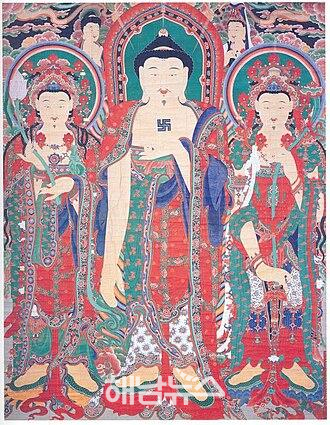 대흥사 성보박물관 소장 영산회상괘불탱 / 사진제공=해남뉴스 |
보물 제1552호
영산회상괘불탱(靈山會上掛佛幀)
지정일 : 2008년 3월 12일
시대 : 조선 후기(18세기 중엽 추정)
현황 : 국내 사찰 소장(대형 야외 의식용 불화)
1. 두륜산, 부처가 머물던 산의 이미지
해남 사람들은 오래전부터 두륜산을 ‘부처의 산’, ‘영적 기운이 맺히는 산’으로 여겨왔다.
두륜산 8봉이 연꽃잎처럼 둘러선 지세
산세가 바다를 향해 열리는 개방적 풍수
구름·바람이 사시사철 산사를 감싸는 독특한 기후
이런 자연적 조건은 불교의 화엄적 세계관과 자연스럽게 맞물렸고, 대흥사가 “남도의 화엄도량”으로 성장하는 기반이 되었다.
바로 이러한 지리적·종교적 세계관 위에서, 영산회상괘불탱은 영취산 설법 장면을 재현하며, 두륜산을 하나의 현세의 영취산(靈鷲山)으로 재해석하는 역할을 했다.
2. 대흥사, 괘불이 살아 숨 쉬는 의식의 도량
대흥사는 조선 후기 승려·화승(畵僧) 집단의 활동이 활발했던 곳으로, 대형 불화를 제작하고 보관·의식에 사용하는 전통이 깊었다.
■ 대흥사가 괘불의 중심지로 자리 잡은 이유
두륜산의 풍수 – 바다에서 육지로 들어오는 생기(生氣)의 통문
삼국~조선기로 이어진 불교 전통의 연속성
의식 중심 사찰로서의 기능(괘불의례·문도 수계식·방생의식 등)
남도 화승들의 교류 중심지
임진왜란 이후 선종·화엄종 융합의 중심지로 성장
따라서 영산회상괘불탱은 단순한 그림이 아니라, 대흥사의 종교적 위상을 시각적으로 규정하는 ‘상징물’이었다.
3. 영산회상괘불탱, 해남 불교문화의 집약체
■ (1) 두륜산–영취산의 영적 교감
괴불의 주제인 ‘영산회상’은 석가모니가 영취산에서 법화경을 설하는 장면이다.
그러나 해남에서는 이 영취산이 두륜산과 겹쳐 읽혔다.
즉, 괘불이 걸리는 순간 “두륜산이 곧 부처가 설법하는 영취산이 되었다.” 이는 자연·신앙·예술이 결합하여 만들어낸 지역적 상징성이다.
■ (2) 남도 화풍의 정수
해남·장흥·강진 일대는 조선 후기 불화승들이 활발히 활동한 지역이다.
보물 제1552호 괘불은 다음과 같은 남도 불화의 특징을 완벽히 보여준다.
선명한 붉은색과 짙푸른 녹청색의 대비, 유려하고 부드러운 선묘, 대형 화면에도 흐트러지지 않는 비례감, 석가의 이목구비·보살의 장식 표현이 정갈하고 화려함, 군중(팔부중·제자)의 표정 묘사가 사실적이며 생동감 있음.
이는 해남이 불교회화의 남도 중심지였음을 반증한다.
■ (3) 해남 공동체의 문화 자산
괘불은 단순히 사찰의 소유물이 아니다.
지역 공동체 전체가 참여하는 의식·축제·치유의 상징물이었다.
과거 해남에서는 가뭄 때 괘불을 모신 행렬(回向 행렬), 마을의 재난 극복을 비는 대동 의식, 농경 풍요를 기원하는 법회 등에서 괘불이 중심에 놓였다.
즉, 괘불은 종교를 넘어 지역의 집단 감정과 공동체 기억을 결속하는 매개체였다.
4. 대흥사의 또 다른 성보문화재와 맥락의 확장
해남 대흥사에는 보물·국보급 성보문화재가 집중되어 있다.
이들은 모두 서로 연결된 하나의 신앙지형(信仰地形)을 이룬다.
문화재 지정 특징 지역문화적 의미
- 보물 제320호 응진전 삼층석탑 :
통일신라 남해안 석탑 전통의 집약, 두륜산 산세와 조화된 ‘정중동’의 미학
- 보물 제1547호 금동관음보살좌상 :
고려 온화하고 정제된 남도 불상, 관음 신앙의 중심지였음을 증명
- 보물 제1959호 묘법연화경 목판 : 조선 국내 유일 갑인자본 법화경 대흥사가 법화 신앙의 도량임을 명확히 보여줌
- 보물 제88호 탑산사명 동종 : 고려 자명종 전설로 유명, 지역에 퍼진 불교적 기적·설화의 중심
이 문화재들은 단순한 유물이 아니라, 두륜산이라는 신앙 산맥(Spiritual Landscape) 위에 축적된, 시간의 층위(시간지층)를 보여준다.
그 정점에 위치한 것이 바로 영산회상괘불탱이다.
5. 해남–두륜산–대흥사, 그리고 괘불의 오늘
오늘날 보물 제1552호 영산회상괘불탱은 대흥사 성보박물관에 보존되어 있으며, 매년 특정 법회에서만 공개되는 의식적 존재를 유지하고 있다.
이는 괘불의 의미가 단순히 박물관적 전시품이 아니라 “해남과 두륜산이 간직한 신앙과 공동체 정신을 현대까지 이어주는 살아 있는 문화유산”임을 뜻한다.
해남의 문화 정체성 - 두륜산의 품, 대흥사의 깊이, 남도 불화의 전통은 - 이 괘불 한 점에 고스란히 응축되어 있다.
맺음말
영산회상괘불탱은 ‘그림’이 아니라 해남이 부처에게 드리는 천년의 응답이다.
해남은 늘 두륜산을 바라보고, 대흥사는 그 산 아래서 사람들의 마음을 길러왔다.
그리고 괘불은 그 모든 시간·지리·신앙을 한 폭의 장엄한 그림으로 응축해 지금까지 전해준다.
이 괘불을 펼치는 순간, 해남은 다시 영산회상(靈山會上)의 현장이 된다.
[Haenam = Haenam News] haenamnews@kakao.com
1. Dutasan, the Mountain Where the Buddha Resides
For generations, the people of Haenam have regarded Dutasan as “the Buddha’s mountain,” a sacred place where spiritual energy gathers.
Eight peaks embracing the valley like an open lotus
A landscape that opens toward the sea, inviting auspicious energy
A unique climate where clouds and wind constantly wrap around the temples
These natural conditions aligned perfectly with the Buddhist worldview of Avatamsaka (Hwaeom). They also formed the foundation for Daheungsa to flourish as the “Hwaeom sanctuary of the southern region.”
Within this geographical and spiritual worldview, the Yeongsan Hoesang Gwaebultang (Hanging Buddhist Painting of the Assembly on Vulture Peak) re-creates the Buddha’s sermon on Mount Grdhrakuta, transforming Dutasan itself into a living Vulture Peak in the minds of the local people.
2. Daheungsa, the Ritual Ground Where the Gwaebul Lives
Daheungsa was one of the most active centers for painter-monks during the late Joseon period. The temple possessed a long tradition of producing, preserving, and ritually enshrining monumental Buddhist paintings.
■ Why Daheungsa Became a Center of Gwaebul Culture
Dutasan’s geomantic power—an energetic gateway where vitality flows from the sea inland
A continuous Buddhist lineage from the Three Kingdoms era through Joseon
Its role as a ritual-oriented temple (Gwaebul ceremonies, ordination rituals, life-release rituals, and more)
A major meeting ground for southern painter-monks
Its development after the Imjin War as a center integrating Seon and Hwaeom traditions
Thus, the Yeongsan Hoesang Gwaebultang is far more than a painting—
it is a visual emblem defining Daheungsa’s religious authority and identity.
3. The Yeongsan Hoesang Gwaebul: A Cultural Convergence of Haenam Buddhism
(1) The Spiritual Resonance Between Dutasan and Vulture Peak
The theme of the Gwaebul, “The Assembly on Vulture Peak,” depicts Shakyamuni Buddha preaching the Lotus Sutra.
In Haenam, however, Vulture Peak and Dutasan became symbolically intertwined.
When the Gwaebul was hoisted during great ceremonies,
Dutasan itself was believed to transform into Vulture Peak, where the Buddha preached.
This reflects a uniquely regional symbolism shaped by nature, faith, and art.
(2) The Finest Expression of Southern Buddhist Painting
The Haenam–Jangheung–Gangjin region was a thriving center of Buddhist painters in the late Joseon era.
The Treasure No. 1552 Gwaebul demonstrates the hallmark features of Namdo (Southern) Buddhist painting:
Vivid contrast of bright reds and deep blue-green hues
Graceful, flowing linework
Perfect proportions maintained across an enormous canvas
Refined depiction of the Buddha’s features and ornate adornments of the bodhisattvas
Lively, expressive portrayals of the assembled beings (Eight Legions, disciples, etc.)
These qualities affirm Haenam’s status as a major center of Buddhist artistry.
(3) A Cultural Asset Shared by the Haenam Community
The Gwaebul was never merely a possession of a temple.
It served as a symbol of communal ritual, collective healing, and spiritual unity.
Historically in Haenam, the Gwaebul stood at the center of:
Hoehyang processions during severe droughts
Community-wide rites seeking protection from disasters
Ceremonies praying for agricultural abundance
Thus, the Gwaebul functioned as a cultural medium binding the emotional and spiritual life of the community far beyond religious boundaries.
4. Daheungsa’s Other Treasured Artifacts and Their Shared Cultural Landscape
Daheungsa in Haenam houses numerous national treasures and important cultural properties.
Collectively, they form an interconnected spiritual landscape rooted in Dutasan.
Cultural Property Era Characteristics Cultural Significance
Treasure No. 320 – Three-story Stone Pagoda at Unginjeon Unified Silla A distilled form of southern coastal pagoda tradition The aesthetics of balanced stillness reflecting Dutasan’s contours
Treasure No. 1547 – Gilt-bronze Seated Avalokiteshvara Goryeo Serene and refined southern sculpture Evidence of strong Avalokiteśvara devotion
Treasure No. 1959 – Lotus Sutra Woodblocks Joseon The only surviving Gapin-type woodblocks of the Lotus Sutra in Korea Proof of Daheungsa’s deep Lotus Sutra tradition
Treasure No. 88 – Tapsansa Bronze Bell Goryeo Famous for the “self-ringing bell” legend A focal point of regional Buddhist miracles and folklore
These artifacts are not isolated relics—they represent layers of time accumulated upon the spiritual massif of Dutasan.
At the pinnacle of this cultural formation stands the Yeongsan Hoesang Gwaebultang.
5. Haenam, Dutasan, Daheungsa—And the Living Gwaebul Today
Today, the Treasure No. 1552 Gwaebul is preserved at the Daheungsa Seongbo Museum and unveiled only during specific major rites.
Its significance therefore remains:
Not as a static museum object,
but as a living heritage connecting the faith and collective memory of Haenam to the present.
The cultural identity of Haenam—
the embrace of Dutasan, the spiritual depth of Daheungsa, and the long tradition of southern Buddhist art—
is condensed within this single monumental painting.
Conclusion
The Yeongsan Hoesang Gwaebul is not merely a painting—
it is Haenam’s thousand-year response to the Buddha.
Haenam has always looked to Dutasan,
and Daheungsa has long nurtured the hearts of its people at the mountain’s foot.
The Gwaebul gathers all these layers of time, geography, and faith into a single majestic image.
When it is unfurled,
Haenam once again becomes the sacred site of the Assembly on Vulture Peak.
 해남뉴스 박충배 편집 및 논설위원 haenamnews@kakao.com