2026.09.23 (수) 19:45



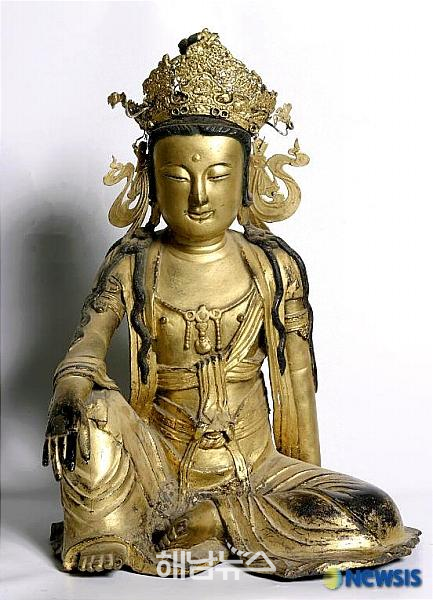 보물 제1547호 금동여래좌상 / 사진제공=해남뉴스 |
보물 제1547호
금동관음보살좌상(金銅觀音菩薩坐像)
지정일 : 2008년 3월 12일
소장처 : 전라남도 해남군 대흥사 성보박물관
■ 1. 개요
보물 제1547호 금동관음보살좌상은 고려 후기(12~13세기) 제작으로 추정되는 금동 불상으로, 온화한 표정·세련된 비례·정교한 보관 표현을 특징으로 하는 관음보살상이다.
현재는 해남 대흥사 성보박물관에 소장·전시되어 있으며, 대흥사의 역사와 불교 조각 전통을 보여주는 중요한 성보자료로 평가된다.
■ 2. 조형적 특징
- 온화한 얼굴과 균형 잡힌 자세
타원형 얼굴, 잔잔한 미소, 반쯤 감긴 눈 등 관음보살 특유의 자비롭고 안정된 인상을 갖춘다.
신체 비례가 매우 안정적이며, 착의 표현이 자연스러워 고려 불상 조각기의 특징이 잘 드러난다.
- 세련된 보관과 장신구
머리 위 보관(寶冠)은 세밀하게 조각되어 있으며, 관음보살을 상징하는 화불(化佛) 이 표현되었을 가능성이 높다.
가슴과 팔의 장신구는 얇고 섬세해 고려 금동불의 장식적 성향이 나타난다.
■ 3. 대흥사 소장 경위(전래 배경)
- 대흥사 경내 출토 혹은 전래된 불상으로 추정
공식 문헌에 자세한 유입 기록은 남아 있지 않으나, 전문가들은 다음 두 가능성을 가장 유력하게 본다.
가설 1 : 대흥사 응진전·삼층석탑 등과 연계된 조성 불상
대흥사는 고려 후기에 크게 번영했으며, 대흥사 응진전·대웅보전·각 전각의 중창 과정과 함께 여러 금동불이 봉안된 것으로 알려져 있다.
이 관음보살좌상은 고려 후기 조성 양식으로 대흥사 주변 지역에서 지속적으로 발견되었던 금동불 유물들과의 유사성 등을 고려할 때, 본래 대흥사 혹은 말사(末寺)에 봉안되었던 불상이 전해진 것으로 보는 견해가 많다.
가설 2 : 근대기 사찰 정비 과정에서 모여든 성보자료
근대 이후 대흥사는 사찰 중수, 흩어진 불상 수습, 말사 폐사 이후 남은 성보의 집결 과정에서 성보박물관 설립 취지에 따라 지역 내 유물들을 체계적으로 수집했다.
이 과정에서 금동관음보살좌상도 대흥사 또는 인근 사찰·암자에서 전래된 성보를 정리하는 과정에서 박물관에 공식 편입된 것으로 추정된다.
■ 4. 대흥사 성보박물관에 보관하게 된 이유
- 대흥사의 역사적 위상
대흥사는 조선 후기 3대 선종 도량(표훈사–대흥사–송광사) 중 하나이며
서남해 불교 중심 사찰로서, 전통적으로 수많은 불상·불구·경판을 보유해 왔다.
이를 체계적으로 보관·연구하기 위해 ‘대흥사 성보박물관’이 설립되었고, 사찰 내·외부에서 전래된 주요 성보들이 모두 하나로 모였다.
- 보물급 유물을 안전하게 보관하기 위한 조치
금동관음보살좌상은 소형 금속불로 도난 위험이 높았기 때문에, 대흥사는 2000년대 들어 중요 성보를 박물관으로 일괄 이관하여 안전관리·보존처리를 강화했다.
- 학술적 가치 정립 및 국가문화재 지정 필요
전문가 조사 결과, 조형성, 제작 시대성, 지역 불교미술사적 가치가 높다고 평가되었고, 이를 계기로 국가 보물 지정(2008)이 추진되었다.
보물 지정 이후에는 더욱 전문적인 환경에서 보존하기 위해 대흥사 성보박물관에서 상시 관리·전시하고 있다.
■ 5. 미술사적 가치
- 고려 후기 금동보살상의 전형을 보여주는 작품
온화한 표정, 얇은 착의 표현, 세련된 신체 비례는 고려 후기에 유행한 관음보살상의 특징을 잘 보여준다.
- 대흥사와 서남해 지역 불교문화 연구의 핵심 자료
대흥사는 해남·완도·강진으로 이어지는 서남해 불교문화의 중심지였으며, 본 유물은 이 지역의 고려 불교 조각 양식을 연구하는 데 중요한 단서를 제공한다.
■ 6. 요약
항목 내용
문화재명 금동관음보살좌상
지정번호 보물 제1547호
지정일 2008년. 03월. 12일
시대 고려 후기 추정
재질 금동
소장처 해남 대흥사 성보박물관
전래 경위 대흥사 및 인근 사찰에서 전래된 성보를 수집·정리 하는 과정에서 박물관에 편입
가치 고려 금동불 조각의 대표작, 지역 불교미술 연구의
핵심 자료
Treasure No. 1547
Gilt-bronze Seated Avalokitesvara Bodhisattva (金銅觀音菩薩坐像)**
Designation Date: March 12, 2008
Location: Seonbo Museum, Daeheungsa Temple, Haenam, Jeollanam-do
[Haenam = Haenam News] haenamnews@kakao.com
1. Overview
Treasure No. 1547, the Gilt-bronze Seated Avalokitesvara Bodhisattva, is presumed to have been crafted during the late Goryeo period (12th–13th century). The statue is distinguished by its serene facial expression, refined proportions, and delicately rendered crown—hallmarks of Avalokitesvara imagery in Goryeo Buddhist sculpture.
Today, the piece is housed and displayed at the Seonbo Museum of Daeheungsa Temple in Haenam, where it serves as an important example of the temple’s long artistic heritage and the sculptural traditions of Korean Buddhism.
2. Artistic Characteristics
– Serene Face and Balanced Posture
The statue features an oval face with a gentle smile and half-closed eyes, embodying the compassion and tranquility associated with Avalokitesvara.
Its stable proportions and naturally flowing drapery are characteristic of Goryeo-period sculptural aesthetics.
– Elaborate Crown and Ornaments
The finely detailed crown (bogwan) may originally have included a hwa-bul ( 화불, miniature Buddha), a symbolic attribute of Avalokitesvara.
The chest and arm ornaments are thin, elegant, and richly decorative—typical of the refined gilt-bronze statues of the Goryeo era.
3. Background of Preservation at Daeheungsa Temple (Transmission History)
Although no official historical record documents the statue’s early movement or origin, researchers generally consider two credible possibilities:
Hypothesis 1: A Buddhist image originally associated with Daeheungsa Temple
During the late Goryeo period, Daeheungsa prospered and underwent several reconstructions of halls such as Eungjinjeon and Daeungbojeon.
It is believed that numerous gilt-bronze statues were enshrined during this time.
Given the stylistic traits of this statue and its similarity to other gilt-bronze Buddhist artifacts historically discovered around the temple, many scholars conclude that it was likely originally enshrined at Daeheungsa or one of its affiliated hermitages.
Hypothesis 2: Incorporated during modern temple restoration efforts
In the modern era, Daeheungsa undertook extensive restoration projects, which included:
recovering dispersed Buddhist images,
collecting artifacts from closed hermitages, and
organizing temple treasures for the establishment of the Seonbo Museum.
It is presumed that this gilt-bronze bodhisattva was formally added to the museum’s collection during this process of gathering and systemizing sacred objects from the temple and surrounding temples.
4. Reasons for Housing the Statue at Daeheungsa Seonbo Museum
– Historical Importance of Daeheungsa
As one of the three major Seon (Zen) monastic centers of late Joseon (alongside Pyohunsa and Songgwangsa), Daeheungsa has long been a spiritual and cultural hub of Buddhism in the southwestern region of Korea.
To preserve and study its many relics—including statues, ritual implements, and woodblocks—the Seonbo Museum was established.
– Protection and professional conservation of a national treasure
Because small gilt-bronze statues are vulnerable to theft, Daeheungsa transferred significant relics to the museum in the 2000s to enhance security and conservation standards.
– Scholarly evaluation and national designation
Experts recognized the statue’s artistic value, dating, and importance to regional Buddhist art history, leading to its designation as a National Treasure (Treasure No. 1547) in 2008.
After designation, the statue has been kept under professional care within the museum for long-term preservation and public exhibition.
5. Art Historical Significance
– A representative example of late Goryeo gilt-bronze bodhisattvas
Its calm expression, thin and elegant drapery, and well-balanced form exemplify the style of Avalokitesvara images popular during the late Goryeo period.
– A key resource for studying the Buddhist culture of Daeheungsa and the southwestern coastal region
Daeheungsa played a central role in the Buddhist culture of Haenam, Wando, and Gangjin.
This statue provides valuable insight into the sculptural traditions and craftsmanship of the region during the Goryeo era.
6. Summary
Category Description
Cultural Property Gilt-bronze Seated Avalokitesvara Bodhisattva
Designation Treasure No. 1547
Date of Designation March 12, 2008
Period Late Goryeo (estimated)
Material Gilt-bronze
Current Location Seonbo Museum, Daeheungsa Temple, Haenam
Transmission History Presumed to have originated from Daeheungsa or nearby temples; formally incorporated during the museum’s collection process
Significance Representative Goryeo gilt-bronze work; key material for regional Buddhist art studies
 해남뉴스 박충배 편집 및 논설위원 haenamnews@kakao.com