2026.04.30 (목) 08:33




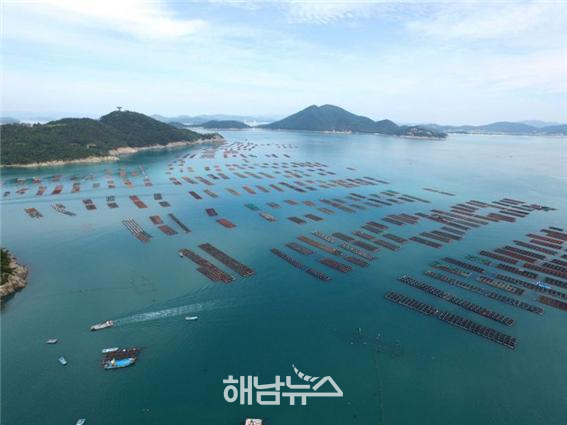 바다 김 양식장 / 사진제공=호남뉴스 |
2026년 7월 1일, 대한민국 행정사에 새로운 장이 열린다.
전남과 광주가 하나의 초광역 체제로 묶이는 전남·광주특별시가 출범한다.
이 변화는 단순한 행정구역 조정이 아니다.
대한민국 경제 구조를 지배해 온 수도권 일극체제를 흔드는 국가적 실험이며, 남부권 경제지도를 다시 그리는 거대한 전환이다.
더불어민주당 지도부는 전남·광주특별시에 대한 전폭적인 지원을 약속했다.
이 구상은 지방을 위한 시혜 정책이 아니라 국가 균형발전 전략의 핵심 축이다.
AI, 반도체, 에너지, 해양 산업을 중심으로 남부권에 새로운 성장축을 만들고, 수도권과 맞서는 대한민국 제2의 경제권을 형성하겠다는 구상이다.
그러나 지금 지역이 던져야 할 질문은 분명하다.
“그 거대한 변화 속에서 해남·완도·진도는 무엇을 가져갈 것인가.”
통합은 선언으로 완성되지 않는다.
통합은 산업과 기관, 재정과 일자리라는 실질적 몫을 확보할 때 비로소 현실이 된다.
지금은 기대를 말할 때가 아니라 “지역이 가져갈 지분을 설계해야 할 시간”이다.
대한민국의 경제 구조는 여전히 수도권 중심이다.
인구의 절반이 수도권에 살고, 대기업 본사와 연구기관, 금융기관의 대부분이 수도권에 집중돼 있다.
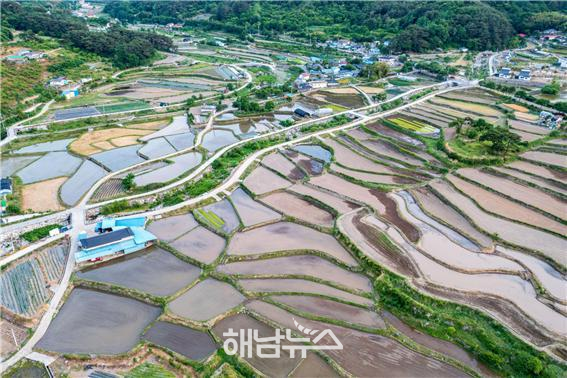 천수답 농업 지대 / 사진제공=호남뉴스 |
지방은 지속적으로 인구를 잃고 산업을 잃고 있다.
이 구조를 바꾸지 않는 한 대한민국의 미래도 없다.
전남·광주특별시는 바로 이 구조를 바꾸기 위한 국가적 대전환 프로젝트다.
특히 AI 산업과 에너지 산업의 결합은 전남 서남권이 가진 가장 강력한 전략 자산이다.
AI 산업은 엄청난 전력을 소비한다.
대형 데이터센터 하나가 중소 도시 하나의 전력 소비량과 맞먹는다.
그래서 세계 데이터센터 산업의 입지 기준도 바뀌고 있다.
과거에는 통신망과 도시 접근성이 중요했다면 지금은 재생에너지와 전력 공급 능력이 가장 중요한 조건이 됐다.
이 변화 속에서 전남 서남권은 놀라운 조건을 갖고 있다.
해상풍력, 태양광, 대규모 부지, 낮은 인구밀도, 그리고 솔라시도 기업도시까지.
이 지역은 이미 대한민국 에너지 수도가 될 수 있는 조건을 갖추고 있다.
문제는 하나다.
“이 거대한 산업 구조 속에서 해남·완도·진도는 어떤 역할을 맡을 것인가.”
지금까지 지역에서 들리는 이야기는 대부분 기대와 희망이다.
그러나 현실은 다르다.
산업도, 공공기관도, 국가사업도, 준비된 지역으로 간다.
기다리는 지역으로 오지 않는다.
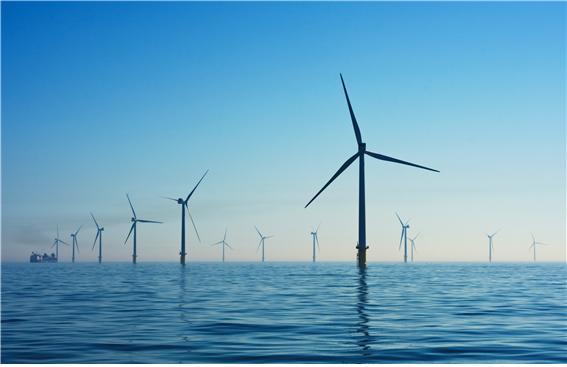 신안 해상 풍력 발전 / 사진제공=호남뉴스 |
국가 균형발전의 가장 강력한 정책 수단은 공공기관 이전이다.
그러나 공공기관 이전은 중앙정부가 알아서 배치해 주는 사업이 아니다.
이는 철저히 정치와 전략이 결합된 협상 프로젝트다.
서남권이 현실적으로 유치해야 할 기관들은 이미 보인다.
해상풍력 산업을 연구할 해상에너지 연구기관, 재생에너지 정책을 담당할 에너지 관련 공공기관, 수산 산업을 고도화할 해양수산 연구기관,
농식품 산업을 혁신할 농식품 연구기관 등이다.
해남·완도·진도는 해양과 수산, 재생에너지라는 전국 최고 수준의 자원을 가진 지역이다.
그럼에도 불구하고 지금까지 지역에서 제시된 공공기관 유치 전략은 아직 충분히 구체적이지 않다.
지금 필요한 것은 요구가 아니라 협상 카드다.
산업단지, 에너지 공급 능력, 해양자원, 연구 인프라, 생활 인구 전략, 이 모든 것이 협상의 자산이 된다.
전남이 추진하는 에너지 기본소득 역시 중요한 시험대다.
재생에너지 산업에서 발생하는 수익을 지역 주민에게 돌려주겠다는 이 정책은 단순한 복지가 아니라 새로운 경제 모델이다.
그러나 지금 단계에서는 여전히 선언이 구조보다 앞서 있다는 지적이 나온다.
에너지 기본소득이 진짜 정책이 되려면 발전 수익의 지분 구조가 설계돼야 한다.
주민 참여형 에너지 펀드, 발전사업 수익 배당, 지역 투자 플랫폼이 만들어져야 한다.
결국 핵심은 하나다.
“발전단지를 짓는 것이 아니라 발전 수익의 지분을 주민이 갖는 것.” 그래야 에너지 산업이 지역 주민의 소득 산업이 된다.
AI 산업 역시 마찬가지다.
AI 데이터센터는 전기를 먹는다.
그리고 그 전기는 결국 지역에서 생산되는 에너지다.
따라서 앞으로의 지역 전략은 분명하다.
AI 산업 + 에너지 생산 + 주민 소득 이 세 가지가 하나의 구조로 연결돼야 한다.
AI 데이터센터가 들어오고 재생에너지 산업이 성장한다면 그 산업 구조 속에서 지역 주민에게 돌아오는 소득 구조를 설계해야 한다.
그것이 바로 AI 시대의 지역 기본소득 모델이다.
그러나 한 가지 사실을 잊어서는 안 된다.
해남·완도·진도의 경제 뿌리는 여전히 농수축산업이다.
쌀, 김, 전복, 해조류, 수산 가공 산업은 지금도 지역 경제를 떠받치는 핵심 산업이다.
첨단 산업이 중요하다고 해서 이 산업을 대체할 수는 없다.
따라서 지역의 미래 전략은 첨단 산업과 1차 산업의 융합이어야 한다.
AI 기반 스마트 농업, 스마트 양식 산업, 해양 바이오 산업, 수산 가공 고부가가치 산업, 이러한 구조가 만들어질 때 지역 경제는 비로소 지속 가능한 성장 구조를 갖게 된다.
전남·광주특별시는 이미 시작됐다.
그러나 지역이 준비하지 않으면 그 거대한 변화는 또 다른 중심 도시만 성장시키는 결과로 끝날 수도 있다.
지금 서남권이 던져야 할 질문은 단순하다.
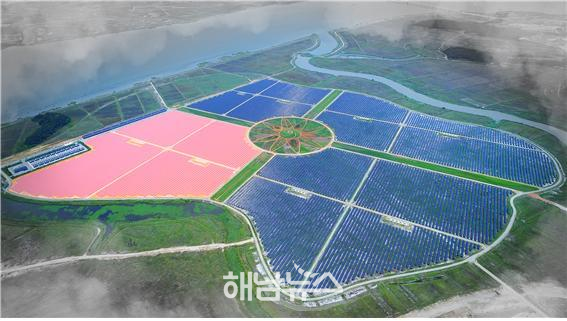 해남 산이면 솔라시도 태양광 / 사진제공=호남뉴스 |
“우리 몫은 무엇인가.”
어떤 공공기관을 가져올 것인가.
어떤 산업을 유치할 것인가.
어떤 에너지 구조를 만들 것인가.
어떤 소득 모델을 설계할 것인가.
이 질문에 답하지 못한다면 통합특별시는 또 하나의 구호로 남을 것이다.
지금 필요한 것은 말이 아니라 행동이다.
전남·광주특별시가 진정한 국가 균형발전의 엔진이 되기 위해서는 해남·완도·진도 같은 서남권 지역이 그 중심에서 전략을 만들어야 한다.
그리고 그 전략은 지금 이 순간부터 시작돼야 한다.
[Haenam News Editorial – Powerful Opinion]
“Not Words, But Our Share”
With the Launch of the Jeonnam–Gwangju Special City, What Are Haenam, Wando, and Jindo Securing for Themselves?
On July 1, 2026, a new chapter will open in the administrative history of the Republic of Korea.
Jeonnam and Gwangju will be integrated into a single super-regional system known as the Jeonnam–Gwangju Special City.
This transformation is not a simple administrative reorganization.
It is a national experiment to challenge the dominance of the Seoul metropolitan area and a major shift that will redraw the economic map of the southern region.
The leadership of the Democratic Party of Korea has pledged full support for the Jeonnam–Gwangju Special City.
This initiative is not a symbolic concession to the provinces; it is a core pillar of the national balanced-development strategy.
The vision is to build a new growth axis in southern Korea centered on AI, semiconductors, energy, and maritime industries, forming a second economic powerhouse capable of standing alongside the capital region.
Yet a critical question must now be asked in the region:
“In this massive transformation, what exactly will Haenam, Wando, and Jindo gain?”
Integration alone does not create reality.
Integration becomes meaningful only when industries, institutions, fiscal resources, and jobs—real shares of development—are secured.
This is no longer the time to speak of expectations.
It is the moment to design the region’s rightful stake.
South Korea’s economic structure remains heavily concentrated in the capital region.
Half of the nation’s population lives there, and most corporate headquarters, research institutes, and financial institutions are clustered around Seoul.
As a result, regional areas continue to lose both population and industry.
Unless this structural imbalance is addressed, the future of Korea itself will remain uncertain.
The Jeonnam–Gwangju Special City is a national-scale transformation project intended to change that structure.
Among its greatest strategic opportunities is the combination of artificial intelligence industries and renewable energy infrastructure, a strength uniquely possessed by southwestern Jeonnam.
AI industries consume enormous amounts of electricity.
A single large-scale data center can use as much power as a small city.
For this reason, the global criteria for data-center locations are changing.
In the past, proximity to telecommunications networks and urban accessibility were key.
Today, the most critical factors are renewable energy and reliable power supply.
In this shifting landscape, southwestern Jeonnam holds remarkable advantages.
Offshore wind resources, large solar capacity, vast available land, low population density, and the development of the Solaseado enterprise city together create a powerful foundation.
This region already possesses the conditions to become the energy capital of Korea.
But the essential question remains:
“What role will Haenam, Wando, and Jindo play within this massive industrial structure?”
So far, much of the discussion in the region has focused on hope and expectation.
Reality, however, is different.
Industries, public institutions, and national projects do not go to regions that wait.
They go to regions that are prepared.
One of the most powerful tools for national balanced development is the relocation of public institutions.
Yet such relocations are not automatically assigned by the central government.
They are strategic negotiations shaped by politics, policy, and regional planning.
The types of institutions that southwestern Korea should realistically pursue are already visible.
Research institutes dedicated to offshore wind and marine energy,
public organizations overseeing renewable-energy policy,
marine and fisheries research institutions aimed at modernizing the fishing industry,
and national agricultural research bodies tasked with innovating the agri-food sector.
Haenam, Wando, and Jindo possess some of the nation’s most valuable assets in marine resources, fisheries, and renewable energy potential.
Yet despite these strengths, the region’s strategies for attracting public institutions remain insufficiently concrete.
What is needed now is not a list of demands, but negotiation leverage.
Industrial zones, energy supply capacity, marine resources, research infrastructure, and strategies for increasing the region’s living population—
all of these can become powerful bargaining assets.
Jeonnam’s policy of energy basic income also stands as an important test.
The idea is simple but transformative:
to return the profits generated by renewable-energy industries directly to local residents.
This concept is not merely a welfare program.
It represents a new economic model.
Yet at present, critics point out that declarations still precede concrete structures.
For energy basic income to become reality, the ownership structure of energy profits must be designed.
Community-participation energy funds,
profit-sharing mechanisms from power generation projects,
and regional investment platforms must be established.
The core principle is clear:
“The goal is not merely to build power plants, but to ensure that residents hold shares in the profits they generate.”
Only then will the energy industry become a source of income for local communities.
The same principle applies to the AI industry.
AI data centers consume electricity,
and that electricity ultimately comes from energy produced in the region.
Therefore, the strategic formula for the future is clear:
AI industry + energy production + resident income
These three elements must function as a single integrated system.
If AI data centers are established and renewable energy industries expand,
then a structure must be designed to ensure that economic benefits return to local residents.
This is the foundation of a regional basic-income model for the AI era.
Yet one fundamental truth must never be forgotten.
The economic roots of Haenam, Wando, and Jindo still lie in agriculture, fisheries, and livestock industries.
Rice, seaweed, abalone, marine algae, and seafood processing remain the pillars of the local economy.
No matter how advanced new industries become, they cannot replace these foundations.
Therefore, the region’s long-term strategy must focus on integrating advanced technology with primary industries.
AI-based smart agriculture,
smart aquaculture systems,
marine bio-industries,
and high-value seafood processing.
Only when these sectors converge will the regional economy achieve sustainable growth.
The Jeonnam–Gwangju Special City has already begun.
But without preparation, this historic transformation could simply strengthen another regional center while leaving surrounding areas behind.
The key question for southwestern Korea is simple:
“What share will we secure?”
Which public institutions will be brought to the region?
Which industries will be attracted?
What energy system will be created?
What income model will be designed for residents?
If these questions remain unanswered, the Special City will become nothing more than another slogan.
What is needed now is not rhetoric but action.
For the Jeonnam–Gwangju Special City to truly become a driving engine of national balanced development,
regions like Haenam, Wando, and Jindo must stand at the center of strategy and planning.
And that strategy must begin right now.
 해남뉴스 박충배 편집 및 논설위원 haenamnews@kakao.com