2026.08.11 (화) 20:40




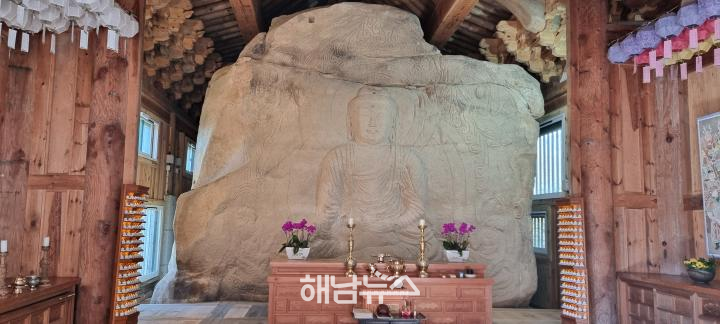 두륜산 대흥사 북미륵암 국보 제308호 / 사진제공=해남뉴스 |
【독자투고】
2025년 12월 27일 오후 1시 오심재에서 두륜봉을 거쳐 원점회귀하는 코스로 등산을 다녀오는 길에서
유네스코 세계문화유산 두륜산 대흥사는 해남을 대표하는 ‘얼굴’이다.
그러나 그 얼굴로 향하는 길은 오늘도 진흙탕이고, 눈이 오면 미끄럼틀이다.
해남군의 관광객 수는 2014년부터 2024년까지 연평균 약 25만 명 수준을 유지해 왔다.
코로나 여파로 2022년에는 15만 명까지 급감했지만, 2024년에는 다시 25만 명으로 회복세를 보이고 있다.
이 가운데 대흥사를 찾는 관광객 수는 년 19만 명에 이른다.
숫자만 놓고 보면 관광 회복을 말할 수 있을지 모른다.
유네스코 세계문화유산 대흥사는 해남군의 대표적인 얼굴이다.
그러나 관광의 질은 어떠한가.
두륜산 도립공원 등산객 수에 대한 공식 통계는 없지만, 계절·요일을 가리지 않고 산을 찾는 사람들은 분명히 늘고 있다.
산을 오르는 것은 이제 일부 마니아의 취미가 아니라, 일상적인 여가이자 건강 문화다.
문제는 그 길이다.
국보 제308호가 있는 북미륵암으로 향하는 길, 오심재 샘터에서 헬기장까지 이어지는 약 200m 구간은 지금도 흙길 그대로다.
비가 오면 질척거리고, 눈이 오면 미끄러워 수천 명의 등산객들이 인상을 쓰며 욕설을 내뱉는다.
이곳은 이름 없는 뒷산이 아니다.
해남을 대표하는 도립공원이자, 세계문화유산 대흥사의 핵심 동선이다.
요즘 각 자치단체들은 경쟁하듯 ‘뒷동산’까지 정비한다.
데크를 깔고, 배수로를 만들고, 노약자도 오를 수 있게 길을 다듬는다.
관광객 유치가 아니라, 주민 삶의 질을 이유로도 충분히 투자한다.
그런데 해남은 어떤가.
해남읍의 금강산, 만덕산, 삼봉의 길은 말끔하게 정비해 놓고, 정작 해남의 얼굴인 두륜산 대흥사 등산로는 도립공원이라는 이름 아래 방치되고 있다.
이것은 예산의 문제가 아니다.
우선순위의 문제다.
의지의 문제다.
세계유산을 보유한 지자체의 기본은 접근성과 안전이다.
문화재를 보호한다는 명분으로 불편과 위험을 방치하는 것은 보존이 아니라 무책임이다.
관광객은 사진만 찍고 가는 존재가 아니다.
길에서 느끼고, 걷는 과정에서 기억을 만든다.
그 기억이 “해남은 미끄럽고 불편한 곳”이라면, 그것이 바로 해남의 이미지다.
해남군과 전라남도에 묻는다.
대흥사 두륜산 등산로는 언제까지 ‘나중 문제’인가.
도립공원이라는 이유로, 세계유산이라는 이유로, 손대기 어려운 성역으로만 둘 것인가.
지금 필요한 것은 거창한 관광 개발이 아니다.
200m의 흙길을 걷는 사람의 발을 생각하는 행정이다.
해남의 얼굴을 더 이상 진흙탕에 빠뜨려서는 안 된다.
이것은 선택이 아니라, 책임의 문제다.
[Haenam = Haenam News]
haenamnews@kakao.com
[Reader’s Contribution]
On December 27, 2025, at 1:00 p.m., I completed a hiking course that began at Osimjae Pass, passed through Duryun Peak, and returned to the starting point.
Haenam’s Face Is Sunk in Mud, but Where Is the Administration Looking?
— How Long Will the Hiking Trails of Duryunsan Daeheungsa Be Neglected? —
Duryunsan Daeheungsa, a UNESCO World Cultural Heritage site, is the very “face” of Haenam.
Yet the road leading to that face is still a muddy mess, turning into a slippery slide when snow falls.
From 2014 to 2024, the number of visitors to Haenam County averaged approximately 250,000 per year.
Due to the impact of COVID-19, the number dropped sharply to 150,000 in 2022, but by 2024 it had rebounded to around 250,000.
Of these, approximately 190,000 visitors come to Daeheungsa each year.
Looking only at the numbers, one might say tourism has recovered.
As a UNESCO World Cultural Heritage site, Daeheungsa is undoubtedly the representative face of Haenam County.
But what about the quality of that tourism?
Although there are no official statistics on the number of hikers visiting Duryunsan Provincial Park, it is clear that people who enjoy hiking—regardless of season or weekday—are increasing every year.
Hiking is no longer a hobby for a small group of enthusiasts; it has become a part of everyday leisure and a common health activity.
The problem lies with the trail itself.
The route leading to Buk Mireukam Hermitage, where National Treasure No. 308 is located—specifically the approximately 200-meter section from the Osimjae spring to the helipad—remains an unpaved dirt path.
When it rains, it turns muddy; when it snows, it becomes dangerously slippery, prompting thousands of hikers to frown and mutter curses under their breath.
This is not some nameless back mountain.
It is a provincial park that represents Haenam and a core access route to Daeheungsa, a World Cultural Heritage site.
These days, local governments across the country compete to improve even their neighborhood hills.
They install decks, build proper drainage, and level paths so that even the elderly can walk safely.
Such investments are justified not only for attracting tourists but also for improving residents’ quality of life.
So what about Haenam?
While the trails of Mt. Geumgang, Mt. Mandeok, and Sambong in Haenam-eup have been neatly maintained, the hiking trails of Duryunsan Daeheungsa—the very face of Haenam—are being neglected under the name of “provincial park.”
This is not a budget issue.
It is a matter of priorities.
It is a matter of will.
The basic responsibility of a local government that possesses a World Heritage site is ensuring accessibility and safety.
Neglecting inconvenience and danger under the pretext of cultural heritage preservation is not conservation—it is irresponsibility.
Tourists are not merely people who come to take photos and leave.
They form memories through the paths they walk and the experiences they feel along the way.
If that memory is “Haenam is slippery and uncomfortable,” then that becomes Haenam’s image.
I ask Haenam County and Jeollanam-do Province:
How long will the hiking trails of Duryunsan Daeheungsa remain a “problem to be dealt with later”?
Will they continue to be treated as untouchable sanctuaries simply because they are part of a provincial park or a World Heritage site?
What is needed now is not grand tourism development.
What is needed is an administration that thinks about the feet of those who must walk a 200-meter dirt path.
Haenam’s face must not be left sunk in mud any longer.
This is not a matter of choice—it is a matter of responsibility.
 해남뉴스 박충배 편집 및 논설위원 haenamnews@kakao.com