2026.03.13 (금) 19:43




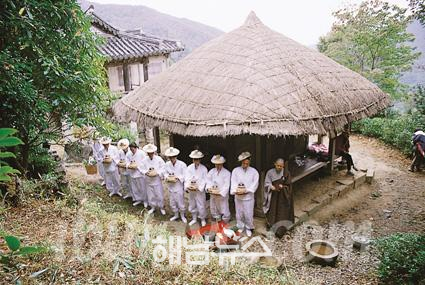 대흥사 차의 성지 일지암 / 사진제공=해남뉴스 |
박충배 편집/칼럼/논설
Ⅰ. 서론
산길 700m 위, 조선의 마음이 숨 쉬는 초당(草堂).
대흥사 대웅전에서 약 700m.
숨이 조금 가빠질 즈음 시선을 들면, 산사(山寺)의 고요를 한 몸에 머금은 작은 암자 하나가 모습을 드러낸다.
일지암(一枝庵).
초의선사가 일평생 추구한 다선일여(茶禪一如), 차와 선이 둘이 아니라는 사상을 가장 사무치게 체현한 공간이다.
그 이름처럼 “깊은 숲의 뱁새는 나뭇가지 하나면 만족한다(鷦鷯巢於深林 不過一枝)”는 장자의 소요유(逍遙遊)를 삶의 실천 원리로 삼아 지어진 작은 초막.
허욕(虛慾)을 버리고 덕(德)으로 살아가겠다는 결기, 그리고 한 가지 가지(一枝)에 마음을 걸겠다는 초의 선사의 깨끗한 심지(心志)가 이곳에 있다.
1824년, 39세의 초의는 이 암자를 중건했고, 그로부터 무려 40여 년 동안 이곳에서 독처하며 차와 선, 시와 서, 화와 범패, 사찰음식과 탱화에 이르기까지 조선 후기 문화정신의 결정체를 이룩했다.
일지암은 작지만, 그 안에 담긴 세계는 크고 깊다.
Ⅱ. 본문 1
초의선사, 남도의 산에서 피어난 조선의 마지막 ‘전인(全人)’
초의(草衣, 1786~1866).
선(禪)으로는 대선사, 차(茶)로는 다성(茶聖), 예술로는 시·서·화에 두루 능통한 조선 후기의 보기 드문 ‘전인(全人)’이었다.
출가 이후 줄곧 대흥사에 머문 그는 고려 이후 끊겨가던 차 문화를 부흥시키기 위해 일지암에서 차 연구와 제다법(製茶法)을 체계화했다.
그 결실이 『동다송』, 『다신전』이었다.
초의는 “차와 선이 곧 하나”임을 선언하며 우리 차의 철학적·미학적 정체성을 현대에 다시 일으켜 세웠다.
그가 끓이던 물은 유천(乳泉)에서 솟아나 나무 대롱을 타고 돌확 속으로 흘렀다.
500년 넘게 흐르는 그 샘물은 지금도 일지암을 찾는 이들에게 부드럽고 깊은 차향을 선물한다.
차는 아버지요, 물은 어머니라 했다.
산상의 샘이 좋은 차를 낳는다는 말을 이곳에서만큼 실감할 수 있는 곳도 드물다.
Ⅲ. 본문 2
다산·추사와의 우정, 일지암이 품은 조선 정신사의 가장 아름다운 장면
일지암이 특별한 이유는 차와 선의 도량이었기 때문만이 아니다.
이 작은 암자에는 다산 정약용, 추사 김정희, 초의선사가 조선 후기 사유의 정점에 선 세 존재의 교류가 서려 있다.
● 다산과 초의
강진 유배 18년 동안, 다산은 대흥사와 깊은 인연을 맺었다.
초의는 다산에게 차를 올렸고, 다산은 초의를 통해 차의 철학적 의미를 더욱 깊이 성찰했다.
● 추사와 초의
추사는 제주 유배길에 대흥사와 연결되며 초의를 만났다.
초의와 추사는 무려 42년간의 우정을 이어간다.
조선 시대 스님의 집을 왕실 대신이나 문인이 이렇게 오래 드나드는 일은 드물었다.
추사가 말년에 초의가 보낸 차를 마시며 써서 보낸 걸작 〈명선(茗禪)〉은 지금도 대흥사에 전해진다.
그 서체는 우정을 넘어 하나의 정신적 공명의 기록이다.
그리고 추사가 초의에게 보낸 편지
그 유명한 ‘투정의 편지’는 두 사람의 우정이 얼마나 인간적이고 깊었는지를 잘 보여준다.
“나는 스님을 보고 싶지도 않고 스님의 편지도 보고 싶지 않으나 다만 차와의 인연만은 차마 끊지 못하여 또 차를 재촉하니… 두 해의 빚을 한꺼번에 챙겨 보내되 빗나감이 없도록 하시오.”
겉으로는 투정이지만 속마음은 “그대가 그립다”는 사랑의 문장이다.
조선 후기 가장 고매한 지성들의 우정이 한 잔의 차에 응축되어 있다.
Ⅳ. 본문 3
일지암, 차와 선이 합일하는 공간의 미학
일지암은 겉으로 보면 2평 남짓한 초당에 불과하다.
그러나 공간의 구성은 선(禪)의 미학 그 자체다.
정면의 작은 연못, 뒤쪽에서 솟아 돌확으로 흐르는 유천, 누마루 아래의 연못에서 노니는 잉어, 돌기둥이 받치는 다정(茶亭)의 운치, 좌선석과 다조(茶槽)의 복원된 배치.
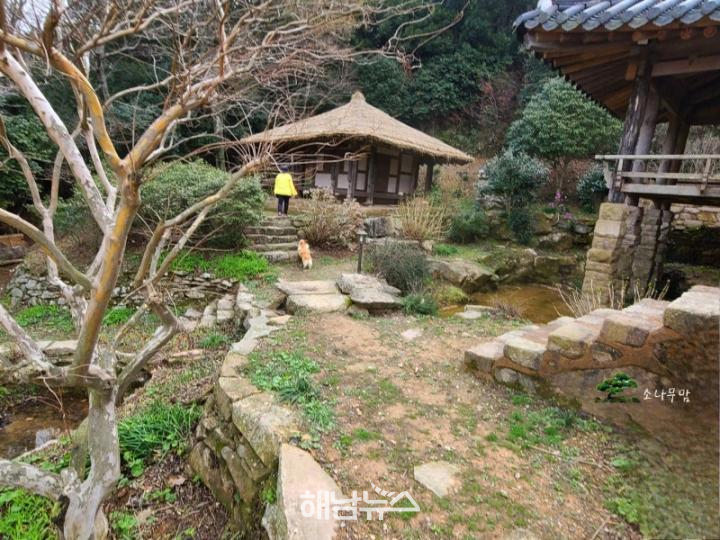 대흥사 차의 성지 일지암 / 사진제공=해남뉴스 |
이 모든 것이 “단순함의 완성”이라는 초의의 세계관을 말해준다.
그리고 초의가 이곳에서 남긴 시 한 수는
일지암의 정신을 가장 정확히 요약한다.
“못을 파서 달이 비치게 하고, 간짓대 이어 백운천 얻었네.
…눈앞을 가린 꽃가지를 잘라버리니 좋은 산이 석양 속에 저리도 많은 것을.” 꽃가지를 치워야 비로소 산이 보인다.
세속의 번뇌를 비워야 비로소 마음의 본래면목이 드러난다는 선가(禪家)의 가르침이다.
Ⅴ. 본문 4
차의 계절, 차의 예법, 차의 마음
일지암에 서면 알 수 있다.
차는 단순히 마시는 음료가 아니라 ‘지은보은(知恩報恩)’—은혜를 알고 갚는 마음의 수행이라는 것.
초의가 필사하여 전한 『다신전』에는 여러 차의 상식이 담겨 있다.
최고의 차는 입하 전후의 어린 잎, 색은 푸르고 향은 맑고 비린내가 없으며, 맛은 달고 감칠맛이 있고, 무엇보다 자기 입맛에 맞는 차가 최고의 차.
차의 순서에도 도리가 있다.
주두다각(酒頭茶脚), 술은 어른부터, 차는 마지막에 어른에게 드리는 것.
첫 잔보다 마지막 잔이 더 깊어지는 차의 성질 때문이기도 하다.
이 단순한 예절 속에는 “겸손”과 “배려”라는 동아시아 미학의 정수가 담겨 있다.
Ⅵ. 결론 — 한 가지 가지에서 피어난 조선의 품격
일지암은 화려하지 않다.
그렇기에 더 아름답다.
초의의 청빈한 마음, 추사의 투정 섞인 우정, 다산의 깊은 사유가 뒤섞여 조선 정신사의 가장 맑은 풍경을 이루고 있기 때문이다.
오늘 이곳을 찾는 이는 유천의 물로 끓인 따뜻한 차 한 잔을 마시며
동다송(東茶頌)의 한 구절을 읊조릴 수 있다면 그 순간 바로 선경(禪境)에 든 것과 다름없다.
후황가수 배귤덕(后皇嘉樹 配橘德)
하늘이 사랑한 그대, 귤나무 같은 덕스러운 나무여.
수명불천 생남국(受命不遷 生南國)
터를 옮기지 않고 따뜻한 남녘에서 자라나니,
밀엽투산 관동청(密葉鬪霰 貫冬靑)
풍설 속에서도 잎을 떨구지 않고 겨울 내내 푸르구나.
차는 결국 한 가지를 가르친다.
은혜를 알고, 마음을 비우고, 본래의 자신으로 돌아가라는 것.
일지암의 차향은 오늘도 그 진실을 조용히 말하고 있다.
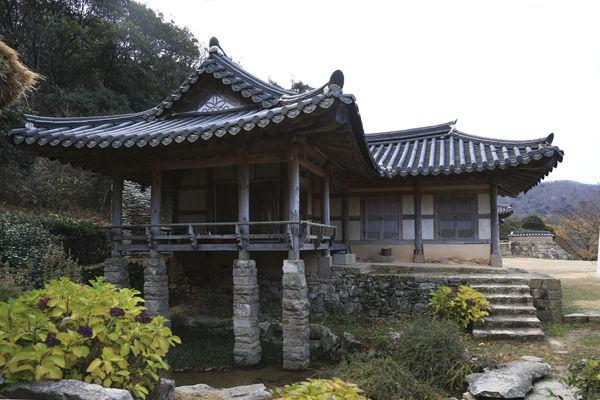 대흥사 차의 성지 홍련암 / 사진제공=해남뉴스 |
“A Single Branch, a Single Heart—Iljiam, Where Cho-ui Left His Deepest Legacy of Zen, Tea, and Friendship”
— A hermitage where the thoughts of Cho-ui, Chusa, and Dasan once flowed, and where the eternal fragrance of tea whispers through the spring of Yucheon —
By Park Chung-bae | Editorial / Column / Commentary
I. Introduction
A small hermitage where the heart of Joseon breathes, 700 meters above the mountain path.
About 700 meters uphill from Daewungjeon Hall of Daeheungsa Temple, one’s breath begins to quicken.
At that moment, a humble hermitage quietly emerges from the stillness of the mountain forest.
This is Iljiam—the “Hermitage of One Branch.”
It is the place where Venerable Cho-ui most fully embodied his lifelong pursuit of da-seon-il-yeo (茶禪一如), the principle that tea and Zen are one and inseparable.
As its name implies—“The wren in the deep forest needs no more than a single branch” (鷦鷯巢於深林 不過一枝) from Zhuangzi, Chapter: Free and Easy Wandering—the hermitage is a physical manifestation of Cho-ui’s commitment to living a life free from vanity and anchored in virtue.
In 1824, at the age of 39, Cho-ui rebuilt this hermitage.
He lived here in seclusion for over forty years, devoting himself to Zen, tea, poetry, calligraphy, painting, ritual arts, temple cuisine, and Buddhist iconography—completing what may be considered the cultural and spiritual summit of late Joseon thought.
Iljiam is small in size, but its inner world is vast.
II. Cho-ui: The Last “Complete Scholar-Monk” of Joseon, Blooming in the Mountains of Namdo
Cho-ui (1786–1866), known as “Grass-Clad Monk,” was a rare figure in late Joseon:
a great Zen master,
the Tea Saint (茶聖),
and a consummate artist capable in poetry, calligraphy, and painting.
Having spent virtually his entire monastic life at Daeheungsa, he sought to revive Korea’s tea tradition, which had dwindled since the Goryeo period.
Iljiam became the birthplace of this revival.
His research and tea-making practices culminated in Dongdasong (Hymn to Eastern Tea) and Dasinjeon (The Spirit of Tea)—works that restored philosophical identity to Korean tea culture.
The water he used came from Yucheon (乳泉), a spring that still flows today through a bamboo pipe into a stone basin.
For over 500 years, this spring has offered a tender, deep flavor to tea.
Tea is the father, and water is the mother.
And nowhere does that truth reveal itself more clearly than here.
III. The Friendship of Dasan, Chusa, and Cho-ui—Iljiam as a Stage for Joseon’s Finest Minds
Iljiam is special not only as a sanctuary of tea and Zen.
It was also a crossroads for three towering intellectuals of the late Joseon era:
Dasan Jeong Yak-yong
Chusa Kim Jeong-hui
Venerable Cho-ui
● Dasan and Cho-ui
During his 18-year exile in Gangjin, Dasan frequently visited Daeheungsa.
Cho-ui offered him tea, and Dasan deepened his philosophical contemplation through it.
● Chusa and Cho-ui
Chusa, while en route to long exile in Jeju, established ties with Daeheungsa and encountered Cho-ui.
From that encounter emerged a 42-year friendship, exceptionally rare between a monk and a high-ranking scholar in Joseon society.
One symbol of this friendship is Chusa’s masterpiece “Myeongseon (茗禪)”, written after drinking the tea Cho-ui sent him in his later years—an artwork that still resides at Daeheungsa, resonating not only as calligraphy but as a spiritual dialogue.
And then there is Chusa’s famous “complaining letter,” perhaps the most human expression of scholarly intimacy in Joseon history:
“I do not wish to see you,
nor do I wish to see your letters.
Yet I cannot sever this bond of tea.
Send the tea—
the two years’ worth I am owed—
all at once,
without delay
and without error.”
What appears as grumbling is, in truth, a confession of longing:
“I miss you.”
In a cup of tea, the highest minds of late Joseon poured the essence of friendship.
IV. The Aesthetic of Iljiam: Where Tea and Zen Become One
Iljiam’s exterior is modest—only about two pyeong (6.6 m²).
But its structure embodies the very aesthetics of Zen:
a small pond in front,
Yucheon spring flowing into a stone basin behind,
carp swimming beneath the raised wooden floor,
stone pillars supporting the tea pavilion,
and restored meditation stones and tea-preparation basins.
These elements together reveal Cho-ui’s philosophy of “simplification to completion.”
Cho-ui expressed the spirit of Iljiam most clearly in a poem he wrote here:
“I dug a pond where the moon may dwell,
and joined bamboo pipes to bring the White Cloud Spring.
Cutting away the branches that obscured my view,
I found the mountains—
so many,
glowing in the evening light.”
Only when the obstructing branches are removed
does one see the mountain.
This is the Zen teaching that only by clearing worldly attachments
can one perceive the true nature of the mind.
V. Tea Seasons, Tea Etiquette, Tea as a Way of the Heart
Iljiam teaches that tea is not merely a drink.
It is a practice of knowing grace and repaying grace (知恩報恩).
From Dasinjeon, transcribed by Cho-ui:
The finest tea is picked around the time of Ipha (the beginning of summer).
Its color should be pure green, its fragrance clean and free of off-notes.
The taste should be sweet and mellow.
But above all: the best tea is the tea that suits one’s own palate.
Tea etiquette also carries philosophical weight.
Jududa-gak (酒頭茶脚):
alcohol is served to elders first,
tea is served to elders last.
Because while the first cup of alcohol is strongest,
the last cup of tea is deepest.
Within this simple custom lies the essence of East Asian aesthetics—
humility and consideration.
VI. Conclusion — A Single Branch, and the Dignity of Joseon That Blossomed From It
Iljiam is not extravagant.
That is its beauty.
It holds the purity of Cho-ui’s heart,
the affectionate grumbling of Chusa,
and the profound reflections of Dasan—
intertwined to create one of the clearest landscapes in Joseon’s intellectual history.
Those who visit Iljiam today,
drinking tea brewed with Yucheon water,
may recite a line from Dongdasong and momentarily enter the realm of Zen:
后皇嘉樹 配橘德
“Heaven cherishes you like the noble citrus tree, full of virtue.”
受命不遷 生南國
“You remain rooted, thriving in the warm lands of the South.”
密葉鬪霰 貫冬靑
“Your thick leaves endure frost and remain green through winter.”
Tea ultimately teaches one thing:
Know grace, empty the heart, and return to one’s true self.
The fragrance of Iljiam continues to whisper this truth—
quietly, yet eternally.
 해남뉴스 박충배 편집 및 논설위원 haenamnews@kakao.com