2026.03.13 (금) 19:45




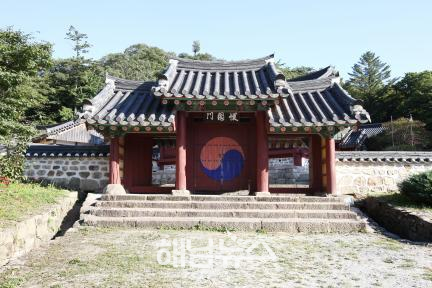 대흥사 표충사 호국문 / 사진제공=해남뉴스 |
박충배 편집‧칼럼‧논설
해남 대흥사 북미륵암으로 오르는 숲길 아래, 조용히 자리한 작은 전각 하나.
국가기념물 제19호 ‘표충사(表忠祠)’(1976.9.30. 지정).
그러나 이 전각은 결코 작지 않다.
조선의 국난을 구한 고승 서산대사 휴정, 그리고 그를 후대에 기리고자 했던 정조대왕의 어필(御筆)이 한 공간 안에 만나는, 한국 정신사의 상징적 무대이기 때문이다.
표충사는 단지 충절을 ‘표시한다.’는 의미를 넘어서 국가·왕실·불교·민중의 정신이 교차하는 국가적 기억장치로 만들어졌다.
오늘 이 칼럼에서는
① 국가기념물 지정 배경
② 정조대왕의 친필 편액(어필)의 역사적 의미
③ 어서각(御書閣)의 위상
④ 표충사 경내 주요 비석과 그 비명(碑銘)의 정신
을 종합적으로 재조명한다.
Ⅰ. 국가기념물 제19호로 지정된 배경
“국가가 직접 보증한 충절의 사당”
표충사가 1976년 국가기념물로 지정된 이유는 명확하다.
1. 임진왜란의 ‘정신적 지휘관’ 서산대사의 위상
- 승군(僧軍)을 조직해 나라를 구한 구국의 영웅
- 조선 왕실과 민중의 정신적 지주
- 이후 사찰·유림·관에서 모두 기리는 드문 성격의 인물
서산대사의 행적은 불교계의 공덕을 넘어 국가사적 차원의 충절(忠)을 증명한다.
2. 정조대왕의 직접 제액(題額)
정조는 서산대사를 “나라가 위기에 처했을 때 몸을 던진 성승(聖僧)”이라 높이 평가하며, 직접 ‘표충사(表忠祠)’라는 편액을 써 대흥사에 하사했다.
왕이 직접 제목을 쓰는 사액(賜額)은 조선에서도 극히 드물며, 그 자체가 국가적 위상을 상징한다.
3. 표충사는 불교 사찰이면서 동시에 ‘국가 충절사(忠節祠)’
사찰 경내에 충신·의승을 위한 사우(祠宇)를 두는 구조, 조선 후기 유·불 융합의 대표적 공간, 국가가 관리·기억해야 할 민족 전통의 장소로 인정하고 있다.
이 세 요소가 결합해 표충사는 한국전쟁기 이후 재편된 '국가기념물 체계에서 가장 특수한 사당적 성격의 기념물'로 자리 잡았다.
Ⅱ. 정조대왕의 친필 편액 — “왕의 붓으로 완성된 충절의 지도(指導)”
정조의 글씨는 왜 특별한가?
정조는 조선 왕 중에서도 손꼽히는 문예군주였고, 그의 서풍은 단정하면서도 절제된 힘, 군왕의 기개와 학인의 품격을 동시에 지님이라는 평가를 받는다.
표충사의 편액은 정조의 다수 어필 중에서도 “임진왜란 구국의 성승을 기리는 국가적 선언”이라는 점에서 상징성이 유난히 크다.
2. ‘표충(表忠)’ 두 글자가 전하는 국가 메시지
‘표(表)’: 드러낸다, 밝힌다
‘충(忠)’: 국가와 백성을 위해 몸을 바침.
즉, “나라를 위해 헌신한 자의 충을 길이 드러낸다”는 의미다.
이 두 글자가 정조의 붓끝에서 나왔다는 사실 하나만으로도 표충사는 권이 공인한 충절의 사당이 된다.
Ⅲ. 어서각(御書閣)의 의미
“임금의 글이 모셔진 성역”
‘어서(御書)’란 임금의 글씨, 즉 어필(御筆)을 뜻한다.
따라서 어서각은 왕의 글이 모셔진 각(閣)이다.
조선에서 어서각은 다음 조건을 갖춘 장소에서만 허용됐다.
- 국가에 뚜렷한 공훈을 세운 인물
- 왕이 직접 그 공훈을 확인하여 글씨 또는 사액을 내림
- 그 글씨가 사찰·서원·사우의 정신적 중심 역할을 함
표충사 어서각은 정조의 어필을 모시는 공간이자 서산대사의 충절을 대표하는 상징적 전각이다.
불교 사찰 안에 왕의 글씨를 따로 모신다는 점 역시 매우 희귀하다.
Ⅳ. 표충사 경내 비석들
“돌에 새겨진 충절, 시대를 관통한 기억의 문장들”
표충사 경내에는 서산대사와 승군, 그리고 그를 기리려는 후대의 마음이 담긴 여러 비석들이 세워져 있다.
대표적 비석과 그 비명(碑銘)의 의미를 아래에 정리한다.
1. ‘서산대사 행장비(行狀碑)’ — 한 스님의 생애가 곧 국가의 역사
주요 내용
- 서산대사의 출생, 수행, 득도 과정
- 임진왜란 당시 승군 일으킨 경위
- 명나라 원군과의 협력, 국가 구한 활동
- 전란 이후 백성 교화와 도량 정비
비명의 핵심 메시지
“한 시대의 어둠을 밝힌 이는 군사도, 대신도 아니요, 한 스님의 지혜와 자비였다.”
이 비석은 서산대사의 삶을 통해 국가를 구한 종교 지도자의 역할을 공식 기록으로 남긴다.
2. ‘표충사 중수기비(重修記碑)’ — 전각을 지켜낸 해남·대흥사의 의지
비문에는 표충사가 어떤 연유로 훼손되었고, 어떤 주도로, 어떤 방식으로 중창·보수되었는지, 상세히 기록되어 있다.
비명의 핵심
“충절을 기리는 일은 시대마다 다시 세워야 할 국가의 도리다.”
이는 표충사가 단순한 건물 보수가 아니라 국가 의식을 재정립하는 행위였음을 뜻한다.
3. ‘정조 어필 표충사기(表忠祠記)’ — 왕이 내린 표충사의 정체성 선언문
이 비석에는 정조가 직접 내린 사액의 의미와 서산대사의 공덕이 문장으로 기록된다.
주요 문구
- “나라가 위태로울 때 먼저 나아간 대사(大師)”
- “충을 드러내었으므로 사우를 세워 길이 표하라”
비명의 핵심
“충은 감추는 것이 아니라 드러내어 후대의 본보기가 되게 하라.”
정조의 국가관이 가장 선명히 드러나는 문장이다.
4. ‘승군 현창비(僧軍 顯彰碑)’ — 조선 불교가 남긴 마지막 군사 유산
표충사에는 승군의 존재를 기리는 비도 남아 있다.
비 내용
- 승군 조직의 형성과 참여 사찰
- 전투 기록 및 전공
- 서산·사명·영규 등 승장들의 활약
비명의 핵심
“나라를 위해 칼을 드는 것도 자비의 또 다른 이름이다.”
이는 불교의 자비가 전쟁의 현장에서도 국난극복의 실천적 가치로 발현되었음을 보여준다.
Ⅴ. 맺음말 —
“표충사는 과거의 사당이 아니라, 오늘의 민주·공공정신을 묻는 성찰의 장소다”
표충사는 단지 서산대사를 기리는 사당이 아니다.
그곳에는 나라가 위기에 처했을 때 의를 지킨 한 스님의 선택,
그 충절을 드러내고자 했던 정조의 국가관, 후대가 돌로 새겨 지켜온 기억의 기록이 겹겹이 쌓여 있다.
오늘 우리가 표충사를 다시 바라보아야 하는 이유는 단 하나다.
“위기 때 드러나는 지도자의 품격, 시민의 연대, 공동체의 가치가 무엇인가”
표충사는 그 질문을 지금도 묵묵히 던지고 있는 충절의 성전(聖殿)이다.
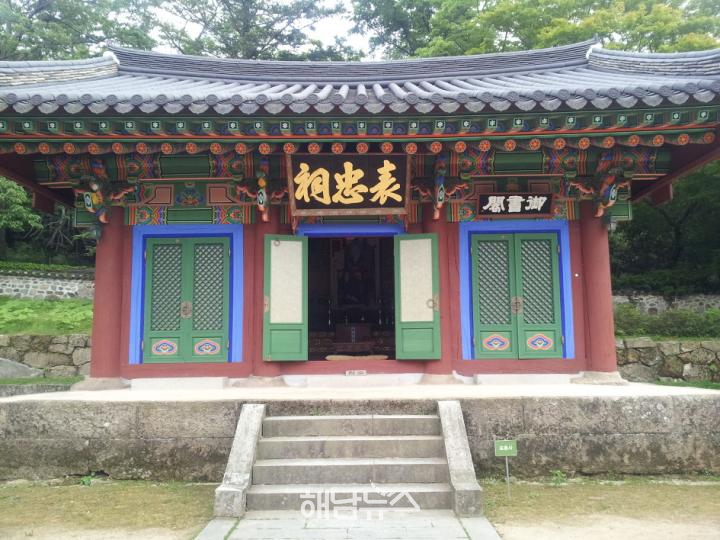 대흥사 표충사 전경 / 사진제공=해남뉴스 |
[Haenam = Haenam News] haenamnews@kakao.com
Park Chung-bae, Editorial Writer / Columnist**
**“The Hall of Loyalty Shaped by King Jeongjo’s Brush”
Re-reading the History, Space, and Spirit of Daeheungsa’s Pyochungsa, National Monument No. 19**
Along the quiet forest path leading toward Bukmirukam of Daeheungsa in Haenam stands a modest-looking hall.
This is Pyochungsa (表忠祠)—designated National Monument No. 19 on September 30, 1976.
Yet this hall is anything but modest.
It is a symbolic stage in Korean intellectual and spiritual history where two forces meet:
Seosan Daesa Hyujeong, the eminent monk who helped save the nation during the Imjin War,
and King Jeongjo, who honored him by inscribing the hall’s name in his own royal hand.
Pyochungsa is more than a place that “expresses loyalty.”
It is a national memory device, where the ideals of state, monarchy, Buddhism, and the common people converge.
In this column, we reexamine:
The background of its designation as a National Monument
The historical significance of King Jeongjo’s calligraphic plaque (royal inscription)
The meaning of Eoseogak (御書閣), the pavilion where the royal writing is enshrined
The key stele within the precincts and the spirit embodied in their inscriptions
I. Why It Became National Monument No. 19
“A shrine of loyalty guaranteed by the nation itself”
The reasons for Pyochungsa’s state-level designation are clear.
1. Seosan Daesa’s stature as the “spiritual commander” of the Imjin War
He organized and led the Buddhist monk militia (僧軍).
He served as a spiritual pillar for both the royal court and the people.
He is one of the very few figures revered simultaneously by temples, Confucian scholars, and government officials.
His legacy transcends Buddhist merit; it stands as a national record of loyalty.
2. King Jeongjo’s personal inscription
King Jeongjo honored Seosan Daesa as “the sacred monk who stepped forward when the nation was in peril.”
He personally wrote and bestowed the inscription Pyochungsa.
Such a royal inscription (saeak, 賜額) was exceedingly rare—even in the Joseon Dynasty—
and symbolized the subject’s exceptional national standing.
3. A Buddhist temple that simultaneously functions as a state shrine of loyalty
A structure dedicated to loyal subjects and monk-soldiers inside a temple precinct
A representative space of late-Joseon Confucian–Buddhist convergence
A site recognized as part of the nation’s transmitted heritage
For these reasons, Pyochungsa stands as one of the most uniquely “shrine-like” monuments
within Korea’s national heritage system, reshaped after the Korean War.
**II. King Jeongjo’s Calligraphy —
“The King’s Brush as a Guide to the Meaning of Loyalty”**
Why is Jeongjo’s handwriting exceptional?
King Jeongjo is celebrated as a monarch of refined literary and artistic taste.
His calligraphy embodies:
disciplined balance,
restrained force,
the dignity of a ruler, and
the composure of a scholar.
Among his many inscriptions, the plaque for Pyochungsa stands out as a national declaration honoring a wartime savior of Joseon.
The national message in the two characters Pyochung (表忠)
Pyo (表): to reveal, to make manifest
Chung (忠): to devote oneself to the nation and its people
Combined, they signify:
“To reveal and honor the loyalty of one who devoted himself to the nation.”
That these characters flowed from Jeongjo’s own brush elevates Pyochungsa to a shrine where loyalty is publicly certified by the throne.
III. The Meaning of Eoseogak (御書閣)
“A sacred space housing the writing of the king”
Eoseo (御書) refers to the writing of the monarch—the royal hand.
Thus, Eoseogak is “the pavilion that houses the king’s writing.”
In Joseon, such a structure was permitted only when:
the individual being honored had rendered exceptional service to the nation,
the king had personally acknowledged that merit by writing or conferring a plaque,
and the writing served as the spiritual center of the temple, academy, or shrine.
Pyochungsa’s Eoseogak functions as both the repository of Jeongjo’s plaque and the symbolic core of Seosan Daesa’s moral legacy.
It is extremely rare for a Buddhist temple to possess a dedicated pavilion solely for enshrining royal calligraphy.
**IV. The Steles Within Pyochungsa
“Loyalty carved in stone—sentences of memory that traverse the ages”**
Many steles stand within Pyochungsa:
testimonies to Seosan Daesa, the monk militia, and the devotion of later generations who sought to commemorate them.
Below are the major steles and the spirit embodied in their inscriptions.
1. The Stele of Seosan Daesa’s Life (行狀碑)
“The life of one monk becomes the history of a nation”
Contents include:
his birth, practice, and enlightenment,
the formation of the monk militia during the Imjin War,
cooperation with Ming forces,
postwar guidance of the populace and temple restoration.
Key message of the inscription:
“The one who illuminated an age of darkness was neither general nor minister, but a monk of wisdom and compassion.”
This stele affirms Seosan Daesa’s role as a religious leader who saved the country.
2. The Stele of Restoration (中修記碑)
“The will of Haenam and Daeheungsa to safeguard the shrine”
The text records:
how Pyochungsa was damaged,
who led its reconstruction,
and how it was restored.
Core meaning:
“To honor loyalty is a duty that every era must rebuild anew.”
Restoration here is more than architecture;
it is the renewal of national consciousness.
3. The Stele Inscribing Jeongjo’s Edict for Pyochungsa (表忠祠記)
“The king’s proclamation of the shrine’s identity”
This stele explains the meaning of the bestowed name and codifies Seosan Daesa’s merit.
Key passages:
“He who stepped forward first when the nation was in danger.”
“Because his loyalty shone forth, let a shrine be built to manifest it eternally.”
Core meaning:
“Loyalty is not to be concealed, but made visible as a model for posterity.”
Nowhere is Jeongjo’s state philosophy clearer.
4. The Stele Honoring the Monk Militia (僧軍 顯彰碑)
“The final military legacy left by Korean Buddhism”
Contents include:
the formation of the monk militia,
the temples that took part,
military engagements and achievements,
and the exploits of Seosan, Samyeong, and Yeonggyu.
Core message:
“To take up arms for the nation is, at times, another expression of compassion.”
This affirms that Buddhist compassion manifested as practical action during national crisis.
**V. Conclusion
“Pyochungsa is not a shrine of the past—it is a space that questions today’s democratic and civic conscience.”**
Pyochungsa is more than a shrine honoring Seosan Daesa.
Within it lie:
the decision of a monk who chose righteousness in a time of national peril,
the state philosophy of King Jeongjo who wished to manifest that loyalty,
and the layers of memory carved in stone by later generations.
And this is why Pyochungsa still matters.
In moments of crisis, it silently asks:
“What defines the dignity of leadership, the solidarity of citizens, and the values of community?”
Pyochungsa remains a sanctuary of loyalty, posing that question even today.
 해남뉴스 박충배 편집 및 논설위원 haenamnews@kakao.com