2026.09.23 (수) 19:45



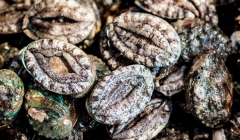
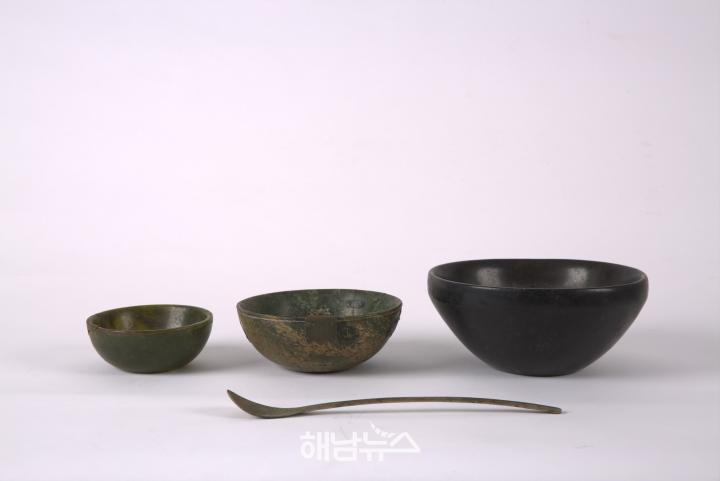 대흥사 성보박물관 소장 서산대사 발우 / 사진제공=해남뉴스 |
박충배 편집/칼럼/논설
Ⅰ. 서론
본 연구는 전라남도 해남 대흥사에 전래된 지방유형문화재 제166호 ‘서산대사 발우’의 사료적 성격을 분석함으로써,
① 선조–서산대사의 교류,
② 서산대사의 승군 조직과 전후 정치적 역할,
③ 대흥사의 법맥적 위상 을 문헌 사료에 근거하여 규명하는 데 목적을 둔다.
특히 『선조실록』, 『청허당집』, 『난중잡록』, 승군 관련 사료 등을 중심으로 서산대사 발우가 단순한 생활유물이 아니라 법맥·정치·지역 도량 관계를 입증하는 실질적 사료임을 논증한다.
Ⅱ. 선조–서산대사의 초기 교류: 『선조실록』을 중심으로
임진왜란 발발 직후 선조조정은 국가적 위기 타개를 위해 승려 휴정(서산대사)을 불러 조언을 듣도록 명한다.
『선조실록』 25년(1592) 4월조에는 다음과 같은 기록이 확인된다.
「休靜僧 行智足 能爲禍難之謀」
*휴정은 지혜와 덕이 충분하니 난세를 해결할 방책을 세울 수 있다.*¹
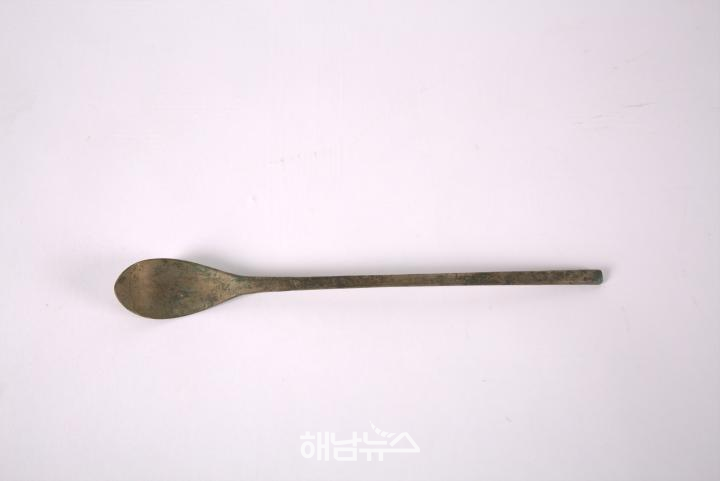 대흥사 성보박물관 소장 서산대사 발우 / 사진제공=해남뉴스 |
이는 전쟁 발발 직후 국왕이 휴정을 '국정 자문자'로 명확히 인식하고 있었음을 보여주는 중요 사료이다.
또한 같은 시기 실록에는 민심 혼란을 수습하기 위해 승려 지도자가 필요하다는 선조의 인식이 다음과 같이 나타난다.
「民心動搖 需安撫之道」
*민심이 동요하니, 이를 안정시킬 길이 필요하다.*²
이러한 사료는 선조–서산대사의 관계가 전쟁 초기부터 ‘정치적 신뢰’ 기반 위에 형성되었음을 입증한다.
Ⅲ. 서산대사의 의승군 조직과 국가적 역할: 『청허당집』 및 『난중잡록』 검토
1. 『청허당집』의 기록
서산대사는 선조의 요청에 응하여 승군 조직을 결의하였고, 이는 문집에 명확히 기록된다.
「國難之時 豈可不以身命奉國」
*국가가 난리에 처했으니 어찌 몸과 목숨을 바쳐 나라에 봉사하지 않겠는가.*³
본 기록은 승군 조직이 단순한 자발적 행동이 아니라 국가의 공식 요청에 따라 수행된 수행·정치적 실천이었음을 보여준다.
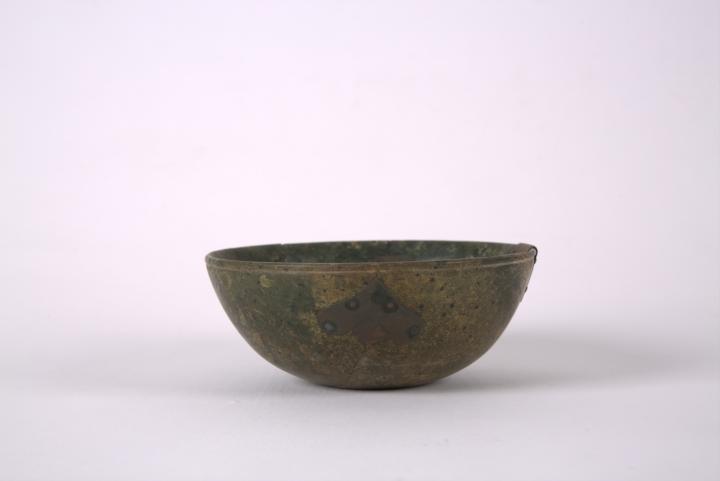 대흥사 성보박물관 소장 서산대사 발우 / 사진제공=해남뉴스 |
2. 『난중잡록』과 승군의 전쟁 활동
『난중잡록』 및 승단 사적에서는 서산대사 제자들(사명·처영·뇌묵 등)의 군사적 활동이 반복적으로 나타난다.
예컨대 사명당(四溟堂)이 금산전투에 참여한 사실은 다음 사료에서 확인된다.
「四溟 等 僧兵 敵陣破之」
*사명 등의 승병이 적진을 격파하였다.*⁴
이 기록은
① 승군이 실전에서 관군과 공동 작전을 수행했으며
② 서산대사의 조직이 국가적 군사력으로 작동했음을 문헌적으로 증명한다.
Ⅳ. 전란 이후의 선조–서산대사 교류: 국사(國師)에 준한 예우
전란이 진정되자 선조는 서산대사를 다시 불러 국정 운영에 관한 의견을 들었다.
『선조실록』에는 다음과 같은 기록이 수록되어 있다.
「上 敬之如師」
*임금은 그를 스승처럼 공경하였다.*⁵
또한 서산대사의 말을 ‘반드시 들었다’는 표현도 확인된다.
「必聽其言」
*그의 말을 반드시 들었다.*⁶
이는 조선 후기 억불 정책 기조 속에서도 드물게 나타나는 승려에 대한 최고 수준의 정치적 예우로, 선조–서산대사 관계가 단순한 전쟁 협력 관계가 아니라 전후 국가 재건의 동반자 관계였음을 시사한다.
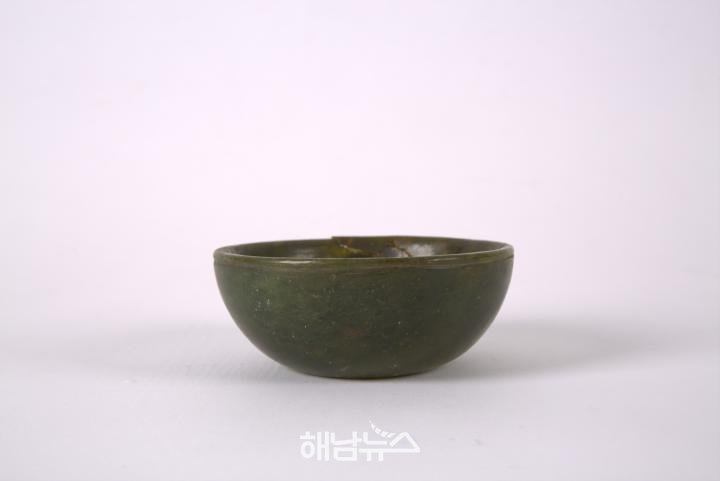 대흥사 성보박물관 소장 서산대사 발우 / 사진제공=해남뉴스 |
Ⅴ. 대흥사의 법맥적 위상과 발우 전승의 사료적 의미
1. 대흥사와 서산대사
대흥사는 서산대사 및 그 제자들의 거점 도량으로서 승단 재건과 선·화엄계 법맥 전승의 중요한 중심지였다.
사찰지에는 다음과 같은 기록이 전한다.
「休靜 住錫 大興」
*휴정이 대흥에 머물렀다.*⁷
이는 대흥사가 서산대사의 실질적 주석처 중 하나였음을 확인케 한다.
2. 발우 전승의 사료적 성격
불교 율장(『사분율』·『범망경』 등)에 의하면 발우(鉢盂) 전승은 법통(法統)의 실체적 계승으로 간주된다.
율장의 기본 규정은 다음과 같다.
「鉢者 佛弟子之所守也 以傳其法」
*발우는 부처 제자가 지니는 바이며, 이를 통해 법이 전해진다.*⁸
따라서 대흥사 성보박물관에 전하는 서산대사 발우는
① 서산대사의 수행적 실물 증거이자
② 제자에게 승계된 법맥의 물적 증거이며
③ 대흥사가 서산 법계승의 중심지였음을 사료적으로 입증하는 유물이다.
즉, 발우는 단순한 생활용구가 아니라 문헌 사료를 물질적으로 보완하는 ‘법맥 사료(material evidence of lineage)’이다.
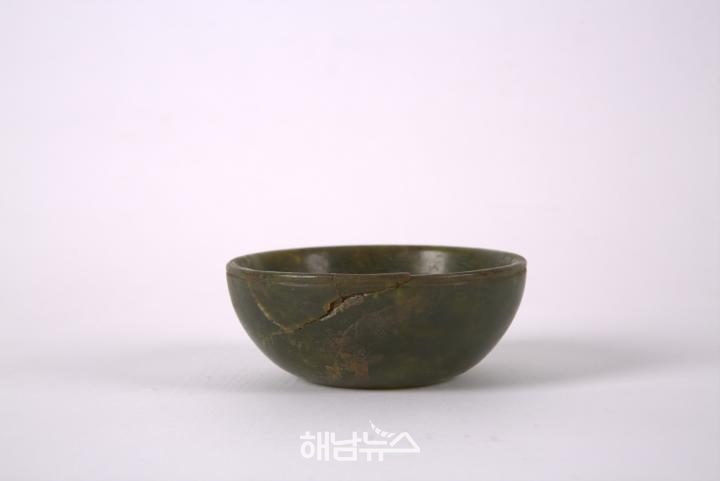 대흥사 성보박물관 소장 서산대사 발우 / 사진제공=해남뉴스 |
Ⅵ. 결론
본 연구는 『선조실록』·『청허당집』·『난중잡록』 등 문헌 사료를 통해
대흥사–서산대사–선조의 관계를 역사적·사상적으로 규명하였다.
선조는 국가적 위기 속에서 휴정을 ‘정치·종교적 자문자’로 신뢰하였다.
서산대사의 승군 조직은 국가의 요청에 따른 법·정치적 실천임이 문헌으로 확인된다.
전란 이후 선조의 예우는 승려에게 주어진 전례 없는 정치적 위상이었다.
대흥사는 서산대사의 법통 중심 도량이며, 발우는 그 법맥 전승의 실물 사료다.
결국, 전남 유형문화재 제166호 서산대사 발우는 조선 후기 국가–불교–지역 도량의 삼중 구조를 입증하는 핵심 사료로 평가된다.
이 유물은 문헌 기록을 물질적·실체적으로 보완하는 기능을 가지며, 한국 불교사·조선 정치사·전남 지역사 연구에서 동시적 의미를 지닌다.
각주(References)
¹ 『선조실록』 25년 4월조.
² 『선조실록』 同年條.
³ 『청허당집』 권1, 「서장(書狀)」.
⁴ 『난중잡록』 제3권.
⁵ 『선조실록』 30년조.
⁶ 同上.
⁷ 『대흥사사적』(傳).
⁸ 『사분율』 권3; 『범망경』 보살계본.
[Haenam = Haenam News] haenamnews@kakao.com
Park Chung-bae · Editor / Column / Commentary
A Philological Study on the Relationship between Daheungsa, Seosan Dasa, and King Seonjo
— Focusing on the Documentary Significance of Seosan Dasa’s Alms Bowl (鉢盂), Jeollanam-do Local Tangible Cultural Property No. 166 —
I. Introduction
The purpose of this study is to analyze the documentary character of “Seosan Dasa’s alms bowl,” designated as Jeollanam-do Local Tangible Cultural Property No. 166 and preserved at Daheungsa Temple in Haenam, Jeollanam-do. Through this analysis, it seeks to clarify, on the basis of textual sources,
the relationship and exchanges between King Seonjo and Seosan Dasa,
the organization of the monk-soldier army (ŭisŭnggun) by Seosan Dasa and his political role in the postwar period, and
the doctrinal-lineage status of Daheungsa Temple.
In particular, drawing mainly on the Annals of King Seonjo (Seonjo sillok), Collected Writings of Cheongheodang (Cheongheodangjip), Miscellaneous Records from the Time of Chaos (Nanjungjaprok), and sources related to the monk-soldier army, this study argues that Seosan Dasa’s alms bowl is not a mere object of daily monastic use, but a substantive piece of evidence that demonstrates the interrelationship between doctrinal lineage, politics, and regional monastic centers.
II. The Early Relationship between King Seonjo and Seosan Dasa:
Focusing on the Annals of King Seonjo
Immediately after the outbreak of the Imjin War (Japanese invasions of Korea), the royal court under King Seonjo ordered that the monk Hyujeong (Seosan Dasa) be summoned to seek his counsel as a means of overcoming the national crisis.
In the Annals of King Seonjo for the 25th year of his reign (1592), 4th month, the following entry appears:
「休靜僧 行智足 能爲禍難之謀」
*The monk Hyujeong possesses sufficient virtue and wisdom and is capable of devising strategies to resolve the calamity.*¹
This passage is an important documentary source demonstrating that, immediately after the outbreak of war, the king clearly regarded Hyujeong as a political adviser to the throne, rather than merely as a Buddhist cleric.
During the same period, the annals also record Seonjo’s perception that a monastic leader was needed to stabilize the disturbed hearts of the people:
「民心動搖 需安撫之道」
*The hearts of the people are shaken; there is a need for a way to pacify them.*²
Taken together, these sources show that the relationship between King Seonjo and Seosan Dasa was grounded in political trust from the early phase of the war.
III. Seosan Dasa’s Organization of the Monk-Soldier Army and His Role at the National Level:
An Examination of Cheongheodangjip and Nanjungjaprok
1. The Record in Cheongheodangjip
Seosan Dasa responded to King Seonjo’s request and resolved to organize a monk-soldier army, and this decision is clearly recorded in his collected writings:
「國難之時 豈可不以身命奉國」
*When the nation is in peril, how could one not offer one’s body and life in service to the country?*³
This passage demonstrates that the formation of the monk-soldier army was not merely a spontaneous act of patriotic zeal, but rather a religious–political practice carried out in response to a formal royal request.
2. Nanjungjaprok and the Wartime Activities of the Monk-Soldier Army
In Nanjungjaprok and various monastic chronicles, the military activities of Seosan Dasa’s disciples—such as Samyeong, Cheoyŏng, and Noemuk—are repeatedly attested.
For example, Samyeongdang’s participation in the Battle of Geumsan is confirmed by the following entry:
「四溟 等 僧兵 敵陣破之」
*Samyeong and other monk-soldiers broke through the enemy lines.*⁴
This record philologically demonstrates that:
the monk-soldier army was not an independent guerrilla group, but a formal military force fighting in cooperation with the government army, and
the monastic organization under Seosan Dasa functioned as an integral component of the state’s military power.
IV. Postwar Exchanges between King Seonjo and Seosan Dasa:
Treatment Equivalent to that of a National Preceptor (國師)
Once the war had subsided, King Seonjo summoned Seosan Dasa again to ask his opinion concerning overall state affairs. This is recorded in the Annals of King Seonjo as follows:
「上 敬之如師」
*The King revered him as a teacher.*⁵
In addition, there is an expression indicating that Seonjo unfailingly heeded Seosan Dasa’s words:
「必聽其言」
*He invariably listened to his words.*⁶
Within the broader context of late Joseon’s “suppression of Buddhism and promotion of Confucianism,” such treatment represents a rare and exceptionally high level of royal favor towards a Buddhist monk. It suggests that the relationship between King Seonjo and Seosan Dasa was not merely a wartime alliance, but rather an enduring postwar partnership for national reconstruction.
V. The Doctrinal-Lineage Status of Daheungsa Temple and the Documentary Meaning of the Transmission of the Alms Bowl
1. Daheungsa Temple and Seosan Dasa
Daheungsa served as a base monastery for Seosan Dasa and his disciples and was an important center for the reconstruction of the monastic community and the transmission of the Seon and Hwaŏm doctrinal lineages.
A monastic chronicle records the following:
「休靜 住錫 大興」
*Hyujeong resided at Daheung[sa].*⁷
This confirms that Daheungsa was one of Seosan Dasa’s actual places of residence and teaching, rather than merely a symbolic association.
2. The Documentary Character of the Transmission of the Alms Bowl
According to Buddhist vinaya texts such as the Four-Part Vinaya (Sifenlü) and the Brahmā’s Net Sūtra (Fanwangjing), the transmission of the alms bowl (鉢盂) is regarded as the concrete succession of the Dharma lineage (法統).
A basic rule in the vinaya is expressed as follows:
「鉢者 佛弟子之所守也 以傳其法」
*The alms bowl is what the disciples of the Buddha keep; through it the Dharma is transmitted.*⁸
Accordingly, the alms bowl of Seosan Dasa preserved in the Sacred Treasures Museum of Daheungsa is:
tangible evidence of Seosan Dasa’s personal practice and daily monastic life;
a material proof of the Dharma lineage transmitted to his disciples; and
a documentary artifact demonstrating that Daheungsa functioned as the central monastery of Seosan’s Dharma succession.
In this sense, the alms bowl is not a mere utensil of daily use, but a “lineage document” in material form that concretely supplements written sources.
VI. Conclusion
By examining the Annals of King Seonjo, Cheongheodangjip, Nanjungjaprok, and related textual materials, this study has historically and intellectually elucidated the relationship among Daheungsa Temple, Seosan Dasa, and King Seonjo.
The findings can be summarized as follows:
King Seonjo, amid a grave national crisis, trusted Hyujeong (Seosan Dasa) as a political and religious adviser.
The organization of the monk-soldier army by Seosan Dasa was a legal–political action undertaken at the request of the state, as confirmed in the texts.
After the war, the royal treatment given to Seosan Dasa represented an unprecedented political status for a Buddhist monk.
Daheungsa functioned as the central monastery of Seosan Dasa’s Dharma lineage, and the alms bowl constitutes the material evidence of that lineage.
Therefore, Seosan Dasa’s alms bowl, Jeollanam-do Local Tangible Cultural Property No. 166, should be evaluated as a key documentary artifact that substantiates the tripartite structure of state–Buddhism–regional monastery in late Joseon.
This artifact complements written records in a tangible and concrete manner and carries simultaneous significance for research in Korean Buddhist history, Joseon political history, and the regional history of Jeollanam-do.
References
¹ Seonjo sillok (Annals of King Seonjo), 25th year, 4th month.
² Seonjo sillok, same year, related entry.
³ Cheongheodangjip, vol. 1, “Letters” (Seojang).
⁴ Nanjungjaprok, vol. 3.
⁵ Seonjo sillok, 30th year.
⁶ Ibid.
⁷ Daheungsa Temple Records (Daheungsasajeok, trad.).
⁸ Four-Part Vinaya (Sifenlü), vol. 3; Brahmā’s Net Sūtra (Fanwangjing), Bodhisattva Precepts chapter.
 해남뉴스 박충배 편집 및 논설위원 haenamnews@kakao.com