2026.03.12 (목) 14:26



 |
해남 두륜산 능선 끝, 암벽에 새겨진 거대한 마애여래좌상과 이를 받치듯 선 동·서 두 탑.
북미륵암은 자연과 조형, 풍수와 신앙이 한데 얽혀 ‘입체적 신앙지형’을 이룬다.
특히 국보 제308호 마애여래좌상을 둘러싼 제작 시기와 의미는 최근 새로운 해석이 더해지며 주목받고 있다.
■ 바다에서 올라온 ‘꽃게 형국’… 북미륵암의 풍수지리
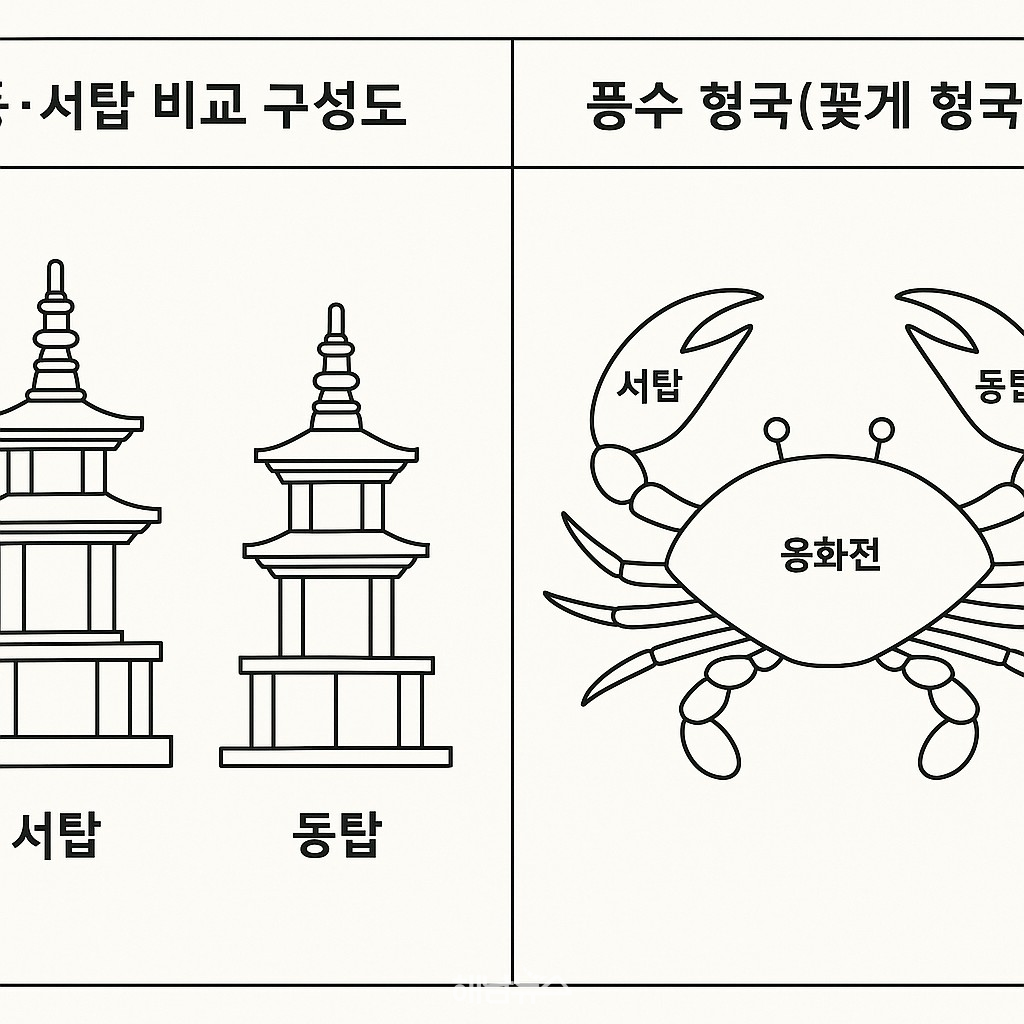
해남 풍수지리에서는 북미륵암을 ‘바다에서 육지로 오른 꽃게 형국’으로 설명한다.
두륜산 자락에서 이례적으로 좌우로 넓게 펼쳐진 지형이 꽃게가 두 집게발을 벌리고 앞으로 전진하는 형상을 닮았기 때문이다.
꽃게의 몸통 → 용화전
오른쪽 집게발 → 서탑(보물 제301호)
왼쪽 집게발 → 동탑
이는 건물 배치를 넘어, 지형을 안정시키고 기운을 모으는 두 개의 ‘지기(地氣) 지지대’로 기능하다.
북미륵암의 암주를 지낸 은성스님은 이 형국을 더욱 상징적으로 해석한다.
“북미륵암은 꽃게가 부처님을 받들 듯 두 팔을 벌린 자리입니다. 두 탑은 꽃게의 집게발, 동시에 마애불에서 뻗어 나온 ‘부처님의 손가락 위에 놓인 탑’입니다.”
즉, 탑은 마애여래좌상에서 흘러나온 법력(法力)이 세상으로 확장되는 지점이자, 풍수적 중심축을 완성하는 ‘법계의 구조물’인 셈이다.
■ 국보 제308호 마애여래좌상, “고려 초가 아닌 통일신라 말 조성”
은성스님의 학설… “불상이 향한 곳은 완도 청해진, 장보고의 시대적 배경 반영”
국보 제308호 북미륵암 마애여래좌상은 일반적으로 고려 11세기경 조성된 것으로 추정된다.
그러나 은성스님은 조성 시기를 ‘통일신라 말기’로 보아야 한다는 새로운 해석을 제기한다.
그 근거는 두 가지다.
① 불상의 양식·형식이 통일신라 말기의 특징과 더 가깝다.
은성스님에 따르면 마애불의 신체 비례, 항마촉지인의 손 모양, 공양천인 표현 방식 등은 경주·합천 계열 통일신라 말기 마애불의 흐름과 더 유사하다는 것이다.
즉, 조형적 요소에서 고려 초기의 중후한 양식보다 통일신라 말기의 세부 묘사 방식과 정신성이 강하게 드러난다는 해석이다.
② 불상이 바라보는 방향이 ‘완도 청해진’을 향한다.
이 점이 특히 주목된다.
은성스님은 다음과 같이 설명했다.
“북미륵암 마애여래좌상은 정교하게 완도 청해진 방향을 향하고 있습니다. 이는 단순한 자연 배치가 아니라, 삼면해(三面海) 해양왕국을 꿈꾸던 장보고 세력의 시대적 기대감이 담긴 자리로 보입니다.”
즉, 통일신라 말 장보고가 해상권을 장악하며 왕권에 도전하고자 했던 시기, 그의 세력을 지지하던 지방 세력 혹은 승려 집단이 해상불국토(海上佛國土)를 상징하는 미륵불을 조성했을 가능성이 제기되는 것이다.
이는 단순한 종교 조형물을 넘어 당대 정치·해양·지방세력의 염원이 담긴 기념비적 신앙 조형물일 수 있음을 시사한다.
학계 공식설은 아니지만, 구전으로 전해져온 설은 마애불의 방향성과 풍수·역사 맥락을 모두 고려한 해석으로서 충분한 가치가 있다.
■ 고려의 미감, 조선의 중수… 보물 제301호 삼층석탑(서탑)
서탑은 고려 전기의 전형적인 석탑 형식을 지닌다.
2단 기단, 3층 탑신, 몸돌 모서리 기둥조각, 넓고 얇은 지붕돌, 위층으로 갈수록 간결해지는 비례, 한편 조선 명종 9년(1554년) 탑을 세웠다는 기록이 있어, 고려 탑을 조선에서 크게 중수한 것으로 해석된다.
서탑은 결국, 고려의 원형, 조선의 보수, 현대의 보존이 이어진 시간의 단면이다.
■ 마애불·동·서탑·용화전… 자연이 만든 ‘삼각 신앙 구조’
북미륵암 앞마당의 동·서 쌍탑은 마애불을 향해 살짝 기울어 자연 지형 속에서 완성된 ‘쌍탑 법당’ 구조를 형성한다.
마애불은 몸(法身), 동·서탑은 양손의 손가락(智慧의 발현), 용화전은 법을 간직한 가슴(佛國土).
이 모든 구조물은 서로 떨어져 있으면서도 미륵도량의 하나의 몸체처럼 호응한다.
■ 보물 지정의 이유… ‘남녘 끝의 전형’이 지닌 아름다움
서탑이 보물 제301호로 지정된 이유는 다음과 같다.
① 고려 탑 전형미의 보존
구조적 안정감, 옥개석 비례, 기단 구성 등 전형적 형태를 고스란히 간직.
② 남해안 최남단 석탑의 희귀성
지리적·문화적 조건을 생각하면 더욱 가치가 높다.
③ 신앙지형의 핵심 구성요소
동탑·마애불·용화전과 함께 하나의 신앙 구조를 이룬다.
풍수적으로는 ‘꽃게 형국의 오른쪽 집게발’이라는 상징성을 지닌다.
■ 천 년의 침묵이 전하는 말
서탑 앞에 서면 두륜산 바람이 탑의 옥개를 스치고, 아래로는 종소리가 먼 능선까지 퍼져나간다.
바다에서 오른 꽃게 형국, 부처님의 손가락 위에 놓인 탑, 장보고 시대의 염원이 깃들었다는 은성스님의 해석, 고려의 조형과 조선의 중수, 그리고 오늘의 보존. 이 여러 층위의 시간이 한 점으로 모일 때 북미륵암의 석탑과 마애불은 조용히 속삭인다.
“기운이 좋은 자리는 결국 사람의 마음을 다시 세우는 자리이다.”
두륜산 정상부에 가까운 북미륵암에서, 천 년의 침묵은 오늘도 깊게 흐르고 있다.
[Haenam = Haenam News] haenamnews@kakao.com
**Bukmirueok Hermitage of Duryunsan:
Where the Sea’s Crab Shape Cradles Maitreya**
— Treasure No. 301 Three-Story Stone Pagoda, National Treasure No. 308 Rock-carved Seated Buddha, and a Millennium of Geomancy & Faith —
At the ridge end of Mt. Duryunsan in Haenam stands a majestic rock-carved seated Buddha, with two stone pagodas positioned like guardians on its east and west sides.
Bukmirueok Hermitage forms a unique “three-dimensional religious landscape,” where nature, architecture, geomancy, and Buddhism intertwine seamlessly.
Recent years have seen renewed attention to National Treasure No. 308—the Rock-carved Seated Buddha—due to emerging interpretations of its era and meaning.
■ A Crab Emerging from the Sea: The Geomantic Landscape of Bukmirueok Hermitage
In Haenam geomancy, Bukmirueok Hermitage is described as a “crab rising from the sea onto land.”
The terrain spreads unusually wide across the mountain slope, resembling a crab with its claws stretched forward in motion.
Crab’s body → Yonghwa-jeon Hall
Right claw → West Pagoda (Treasure No. 301)
Left claw → East Pagoda
This arrangement functions not merely as architectural placement but as two geomantic pillars that stabilize the terrain and concentrate spiritual energy.
Venerable Eunseong, former resident monk of Bukmirueok Hermitage, interprets this shape in an even more symbolic way:
“Bukmirueok Hermitage is where a crab spreads its arms to uphold the Buddha.
The two pagodas serve as its claws, and at the same time,
they are pagodas placed on the ‘fingers of the Buddha’ extending from the rock-carved image.”
Thus, the pagodas serve as points where the spiritual force of the rock-carved Buddha radiates outward, completing the geomantic axis of the entire sacred site.
■ National Treasure No. 308 Rock-carved Seated Buddha
“Not Early Goryeo, but Late Unified Silla”—Venerable Eunseong’s Theory
“The Buddha faces Wando’s Cheonghaejin, reflecting the era of General Jang Bogo”
The Bukmirueokam Rock-carved Seated Buddha is generally dated to the 11th-century early Goryeo period.
However, Venerable Eunseong argues that its creation should instead be attributed to late Unified Silla, offering two key reasons.
1) Its sculptural style corresponds closely to late Unified Silla
According to Eunseong, the Buddha’s body proportions, the detailed shape of the “earth-touching” gesture, and the depiction of attendant celestial beings resemble the stylistic lineage of late Unified Silla rock carvings from regions such as Gyeongju and Hapcheon—
displaying more late-Silla characteristics than early Goryeo heaviness.
2) The Buddha faces directly toward Wando’s historic Cheonghaejin
This point is particularly significant.
Eunseong explains:
“The rock-carved Buddha precisely faces the direction of Cheonghaejin on Wando.
This cannot be dismissed as coincidence.
It appears to contain the hopes and aspirations of the era when General Jang Bogo sought to build a maritime kingdom, commanding the seas on all three sides.”
In other words, during the late Unified Silla era—when Jang Bogo gained maritime dominance and challenged the central royal authority—
local supporters or monastic communities may have carved this Buddha as a symbol of a maritime Buddhist utopia aligned with his vision.
Though not an academic consensus, this oral tradition offers a compelling interpretation that considers the Buddha’s orientation, local geomancy, and the historical context of Jang Bogo’s era.
■ Goryeo Aesthetics, Joseon Restoration:
Treasure No. 301 Three-story Stone Pagoda (West Pagoda)
The West Pagoda exhibits the classic features of an early Goryeo stone pagoda:
Two-tier stylobate
Three-story body
Corner column carvings
Wide and thin roof stones
Simplified, upward-lightening proportions
A record from 1554 (King Myeongjong of Joseon) states that a pagoda was erected at this site, suggesting that the original Goryeo structure underwent significant restoration during the Joseon Dynasty.
Thus, the West Pagoda embodies continuity across eras:
Goryeo origins,
Joseon restoration, and
Modern preservation.
It is, in effect, a cross-section of time carved in stone.
■ Buddha, East Pagoda, West Pagoda, Yonghwa-jeon:
A Natural “Triangular Sanctuary”
The east and west pagodas incline slightly toward the Buddha, forming a natural twin-pagoda temple layout integrated into the mountainside.
The rock-carved Buddha = Body (Dharmakāya)
The two pagodas = Fingers of wisdom
Yonghwa-jeon = The heart that contains the Dharma
Each structure stands independently yet resonates as one unified Maitreya mandala, harmonizing into a single sacred body.
■ Why Treasure No. 301?
The Beauty of a “Southern Archetype” Preserved at the Peninsula’s Edge
The reasons for designating the West Pagoda as a Treasure are clear:
1) Preservation of early Goryeo pagoda aesthetics
Its stability, roof-stone proportions, and stylobate composition remain remarkably intact.
2) Rarity in Korea’s southernmost coastal region
A pagoda of such classical form surviving in far-southern Haenam is exceptionally rare.
3) A core component of Bukmirueok’s sacred geography
Together with the East Pagoda, the Buddha, and Yonghwa-jeon, it forms the essential framework of the site.
Geomantically, it functions as the right claw of the Crab Formation.
■ The Message of a Thousand Years of Silence
Standing before the West Pagoda, the mountain wind brushes through its stone eaves, and temple bells echo faintly across the ridges.
A crab rising from the sea, pagodas placed on the Buddha’s fingers,
the aspirations of Jang Bogo’s era,
Goryeo craftsmanship, Joseon restorations, and modern-day preservation—
all these layers converge into a single point.
In that convergence, the Buddha and the pagoda seem to whisper:
“A place of auspicious energy
is ultimately a place that restores the human heart.”
Near the summit of Mt. Duryunsan,
the thousand-year silence of Bukmirueok Hermitage continues to flow quietly, even today.
 해남뉴스 박충배 편집 및 논설위원 haenamnews@kakao.com