2026.09.22 (화) 03:00




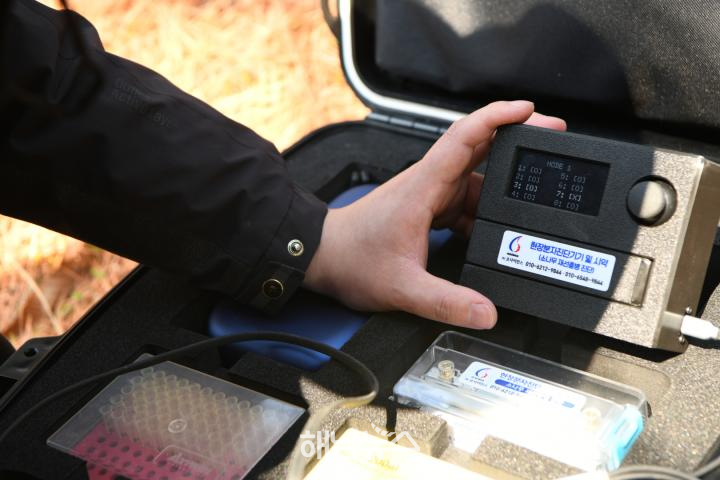 산림병해충 예찰·진단-재선충병 유전자 진단 검사/ 사진제공=전라남도 |
전라남도산림연구원이 기후변화로 산림병해충의 발생 시기와 활동 기간이 점차 빨라지고 길어지는 등 발생 양상이 변화함에 따라 과학 기반 예찰과 정밀진단, 방제기술 연구를 강화하고 있다.
산림연구원에 따르면 최근 기온 상승으로 소나무재선충병 매개충인 솔수염하늘소를 비롯한 주요 산림해충의 활동 기간이 길어지고 있으며, 돌발 병해충 발생도 증가하면서 산림과 도시숲의 피해가 확산되는 추세다.
산림병해충 예찰은 병해충 발생 여부와 피해 정도, 확산 양상 등을 사전에 조사·분석해 적기에 방제하기 위한 활동으로, 전남산림연구원은 시군 산림부서와 협력해 조기 발견과 정확한 진단을 위한 예찰 활동을 적극 추진하고 있다.
특히 예찰의 효율성과 정확성을 높이기 위해 대상지 선정과 우선순위, 조사 시기 등을 종합적으로 고려한 현장 중심의 예찰 계획을 수립하고 있으며, 사람이 접근하기 어려운 산림지역에는 드론을 활용한 항공예찰도 병행하고 있다.
현재 전남산림연구원은 소나무재선충병, 솔잎혹파리, 솔껍질깍지벌레, 참나무시들음병 등 주요 산림병해충과 도시숲 피해 병해충을 포함한 총 15종을 대상으로 도내 22개 시군 110개소에 고정조사구를 설치해 발생 시기와 규모, 피해 상황을 조사하고 있다.
또한 유아등을 활용한 산림해충 채집과 함께 명승지와 국립공원 등 주요 산림지역 10개소를 대상으로 돌발 병해충 발생 상황을 오는 9월까지 매월 정기 조사할 계획이다.
산림 분야 최대 피해 요인으로 꼽히는 소나무재선충병에 대해서는 매개충 우화 상황을 조사하는 한편 피해가 심한 지역에는 친환경 방제 방식인 페로몬 유인트랩을 설치해 솔수염하늘소를 집중 포획하고 있다.
아울러 가로수와 조경수에 피해를 주는 맵시혹나방과 황칠나무 잎마름병 등 신규 병해충에 대해서는 방제 효과와 안전성이 높은 약제를 선발하기 위한 농약 직권등록시험도 추진하고 있다.
오득실 전남산림연구원장은 “산림병해충은 조기 예찰과 정확한 진단이 무엇보다 중요하다”며 “기후변화에 대응해 주요 산림병해충은 물론 돌발 병해충에도 선제적으로 대응하고 예찰·진단·방제기술 연구를 강화해 산림 피해를 최소화하겠다.”고 말했다.
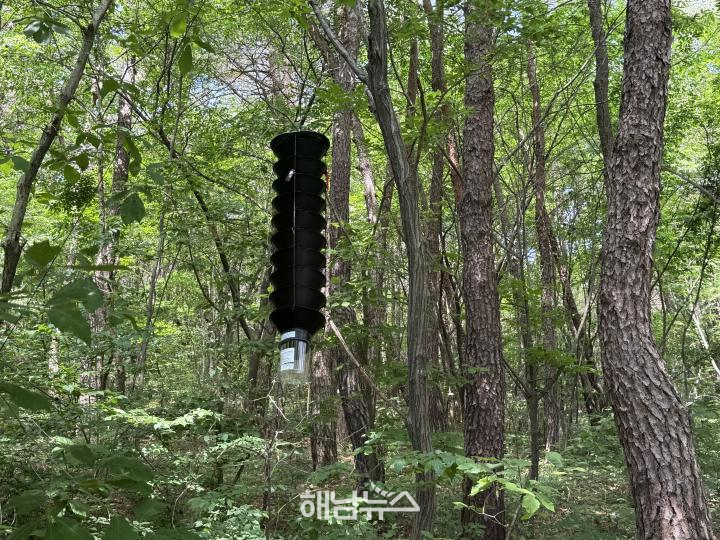 산림병해충 예찰·진단-솔수염하늘소 페로몬트랩 조사 / 사진제공=전라남도 |
[Jeonnam = Haenam News] haenamnews@kakao.com
Jeonnam Forest Research Institute Strengthens Forest Pest Monitoring and Control Technology Research
Expanding Drone-Based Aerial Monitoring and Eco-Friendly Control Measures to Respond to Climate Change
The Jeollanam-do Forest Research Institute is strengthening scientific monitoring, precise diagnosis, and pest control technology research as climate change continues to alter the occurrence patterns of forest pests, causing earlier emergence and longer activity periods.
According to the institute, rising temperatures have extended the activity period of major forest pests, including the Japanese pine sawyer beetle, the vector responsible for pine wilt disease. At the same time, outbreaks of invasive and unexpected pests are increasing, leading to greater damage in forests and urban green spaces.
Forest pest monitoring involves observing and investigating pest occurrence, damage levels, and spread patterns in advance to enable timely and effective control measures. The institute is actively conducting monitoring activities in cooperation with municipal and county forestry departments to ensure early detection and accurate diagnosis.
To improve efficiency and accuracy, the institute develops field-oriented monitoring plans based on target-site selection, priority levels, survey timing, and frequency. Drone-based aerial monitoring is also being utilized in mountainous and inaccessible forest areas where ground inspections are difficult.
Currently, the institute operates fixed monitoring plots at 110 locations across all 22 cities and counties in Jeollanam-do. These sites are used to investigate the occurrence period, scale, and status of 15 major forest and urban-tree pests and diseases, including pine wilt disease, pine gall midge, pine bast scale insect, and oak wilt disease.
In addition, the institute collects forest insects using light traps and conducts monthly surveys through September at ten major forest areas, including scenic sites and national parks, to monitor the occurrence of sudden pest outbreaks.
Particular attention is being given to pine wilt disease, one of the most destructive forest diseases. Along with monitoring the emergence of its vector insects, eco-friendly pheromone traps are being installed in severely affected areas to capture Japanese pine sawyer beetles and reduce pest populations.
The institute is also conducting pesticide registration trials to identify highly effective and environmentally safe control agents for newly emerging pests and diseases, such as the spotted moth that damages street trees and the leaf blight disease affecting dendropanax trees.
Oh Deuk-sil, Director of the Jeollanam-do Forest Research Institute, said, “Early monitoring and accurate diagnosis are the most important factors in preventing forest pest damage. We will proactively respond not only to major forest pests but also to emerging and unexpected outbreaks caused by climate change, while strengthening research on monitoring, diagnosis, and control technologies to minimize forest damage.”
 해남뉴스 박충배 편집 및 논설위원 news@hbcnews.kr