| 국보로 가는 길인가, 하천 바닥인가…해남군은 각성하라 북미륵암 접근로 훼손 직접 확인…문화예술과에 현장 점검과 정비 촉구 해남뉴스 박충배 편집/논설 news@hbcnews.kr |
| 2026년 10월 11일(일) 22:12 |
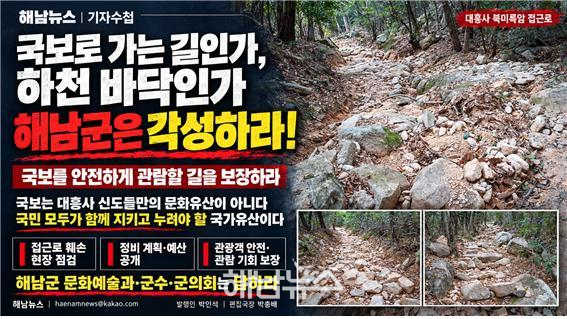 해남군은 각성하라 / 사진제공=ai이미지 |
[해남=해남뉴스] haenamnews@kakao.com
국보를 보러 가는 길에서 해남의 문화유산 행정 수준을 묻게 됐다.
필자가 직접 걸으며 확인한 대흥사 북미륵암 접근로는 크고 작은 돌이 뒤엉키고, 노면이 패여 발을 디딜 곳부터 살펴야 하는 상태였다. 나무뿌리가 드러나고 돌 사이에는 불규칙한 틈과 높낮이가 이어졌다. 함께 제시한 사진은 그 현장의 모습이다.
“등산로인지, 북미륵암으로 가는 길인지, 하천 바닥인지 도저히 구분이 안 된다.”
현장을 지나며 필자가 느낀 참담함이다. 산길이기에 어느 정도의 불편은 감수할 수 있다. 그러나 훼손된 통행 구간에서 발을 헛디딜 위험까지 방문객의 몫으로 돌려서는 안 된다. 더욱이 이 길은 우리나라의 소중한 국보를 만나러 가는 길이다.
북미륵암에는 옛 국보 제308호인 ‘해남 대흥사 북미륵암 마애여래좌상’이 있다. 인근에는 보물로 지정된 북미륵암 삼층석탑도 있다. 귀중한 문화유산을 눈앞에 두고도 접근로의 불편과 위험을 먼저 걱정해야 하는 현실을 해남군은 어떻게 설명할 것인가.
문화유산은 존재하는 것만으로 관광객에게 관람 기회가 보장되지 않는다. 찾아갈 수 있는 길과 안전하게 이동할 수 있는 환경이 함께 마련돼야 한다. 거친 노면과 훼손된 접근로는 특히 고령자와 어린이를 동반한 가족, 보행이 불편한 관광객에게 큰 장벽이 된다.
관광객들에게 국보를 관람할 기회를 빼앗는 결과를 낳는 행정에 대해 해남군은 각성해야 한다. 위험한 접근 환경을 개선하지 않은 채 방문객의 체력과 인내에 맡긴다면, 국보를 보고 배우려는 발걸음을 행정이 가로막는 셈이다. 국보를 관광 자원으로 홍보하면서 정작 그곳에 이르는 길을 소홀히 하는 모순부터 바로잡아야 한다.
해남군청 문화예술과에 공개적으로 이의를 제기한다. 북미륵암 접근로의 훼손 상태를 현장에서 확인하라. 통행 위험을 조사하고, 관리 주체와 관련 부서의 책임을 정리해 정비 계획을 공개하라. 무엇을 언제까지 개선할 것인지 군민과 방문객에게 구체적으로 답해야 한다.
국보는 해남군의 문화유산이다. 나아가 국민 모두가 함께 지키고 누려야 할 국가유산이다. 대흥사 신도들만의 문화유산이 아니다. 사찰이 소유·관리한다는 사실이 그 문화적 가치를 특정 종교의 울타리 안에 가두는 이유가 될 수는 없다.
불교 신자도, 기독교 신자도, 종교가 없는 사람도 국보를 찾아 그 역사와 아름다움을 배울 수 있어야 한다. 안전한 접근로를 마련하는 일은 문화유산을 향유할 기회를 지키는 공공의 과제다.
필자는 대흥사 지원에 반대하는 기독교 단체의 주장과 군수·군의원들의 공개적인 지원 반대를 직접 경험했다. 이 대목은 전해 들은 이야기가 아니라 집필자가 직접 겪은 사실임을 분명히 밝힌다.
그 경험을 바탕으로 묻는다. 대흥사 지원 문제를 판단하면서 국가유산 보존과 방문객 안전이라는 공공성을 충분히 살폈는가. 사찰에 대한 지원이라는 이유로 문화유산과 그 접근 환경을 개선하는 일까지 반대 대상으로 삼은 것은 아닌가.
문화유산의 공공성을 외면하는 지원 반대와, 그 반대에 머무는 군수·군의원들의 태도를 강력히 규탄한다. 국보를 지키고 국민이 안전하게 찾아가도록 하는 일에 종교적 편견이 개입해서는 안 된다.
공공예산은 엄격하게 검토해야 한다. 사업의 필요성과 규모, 집행의 투명성도 따져야 한다. 그렇다면 군수와 군의원들은 어떤 사업의 어느 항목에 반대했는지, 그 근거는 무엇인지 설명해야 한다. 필요한 정비에 반대했다면 방문객 안전과 관람 기회를 확보할 대안도 함께 제시해야 한다.
군수는 군민 전체를 위한 행정을 책임지는 자리다. 군의원은 주민의 안전과 지역의 미래를 살피는 자리다. 개인의 신앙과 공적인 책무를 구분하고, 문화유산의 가치와 사업의 공익성을 기준으로 판단해야 한다.
두륜산을 찾는 등산객과 북미륵암을 찾는 관람객의 발걸음도 행정이 살펴야 할 대상이다. 필자가 제기하는 ‘연간 20만 명이 넘는 등산객의 관람권’ 문제에 대해 해남군은 정확한 이용 통계와 관리 대책으로 답하라. 두륜산 전체 이용객과 북미륵암 방문객을 구분해 현황을 공개하고, 통행량과 위험도를 반영한 정비 기준을 마련해야 한다.
방문객 수를 관광 성과로 내세우면서 방문객이 걷는 길의 안전을 놓친다면 행정의 무능이라는 비판을 피하기 어렵다. 문화유산을 알리는 홍보만큼, 관광객이 실제로 보고 배울 수 있는 환경을 만드는 일에도 책임을 다해야 한다.
해남에는 북미륵암 마애여래좌상과 윤두서 자화상이라는 두 국보가 있다. 북미륵암의 삼층석탑은 국보와 구분되는 보물이다. 귀중한 유산을 품은 지역이라면 그에 걸맞은 보존과 관람 환경을 갖추려는 노력부터 보여야 한다. 국보를 향한 접근성이 이처럼 문제로 남아 있다는 것은 해남의 부끄러움이다.
산 전체를 콘크리트로 덮으라는 요구가 아니다. 훼손된 구간의 노면과 배수를 점검하고, 불안정한 돌을 정비하며, 필요한 곳에 최소한의 안전시설과 안내시설을 마련하라는 요구다. 자연환경과 문화유산을 보전하면서 보행 위험을 줄일 방법을 찾아야 한다.
문화예술과는 관련 부서와 대흥사, 관계기관을 연결해 해결에 나서라. 해남군의회는 점검 실적과 정비 예산을 확인하고, 필요한 사업이 실행되도록 역할을 다하라. 대흥사 역시 관리 주체로서 접근로 개선 협의에 적극 참여해야 한다.
필자는 현장을 직접 걸었고, 훼손된 길을 직접 확인했으며, 공개적인 지원 반대도 직접 경험했다. 이제 그 경험을 해남의 문화유산 행정에 대한 공개적인 문제 제기로 남긴다.
국보를 보러 온 관광객이 길의 위험부터 걱정해야 하는 현실은 바뀌어야 한다. 관람의 기회를 가로막는 접근 환경을 개선하는 일에 해남군은 더 이상 소극적이어서는 안 된다.
해남군은 각성하라. 국보를 자랑하려면, 국민이 그 국보를 안전하게 만날 수 있는 길부터 책임져야 한다.
Is This a Path to a National Treasure or a Streambed? Haenam County Must Wake Up
Damage to the Bungmireugam access trail witnessed firsthand—on-site inspection and repairs urged
Unsafe access obstructs tourists’ opportunity to view cultural heritage—the county head and council must recognize its public value
[Haenam—Haenam News] haenamnews@kakao.com
On the path to a National Treasure, I found myself questioning the standard of cultural heritage administration in Haenam.
I walked the access trail to Bungmireugam Hermitage at Daeheungsa Temple and saw its condition firsthand. Large and small stones lay jumbled together, and the uneven, eroded surface forced me to check where to place each foot. Tree roots were exposed, with irregular gaps and changes in height between the rocks. The accompanying photographs show these conditions.
“It is impossible to tell whether this is a hiking trail, a path to Bungmireugam, or a streambed.”
That was my dismayed reaction as I passed through the area. Some inconvenience is to be expected on a mountain trail. But visitors should not be left to bear the risk of losing their footing on damaged sections. This is, after all, the route to one of Korea’s precious National Treasures.
Bungmireugam houses the “Rock-carved Seated Buddha at Bungmireugam Hermitage of Daeheungsa Temple, Haenam,” formerly designated National Treasure No. 308. Nearby stands the Three-story Stone Pagoda at Bungmireugam, designated a Treasure. How does Haenam County explain a situation in which visitors must worry about difficult and unsafe access before they can appreciate these cultural treasures?
The mere existence of cultural heritage does not guarantee tourists an opportunity to see it. There must also be a route they can follow and conditions that allow them to travel safely. Rough surfaces and damaged access trails create particularly serious barriers for older people, families with children, and visitors with limited mobility.
Haenam County must wake up to an administrative failure that effectively deprives tourists of the opportunity to view a National Treasure. Leaving hazardous access conditions unimproved and relying on visitors’ stamina and perseverance amounts to placing an administrative obstacle in their path. The county must resolve the contradiction between promoting a National Treasure as a tourist attraction and neglecting the route that leads to it.
I publicly raise this objection with Haenam County’s Culture and Arts Division. Inspect the damaged Bungmireugam access trail on site. Assess the risks, clarify the responsibilities of the managing body and relevant departments, and publish a repair plan. Residents and visitors deserve specific answers about what will be improved and when.
This National Treasure is part of Haenam’s cultural heritage. It is also national heritage whose value should be protected and shared by everyone. It does not belong, in cultural terms, exclusively to Daeheungsa’s Buddhist congregation. The fact that a temple owns and manages it cannot justify confining its cultural significance within the boundaries of a single religion.
Buddhists, Christians, and people with no religious affiliation should all have the opportunity to visit the National Treasure and learn about its history and beauty. Providing safe access is a public responsibility that protects this opportunity.
I personally witnessed objections from Christian groups to support for Daeheungsa, as well as public opposition to such support by county heads and county council members. I make clear that this account is based on my own experience, not on hearsay.
That experience prompts these questions: When considering support for Daeheungsa, did they adequately consider the public interests of national heritage conservation and visitor safety? Was opposition to support for a temple extended to improvements intended to protect cultural heritage and its access routes?
I strongly condemn opposition that disregards the public value of cultural heritage, and the stance of county heads and council members who remain committed to such opposition. Religious prejudice must not interfere with protecting a National Treasure or enabling people to reach it safely.
Public spending must be scrutinized rigorously. A project’s necessity, scale, and transparency must also be examined. County heads and council members should therefore explain which projects and budget items they opposed, and on what grounds. If they opposed necessary repairs, they must also present alternatives that ensure visitor safety and preserve opportunities to view the heritage.
A county head is responsible for administering the county in the interests of all residents. County council members are responsible for safeguarding public safety and the region’s future. They must distinguish personal faith from public duty and base their decisions on cultural heritage value and public benefit.
The county must also consider the people who hike Duryunsan Mountain and visit Bungmireugam. In response to my concern about “the viewing rights of more than 200,000 hikers annually,” Haenam County should provide accurate visitor statistics and a management plan. It should distinguish between all Duryunsan users and visitors to Bungmireugam, publish those figures, and establish repair priorities based on traffic and risk.
An administration that presents visitor numbers as a tourism achievement while overlooking the safety of the paths those visitors use cannot escape criticism for incompetence. It must devote as much attention to enabling tourists to see and learn about cultural heritage as it does to promoting it.
Haenam has two National Treasures: the Rock-carved Seated Buddha at Bungmireugam and Yun Du-seo’s Self-Portrait. The Three-story Stone Pagoda at Bungmireugam is designated a Treasure, a category distinct from National Treasure. A region entrusted with such precious heritage should demonstrate a corresponding commitment to conservation and visitor access. That access to a National Treasure remains a concern is a source of shame for Haenam.
This is not a demand to cover the mountain in concrete. It is a demand to inspect damaged trail surfaces and drainage, stabilize loose stones, and install essential safety features and signs where needed. Ways must be found to reduce walking hazards while protecting the natural environment and cultural heritage.
The Culture and Arts Division must bring together the relevant departments, Daeheungsa, and other responsible agencies to resolve the problem. The Haenam County Council must examine inspection records and repair budgets and help ensure that necessary work proceeds. Daeheungsa, as the managing body, must also participate actively in discussions about improving access.
I walked the route myself, witnessed the damage firsthand, and personally experienced public opposition to support. I now place that experience on record as a public challenge to Haenam’s cultural heritage administration.
Visitors who come to see a National Treasure should not have to worry first about the dangers of reaching it. Haenam County must take an active role in improving access conditions that obstruct the opportunity to view this heritage.
Haenam County must wake up. If it wishes to take pride in its National Treasure, it must first take responsibility for the path that allows people to reach it safely.
 해남뉴스 박충배 편집/논설 news@hbcnews.kr