| “농수산업에 AI·재생에너지 입힌다”…진도군, 미래 성장동력 발굴 본격화 한국은행 목포본부와 ‘2026년 진도군 경제정책 포럼’ 공동 개최 박인석 ai호남뉴스 발행인 news@hbcnews.kr |
| 2026년 09월 19일(토) 11:51 |
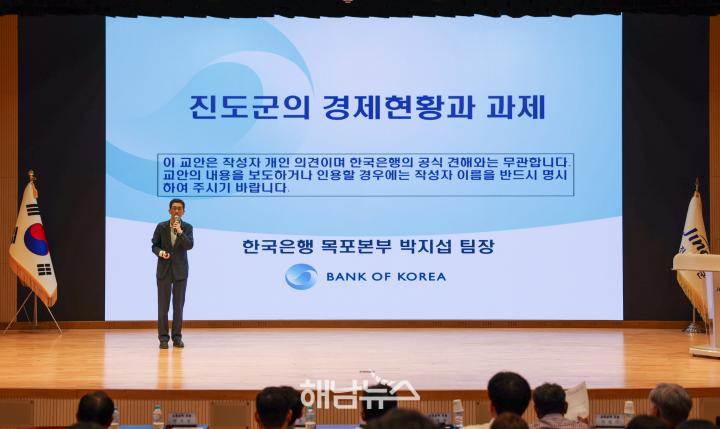 진도군–한국은행 경제정책 토론회(포럼) 개최 / 사진제공=진도군 |
진도군이 인구감소와 고령화 등 지역경제의 위기를 극복하고 농수산업과 인공지능(AI), 재생에너지를 연계한 새로운 성장동력 발굴에 나섰다.
진도군은 지난 18일 군청 대회의실에서 한국은행 목포본부와 공동으로 ‘2026년 진도군 경제정책 포럼’을 개최했다.
‘진도 경제의 대전환, 새로운 성장동력을 찾다!’를 주제로 열린 이번 포럼은 지역경제의 현황과 과제를 진단하고, 진도가 보유한 농수산업·해양·관광·문화예술 자원에 미래산업을 접목할 방안을 찾기 위해 마련됐다.
특히 새로운 산업이 실제 군민의 소득 증대와 일자리 창출로 이어질 수 있도록 분야별 전문가와 지역민이 함께 진도의 미래 발전 방향을 논의했다.
포럼은 지역경제 전문가들의 주제 발표와 종합토론 순으로 진행됐다.
첫 번째 발표자로 나선 박지섭 한국은행 목포본부 기획조사팀장은 ‘진도군 경제의 현황과 과제’를 주제로 진도의 인구와 산업구조 등 주요 경제지표를 분석했다.
박 팀장은 인구감소와 고령화가 지역경제에 미치는 영향을 진단하고, 진도가 지속 가능한 경제 기반을 마련하기 위해 추진해야 할 대응 방향을 제시했다.
이어 김자봉 한국금융연구원 선임연구위원은 ‘5극3특 지방주도성장과 진도의 미래’를 주제로 정부의 국가균형발전 전략과 서남권 산업환경의 변화를 살펴봤다.
김 선임연구위원은 인공지능과 재생에너지 등 미래산업을 진도의 농수산업·관광산업과 연계해 지역의 새로운 성장 기회로 만들어야 한다고 강조했다.
주제 발표에 이어 김자봉 선임연구위원의 진행으로 분야별 전문가와 군민이 참여하는 종합토론이 열렸다.
토론에는 김준철 한국은행 목포본부장과 조성문 진도문화원 부원장, 박호성 전 진도군 수산지원과장, 박병익 전 진도실업고 교사 등이 참여했다.
참석자들은 진도가 가진 농수산업과 해양자원, 관광, 문화예술 등 기존의 강점을 더욱 발전시키는 한편, AI와 재생에너지 등 새로운 산업 흐름을 지역경제 활성화로 연결하기 위한 다양한 의견을 제시했다.
또한 신규 산업과 정책이 단순한 계획에 머물지 않고 주민 소득과 청년 일자리, 기업 유치, 지역 정착으로 이어질 수 있도록 구체적인 실행전략을 마련해야 한다는 데 뜻을 모았다.
이재각 진도군수는 “급변하는 경제·산업 환경 속에서 진도가 가진 강점을 새로운 성장 기회로 연결하는 것이 중요하다”며 “포럼에서 제시된 다양한 의견을 정책에 반영해 진도만의 경쟁력을 살린 미래 성장동력을 구체화하겠다.”고 말했다.
진도군은 앞으로 중앙정부와 전남광주통합특별시의 정책 변화에 선제적으로 대응할 수 있도록 조직적 기반을 강화할 방침이다.
이와 함께 농수산업과 미래산업을 연계한 신규 사업을 적극 발굴하고, 정부 정책 반영과 국비 확보를 통해 지역경제의 대전환을 추진할 계획이다.
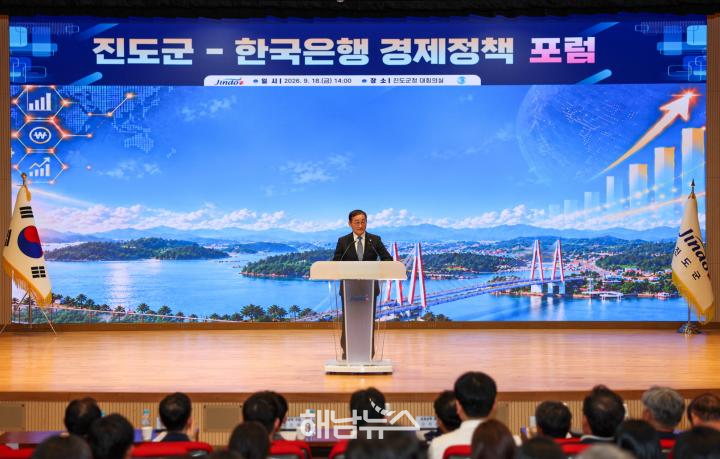 진도군–한국은행 경제정책 토론회(포럼) 개최 / 사진제공=진도군 |
“Jindo to Integrate AI and Renewable Energy with Agriculture and Fisheries”…County Accelerates Search for New Growth Engines
Jointly hosts the 2026 Jindo County Economic Policy Forum with the Bank of Korea’s Mokpo Branch
Experts assess the local economy amid population decline, aging demographics and structural challenges
Forum examines the government’s “Five Poles and Three Special Zones” balanced-development strategy and industrial changes in the southwestern region
Participants discuss linking AI and renewable energy with agriculture, fisheries and tourism to create income and jobs
New industries proposed based on Jindo’s strengths in agriculture, fisheries, marine resources, tourism, culture and the arts
Mayor Lee Jae-gak: “We will turn Jindo’s unique competitive strengths into concrete engines for future growth”
[Jindo=AI Honam News] aihnnews@kakao.com
Jindo County has begun identifying new engines for economic growth by combining artificial intelligence (AI) and renewable energy with its agriculture and fisheries sectors, as it seeks to overcome regional challenges such as population decline and demographic aging.
On September 18, Jindo County jointly hosted the “2026 Jindo County Economic Policy Forum” with the Bank of Korea’s Mokpo Branch in the main conference hall of the county government building.
Held under the theme “A Great Transformation of Jindo’s Economy: Finding New Engines for Growth,” the forum was organized to assess the current state and challenges of the local economy and explore ways to integrate emerging industries with Jindo’s strengths in agriculture, fisheries, marine resources, tourism, culture and the arts.
Experts and local residents also discussed how new industries could generate tangible benefits for the community, including higher household income and new employment opportunities.
The forum consisted of presentations by regional economic experts followed by a panel discussion.
Park Ji-seop, head of the Planning and Research Team at the Bank of Korea’s Mokpo Branch, delivered the first presentation under the title “The Current State and Challenges of Jindo County’s Economy.”
Park analyzed key economic indicators, including Jindo’s population trends and industrial structure. He also examined the effects of population decline and aging on the local economy and proposed policy directions for building a sustainable economic foundation.
Kim Ja-bong, a senior research fellow at the Korea Institute of Finance, then delivered a presentation titled “Locally Led Growth under the Five Poles and Three Special Zones Strategy, and Jindo’s Future.”
Kim reviewed the government’s national balanced-development strategy and changes in the industrial environment of Korea’s southwestern region. He emphasized the need to connect future industries, including AI and renewable energy, with Jindo’s agriculture, fisheries and tourism sectors to create new opportunities for regional growth.
Following the presentations, Kim moderated a panel discussion involving experts from various fields and local residents.
Panelists included Kim Jun-cheol, head of the Bank of Korea’s Mokpo Branch; Cho Seong-mun, vice president of the Jindo Cultural Center; Park Ho-seong, former head of Jindo County’s Fisheries Support Division; and Park Byeong-ik, a former teacher at Jindo Vocational High School.
Participants offered a wide range of proposals for further developing Jindo’s existing strengths in agriculture, fisheries, marine resources, tourism, culture and the arts, while incorporating emerging industries such as AI and renewable energy into the local economy.
They also agreed that concrete implementation strategies are needed to ensure that new industries and policies move beyond the planning stage and lead to increased resident income, jobs for young people, business investment and long-term settlement in the region.
“In today’s rapidly changing economic and industrial environment, it is essential to transform Jindo’s strengths into new opportunities for growth,” Jindo County Mayor Lee Jae-gak said. “We will incorporate the diverse ideas presented at the forum into our policies and develop future growth engines that build on Jindo’s unique competitive advantages.”
Jindo County plans to strengthen its administrative and organizational capacity to respond proactively to policy changes introduced by the central government and the Jeonnam-Gwangju Integrated Special Metropolitan City.
The county will also identify new projects that connect agriculture and fisheries with future-oriented industries, seek their inclusion in government policy and secure national funding to drive a major transformation of the local economy.
박인석 ai호남뉴스 발행인 news@hbcnews.kr