| 2차 공공기관 이전 본격화…전남광주 40곳 유치전, 해남 솔라시도 ‘AI·에너지 기관’ 품을까 정부, 이르면 8~9월 이전 대상 기관·추진 일정 발표 전망 해남뉴스 박충배 편집 및 논설위원 news@hbcnews.kr |
| 2026년 08월 01일(토) 12:50 |
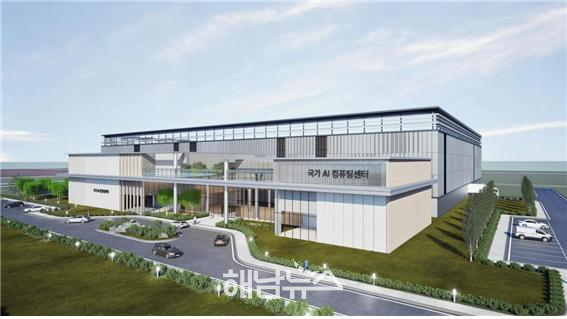 국가 AI컴퓨팅센타 조감도 / 사진제공=AI호남뉴스 |
정부의 제2차 공공기관 지방 이전 계획 발표가 임박하면서 전남광주통합특별시와 27개 시·구·군의 유치 경쟁이 본격화하고 있다.
전남광주통합특별시는 농협중앙회와 수협중앙회를 비롯해 한국지역난방공사, 한국마사회, 한국환경공단, 한국공항공사 등 농수산·AI·에너지·환경·교통 분야 공공기관 총 40곳을 유치한다는 전략이다. 이 가운데 파급력이 큰 핵심 기관 10곳을 중심으로 정부와 해당 기관을 상대로 유치 활동을 전개하는 것으로 알려졌다.
다만 전남광주가 유치를 희망하는 40개 기관 전체 명단과 기관별 우선순위, 구체적인 예정지역은 아직 시민에게 공개되지 않았다. 정부가 이르면 8월이나 9월께 이전 대상과 배치 원칙, 추진 일정을 발표할 것으로 전망되지만 전남광주에 몇 개 기관이 배정될지, 해당 기관이 어느 지역으로 이전할지는 확정되지 않았다.
전남광주는 정부가 행정통합 지역에 공공기관 이전 등 인센티브를 제공하겠다는 입장을 밝혔다는 점에서 다른 비수도권 지역보다 유리한 위치에 설 것으로 기대하고 있다. 이재명 대통령도 2차 공공기관 이전과 관련해 여러 지역에 소규모로 나누기보다 산업 연계성을 고려해 집중적으로 배치하는 방안을 언급해 행정통합을 먼저 이룬 전남광주에 대한 기대감이 커지고 있다.
현재 가장 유력하게 거론되는 이전지역은 나주 빛가람혁신도시다. 현행 혁신도시 조성 및 발전에 관한 특별법은 수도권에서 지방으로 이전하는 공공기관을 혁신도시로 이전하는 것을 원칙으로 규정하고 있다. 한국전력공사와 한국농어촌공사 등 1차 이전 기관이 집적된 나주는 기존 기관과의 연계성뿐 아니라 업무시설과 주거·교육 기반을 갖추고 있어 2차 이전에서도 상대적으로 앞서 있다는 평가를 받는다.
나주시는 즉시 입주할 수 있는 상가 공실 230여 곳과 공공기관 청사를 건립할 수 있는 클러스터 부지 54필지를 확보한 것으로 파악됐다. 공사 중이거나 사업계획 승인을 받은 주택도 약 2천260세대 규모여서 농업·에너지 관련 기관이 전남광주에 배정될 경우 나주가 우선 후보로 검토될 가능성이 크다.
그러나 2차 이전 기관까지 나주에 집중하면 수도권 집중을 완화하기 위한 공공기관 이전이 전남광주 안에서 또 다른 지역 집중을 초래할 수 있다는 지적도 나온다. 이에 따라 특별시를 동부권과 서부권, 광주 근교권으로 나누고 지역별 주력산업에 맞춰 기관을 배치해야 한다는 분산 유치론이 제기되고 있다.
전남 동부권에서는 수협중앙회와 한국환경공단, 해양환경공단, 한국산업기술진흥원 등이 주요 유치 대상으로 거론된다. 여수·순천·광양의 항만과 석유화학·철강산업, 고흥의 우주·해양산업을 연결해 해양경제와 환경산업 거점을 구축하자는 구상이다.
서부권에서는 무안국제공항과 연계한 한국공항공사 유치가 거론되고 있으며, 완도와 진도는 수산업·양식산업 기반을 앞세워 한국어촌어항공단 유치를 희망하고 있다. 영광은 에너지 생산지역이라는 점을 근거로 한국지역난방공사 유치 후보로 제시되고 있다.
광주 근교권에서는 광주 광산구와 함평을 중심으로 국토교통과학기술진흥원, 곡성과 화순을 중심으로 농협중앙회, 나주를 중심으로 한국에너지기술평가원, 담양을 중심으로 한국마사회 유치 방안이 거론된다. 광주의 AI산업과 나주 빛가람혁신도시, 한국에너지공대의 연구기반을 연결해 첨단 연구개발 벨트를 구축하자는 전략이다.
다만 이 같은 기관별 후보지역은 전남광주특별시가 확정한 최종 배치계획이 아니다. 지역 정치권과 지방자치단체가 산업 연계성을 기준으로 제안한 유치 구상에 가깝다. 실제 이전지역은 정부의 배치 원칙과 주무부처 협의, 대상 기관의 업무 연계성, 청사 부지, 직원과 가족의 정주여건 등을 종합적으로 검토해 결정된다.
해남군도 솔라시도 기업도시의 재생에너지와 AI·데이터 산업 기반을 앞세워 공공기관 유치전에 뛰어들었다. 해남군이 정부와 전남광주통합특별시에 공식적으로 건의한 주요 기관은 한국지역난방공사와 한국데이터산업진흥원, 한국에너지기술평가원 등이다.
지역사회에서는 농업정책보험금융원과 한국어촌어항공단도 해남의 농수산업 기반과 연결할 수 있는 후보로 거론되고 있다. 그러나 해남군이 최근 핵심 유치 대상으로 명시한 기관은 지역난방공사와 데이터산업진흥원, 에너지기술평가원 등 에너지·데이터 분야 3곳으로 파악된다.
해남의 가장 큰 경쟁력은 솔라시도가 단순한 공공기관 청사 이전 후보지가 아니라 재생에너지와 AI, 데이터산업을 결합할 수 있는 산업거점이라는 점이다. 솔라시도에는 대규모 태양광발전시설이 운영되고 있으며 AI컴퓨팅센터와 데이터센터 집적화단지, RE100 산업단지, 분산에너지 기반 미래도시 조성사업이 추진되고 있다.
산업통상자원부는 지난 2023년 솔라시도에 최대 25개 데이터센터를 집적하는 데이터센터 파크 조성 업무협약을 체결했다. 당시 정부는 호남지역에 전국 태양광 설비의 42.1%가 분포하고 있어 재생에너지 100% 사용을 목표로 하는 기업의 데이터센터 입지에 유리하다고 평가했다.
하지만 최대 25개 데이터센터는 장기적인 조성 목표로, 모든 시설의 투자와 입주가 확정됐다는 의미는 아니다. 실제 데이터센터 건립 실적과 전력계통 보강, 투자기업의 사업 일정 등을 냉정하게 구분해 설명할 필요가 있다.
해남이 추진하는 기관 가운데 솔라시도와 산업적 연계성이 가장 뚜렷한 곳은 한국데이터산업진흥원이다. 솔라시도에 AI컴퓨팅센터와 데이터센터가 실제로 집적되면 데이터 유통과 품질관리, 산업 육성, 인재 양성을 담당하는 공공기관의 현장 수요가 발생할 수 있다. 광주의 AI 연구개발 기능과 해남의 재생에너지·데이터센터 기반을 연결하는 초광역 산업체계도 구축할 수 있다.
그러나 한국데이터산업진흥원은 대구 등 다른 지역도 유치를 추진하고 있어 경쟁이 치열하다. 목포MBC 보도에 따르면 전남광주가 유치를 추진하는 한국산업기술진흥원과 한국데이터산업진흥원 등 6개 기관은 대구와 유치 대상이 겹친다. 국토교통과학기술진흥원과 한국에너지기술평가원은 경북까지 포함한 3개 권역이 경쟁하는 것으로 나타났다.
한국에너지기술평가원도 솔라시도의 재생에너지 실증사업과 연계할 수 있지만 한국전력과 한국에너지공대가 위치한 나주의 집적효과가 강력한 경쟁 요소다. 해남이 나주보다 유리한 평가를 받으려면 단순히 재생에너지 생산량이 많다는 설명을 넘어 기관의 기술평가와 연구개발 지원 기능을 솔라시도의 실제 사업과 어떻게 연결할 것인지 구체적으로 제시해야 한다.
한국지역난방공사는 에너지 공기업이라는 상징성과 사업 규모가 크지만 지역난방 수요와 기존 사업망을 고려하면 솔라시도와의 직접적인 연계 논리를 보완해야 한다. 영광 등 다른 에너지 생산지역도 유치 후보로 거론되고 있어 해남만의 차별화된 사업계획이 필요하다.
결국 해남의 공공기관 유치 전망은 산업적 연계성은 강하지만 제도와 정주여건 측면에서는 넘어야 할 과제가 많다는 평가로 요약된다.
솔라시도는 넓은 부지와 풍부한 태양광·해상풍력 자원, AI컴퓨팅센터와 데이터센터 계획을 갖고 있다. 공공기관과 민간기업, 대학·연구시설을 함께 배치할 경우 단순한 청사 이전을 넘어 AI·에너지 산업생태계를 조성할 가능성이 있다.
반면 현행법상 빛가람혁신도시 이전 원칙을 넘어설 법적 근거나 특별시 차원의 분산 배치 특례는 아직 명확하지 않다. 대중교통과 광역철도, 주택, 학교, 병원, 문화시설 등 공공기관 직원과 가족이 실제로 정착할 수 있는 생활 기반도 나주와 광주보다 부족하다.
해남읍과 솔라시도를 잇는 산업전용도로, 광주∼영암 초고속도로의 솔라시도 연장, 무안국제공항과 솔라시도를 연결하는 교통망도 현재는 계획 또는 정부 건의 단계다. 풍부한 전력과 값싼 부지만으로 공공기관 직원과 관련 기업, 전문인력이 자동으로 정착하는 것은 아니다.
해남군은 기관 이름을 나열하는 수준의 유치 활동에서 벗어나 기관별 전담 유치계획을 마련해야 한다. 대상 기관별 청사 예정부지와 면적, 건립비 분담방안, 이전 직원 주택, 학교·병원·교통 대책, 가족 동반 이주율, 지역인재 채용 규모, 관련 기업 유치계획을 구체적으로 제시할 필요가 있다.
전남광주통합특별시도 유치를 추진하는 40개 기관의 전체 명단과 우선순위, 기관별 연계산업, 시·군·구 배치 기준을 공개해야 한다. 정부가 이전기관을 결정한 뒤 지역끼리 경쟁하도록 방치한다면 공공기관 이전이 특별시 내부의 또 다른 갈등으로 번질 수 있다.
2차 공공기관 이전은 지역에 청사 건물 하나를 옮기는 사업이 아니다. 일자리와 인재, 기업, 연구개발, 교육과 주거를 함께 옮겨 지속 가능한 지역 산업생태계를 만드는 국가균형발전 정책이다.
해남 솔라시도가 AI·에너지 공공기관을 유치하기 위해서는 ‘재생에너지가 풍부하고 땅이 넓다’는 홍보를 넘어 해당 기관이 왜 해남에 와야 하는지 국가적 필요성을 증명해야 한다. 동시에 이전 직원과 가족이 실제로 거주할 수 있는 교통·교육·의료·주거계획까지 제시해야 솔라시도 공공기관 유치 구상이 현실적인 경쟁력을 확보할 수 있다
Second-Round Relocation of Public Institutions Gains Momentum: Can Haenam’s Solaseado Attract AI and Energy Agencies Amid Gwangju–Jeonnam’s Bid for 40 Institutions?
Government expected to announce target institutions and relocation timetable as early as August or September
Gwangju–Jeonnam Special Metropolitan City seeks to attract 40 institutions, including the National Agricultural Cooperative Federation and National Federation of Fisheries Cooperatives
Naju’s Bitgaram Innovation City regarded as the strongest candidate under the Innovation City Act
Calls grow for distributed placement: marine and environmental agencies in the eastern region, and data, aviation and fisheries agencies in the western region
Haenam County proposes attracting the Korea District Heating Corporation, Korea Data Agency and Korea Institute of Energy Technology Evaluation and Planning
Solaseado’s renewable energy, AI computing center and data center projects offer major advantages
“Land and power alone are not enough—transportation, housing, education and healthcare plans must be disclosed”
【Haenam–Gwangju–Jeonnam = AI Honam News】 aihnnews@kakao.com
Competition among Gwangju–Jeonnam Special Metropolitan City and its 27 cities, counties and districts is intensifying as the government prepares to announce its second-round relocation plan for public institutions.
The special metropolitan city aims to attract a total of 40 public institutions in the agriculture, fisheries, AI, energy, environment and transportation sectors. Its targets reportedly include the National Agricultural Cooperative Federation, the National Federation of Fisheries Cooperatives, the Korea District Heating Corporation, the Korea Racing Authority, the Korea Environment Corporation and the Korea Airports Corporation.
Of these, the city is reportedly focusing its efforts on 10 core institutions expected to generate significant economic and industrial benefits.
However, the complete list of 40 target institutions, their order of priority and proposed destinations have yet to be disclosed to the public. Although the government is expected to announce the institutions subject to relocation, the allocation criteria and implementation schedule as early as August or September, neither the number of institutions to be allocated to Gwangju–Jeonnam nor their final destinations has been determined.
Expectations are growing that Gwangju–Jeonnam could gain an advantage over other non-capital regions because the government has indicated that administrative integration could be rewarded with incentives, including preferential consideration in the relocation of public institutions.
President Lee Jae-myung has also discussed concentrating institutions in locations with strong industrial links instead of dividing them into small units across numerous regions. His remarks have increased expectations that Gwangju–Jeonnam, which completed administrative integration ahead of other regions, could receive preferential consideration.
Naju’s Bitgaram Innovation City is currently regarded as the most likely destination.
The Special Act on the Construction and Development of Innovation Cities stipulates, in principle, that public institutions relocating from the Seoul metropolitan area should move to designated innovation cities. Naju already hosts institutions transferred during the first round, including Korea Electric Power Corporation and the Korea Rural Community Corporation. It is considered relatively well positioned for the second round because it has established institutional networks, office facilities and residential and educational infrastructure.
Naju has reportedly identified more than 230 vacant commercial units that could be occupied immediately and 54 cluster-site lots where new headquarters could be built. About 2,260 housing units are either under construction or have received project approval. Accordingly, if agricultural and energy-related institutions are allocated to Gwangju–Jeonnam, Naju is likely to receive priority consideration.
There are concerns, however, that concentrating second-round institutions in Naju would create another form of regional centralization within Gwangju–Jeonnam, even though the national relocation policy is intended to ease excessive concentration in the capital region.
This has led to growing calls for public institutions to be distributed according to the principal industries of three broad areas: eastern Jeonnam, western Jeonnam and the area surrounding Gwangju.
In eastern Jeonnam, the National Federation of Fisheries Cooperatives, Korea Environment Corporation, Korea Marine Environment Management Corporation and Korea Institute for Advancement of Technology have been mentioned as possible targets. The objective would be to establish marine-economy and environmental-industry hubs by connecting the ports, petrochemical and steel industries of Yeosu, Suncheon and Gwangyang with Goheung’s aerospace and marine industries.
In western Jeonnam, the Korea Airports Corporation has been proposed as a candidate for relocation to Muan in connection with Muan International Airport. Wando and Jindo are seeking to attract the Korea Fisheries Infrastructure Public Agency by emphasizing their fisheries and aquaculture industries. Yeonggwang has also been proposed as a candidate for the Korea District Heating Corporation because of its role as an energy-producing region.
In the area surrounding Gwangju, possible proposals include locating the Korea Agency for Infrastructure Technology Advancement in Gwangju’s Gwangsan District or Hampyeong, the National Agricultural Cooperative Federation in Gokseong or Hwasun, the Korea Institute of Energy Technology Evaluation and Planning in Naju, and the Korea Racing Authority in Damyang.
The strategy seeks to create an advanced research and development corridor by linking Gwangju’s AI industry with Bitgaram Innovation City and the Korea Institute of Energy Technology in Naju.
These proposed destinations, however, do not constitute a final allocation plan officially confirmed by Gwangju–Jeonnam Special Metropolitan City. They remain proposals advanced by regional political figures and local governments on the basis of industrial compatibility.
Final destinations will be determined only after the government reviews its allocation principles, negotiations with the relevant ministries, links with each institution’s responsibilities, the availability of headquarters sites and living conditions for employees and their families.
Haenam County has also joined the competition, promoting Solaseado Enterprise City’s renewable energy and AI and data-industry infrastructure.
The principal institutions Haenam has formally proposed attracting are the Korea District Heating Corporation, the Korea Data Agency and the Korea Institute of Energy Technology Evaluation and Planning.
The Agricultural Policy Insurance & Finance Service and the Korea Fisheries Infrastructure Public Agency have also been discussed locally as possible candidates because of Haenam’s strong agricultural and fisheries sectors. Nevertheless, the three energy and data-related institutions most recently identified by the county as its core targets are the district heating corporation, the data agency and the energy technology evaluation institute.
Haenam’s greatest advantage is that Solaseado is not merely a potential headquarters location. It could become an industrial hub integrating renewable energy, AI and data-related industries.
Large-scale solar power facilities are already operating in Solaseado, while an AI computing center, a data center cluster, a RE100 industrial complex and a distributed-energy-based future city are being promoted.
In 2023, the Ministry of Trade, Industry and Energy signed a memorandum of understanding to establish a data center park accommodating up to 25 data centers in Solaseado. At the time, the ministry noted that 42.1 percent of the country’s solar generation capacity was located in the Honam region, making the area advantageous for companies seeking to operate data centers entirely on renewable energy.
The proposed maximum of 25 data centers, however, is a long-term development target. It does not mean that all investments and tenant commitments have been finalized. The actual number of data centers constructed, reinforcement of the electricity grid and the business schedules of participating companies must be clearly distinguished from promotional targets.
Among the institutions sought by Haenam, the Korea Data Agency has the clearest industrial connection with Solaseado.
If the AI computing center and data centers are actually concentrated in Solaseado, there could be practical demand for a public institution responsible for data distribution, quality management, industry development and workforce training. Such a relocation could also help establish a metropolitan-scale industrial system linking Gwangju’s AI research and development capacity with Haenam’s renewable energy and data center infrastructure.
Competition for the Korea Data Agency will nevertheless be intense, as Daegu and other regions are also seeking to attract it.
According to Mokpo MBC, six institutions sought by Gwangju–Jeonnam—including the Korea Institute for Advancement of Technology and the Korea Data Agency—are also being pursued by Daegu. Both the Korea Agency for Infrastructure Technology Advancement and the Korea Institute of Energy Technology Evaluation and Planning are being contested by three regions, including Gyeongbuk.
The Korea Institute of Energy Technology Evaluation and Planning could also be connected to Solaseado’s renewable energy demonstration projects. However, Naju has a powerful clustering advantage because it already hosts Korea Electric Power Corporation and the Korea Institute of Energy Technology.
For Haenam to secure a more favorable evaluation than Naju, it must go beyond emphasizing the volume of renewable energy generated in the county. It should present a concrete plan showing how the institution’s technology assessment and research funding responsibilities would be integrated with actual projects in Solaseado.
The Korea District Heating Corporation is a major energy-related public corporation with considerable symbolic and economic significance. However, given its existing business structure and the demand required for district heating services, Haenam needs to strengthen the case for its direct connection with Solaseado. Other energy-producing areas, including Yeonggwang, have also been mentioned as potential destinations, making a differentiated Haenam-specific proposal essential.
Ultimately, Haenam’s prospects can be summarized as follows: Solaseado offers strong industrial connections, but significant institutional and residential challenges remain.
Solaseado has extensive available land, abundant solar and offshore wind resources, and plans for an AI computing center and data center cluster. If public institutions, private companies, universities and research facilities are located together, the project could develop into a genuine AI and energy industry ecosystem rather than merely hosting new government offices.
On the other hand, there is still no clear legal basis or special metropolitan provision that would enable Solaseado to overcome the statutory principle favoring relocation to Bitgaram Innovation City.
Haenam also remains behind Naju and Gwangju in public transportation, metropolitan rail access, housing, schools, hospitals and cultural facilities—all of which are necessary if relocated employees and their families are to settle permanently.
Plans for an industrial road connecting Haenam-eup with Solaseado, an extension of the Gwangju–Yeongam high-speed road to Solaseado, and a transportation link between Muan International Airport and Solaseado remain at the planning or government-proposal stage.
Abundant electricity and inexpensive land alone will not automatically attract public-sector employees, related companies and highly skilled professionals.
Haenam County must move beyond simply listing the names of institutions it hopes to attract and prepare a dedicated strategy for each target.
Such plans should specify the location and area of proposed headquarters sites, the division of construction costs, housing for relocated employees, school, hospital and transportation measures, family relocation targets, local recruitment goals and plans to attract related companies.
Gwangju–Jeonnam Special Metropolitan City must also disclose the complete list of the 40 institutions it is seeking, their priority rankings, associated industries and the criteria for allocating them among its cities, counties and districts.
If local governments are left to compete only after the central government selects the institutions to be relocated, the policy could create a new source of conflict within the special metropolitan city.
The second-round relocation of public institutions is not simply a project to move government office buildings. It is a national balanced-development policy intended to relocate jobs, skilled workers, companies, research and development functions, education and housing, thereby creating sustainable regional industrial ecosystems.
If Haenam’s Solaseado is to attract AI and energy-related public institutions, the county must go beyond promoting its abundant renewable energy and extensive land.
It must demonstrate why these institutions need to relocate to Haenam from the perspective of national strategy. At the same time, it must provide credible transportation, education, healthcare and housing plans that would allow relocated employees and their families to settle in the area.
Only then can Solaseado’s public-institution attraction strategy secure genuine and sustainable competitiveness
 해남뉴스 박충배 편집 및 논설위원 news@hbcnews.kr