| 왕우렁이 8월까지 집중 수거…“내년 어린벼 피해 막아야” 7~8월 왕우렁이 2단계 집중 수거기간 운영 해남뉴스 박충배 편집 및 논설위원 news@hbcnews.kr |
| 2026년 07월 31일(금) 09:15 |
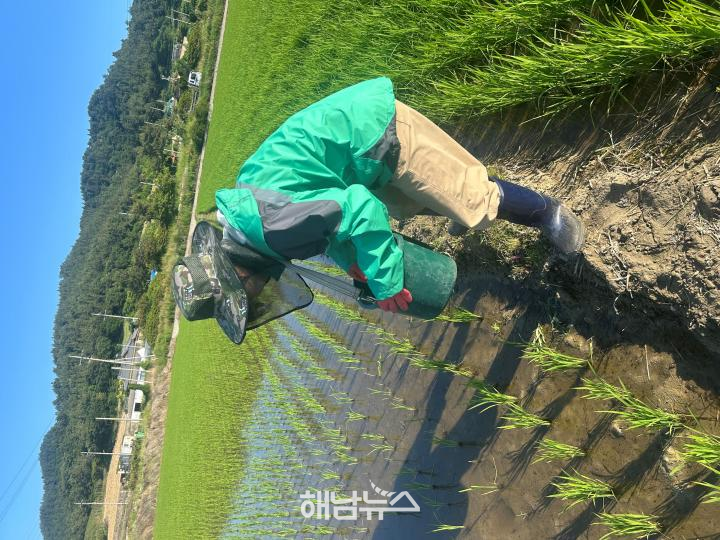 신안군 자은면 우렁이 수거 / 사진제공=전남광주특별시 |
전남광주통합특별시가 친환경 벼농사에 활용되는 왕우렁이의 월동과 농작물 피해를 막기 위해 7월부터 8월까지를 ‘2단계 왕우렁이 집중 수거기간’으로 정하고 수거 활동을 추진한다.
왕우렁이는 논에서 잡초를 먹어 친환경 제초 수단으로 효과가 크지만, 제때 수거하지 않으면 농·배수로나 하천으로 유출돼 생태계에 영향을 줄 수 있다. 일부 개체가 겨울을 넘기면 이듬해 논에 심은 어린벼를 갉아먹는 피해로 이어질 가능성도 있다.
이에 따라 각 시·군은 자체 수거계획을 수립하고 8월까지 농경지와 용·배수로 주변에 남은 왕우렁이와 우렁이알을 집중적으로 제거할 계획이다. 농업인에게도 왕우렁이 수거와 외부 유출 방지 등 관리 의무를 철저히 이행해달라고 당부했다.
7~8월 중간 물떼기 시기는 왕우렁이 개체수를 줄일 수 있는 관리의 골든타임이다. 논 가장자리에 물길을 미리 만들어 놓으면 왕우렁이가 물길로 모여 뜰채 등을 이용해 비교적 쉽게 수거할 수 있다.
왕우렁이의 외부 유출을 막는 조치도 중요하다. 논의 물 빠짐 지점과 용·배수로에 차단망을 설치하고 집중호우 때 논물이 넘치지 않도록 적정 수위를 유지해야 한다. 논 밖으로 유출된 왕우렁이와 수로 주변에 붙어 있는 분홍색 알도 함께 제거해야 방제 효과를 높일 수 있다.
벼 생육 후기까지 왕우렁이 개체수가 많이 남아 있다면 9~10월 완전 물떼기에 앞서 예방 자재를 사용해 밀도를 낮춰야 한다. 다만 친환경 인증 논에서는 반드시 공시된 유기농업자재 제품을 사용하고, 제품별 사용 기준과 안전수칙을 지켜야 한다.
김영석 전남광주통합특별시 친환경농업과장은 “친환경농업을 위한 왕우렁이 활용도 중요하지만, 월동 방지와 어린벼 피해 예방을 위해 철저한 수거관리가 필요하다”며 “폭염이 이어지는 만큼 한낮을 피해 서늘한 이른 아침이나 저녁 시간대 수거 활동에 적극적으로 동참해달라”고 당부했다.
전남광주통합특별시는 지난해 12월부터 올해 2월 말까지 해남·진도 등 왕우렁이 월동 우려 지역을 중심으로 논 말리기와 동계작물 재배, 깊이갈이 등 약 1만6천㏊ 규모의 월동 방지대책을 추진했다.
왕우렁이 투입 전인 올해 4~6월에는 월동 개체를 대상으로 1단계 집중 수거 활동을 실시했다. 특별시는 이 같은 선제 대응으로 현재까지 대규모 어린모 피해는 발생하지 않았다고 설명했다.
그러나 수거 활동이 일회성 행사에 그쳐서는 안 된다. 왕우렁이는 기온과 수환경에 따라 월동 가능성과 개체 밀도가 달라지는 만큼 시·군별 수거 면적과 수거량, 월동 개체 조사 결과, 어린벼 피해 현황을 지속적으로 점검해야 한다.
특히 해남과 진도 등 우심 지역에 대해서는 농경지뿐 아니라 인접 하천과 용·배수로까지 조사 범위를 넓히고, 왕우렁이 사용 농가의 투입량과 사후 수거 실적을 체계적으로 관리할 필요가 있다.
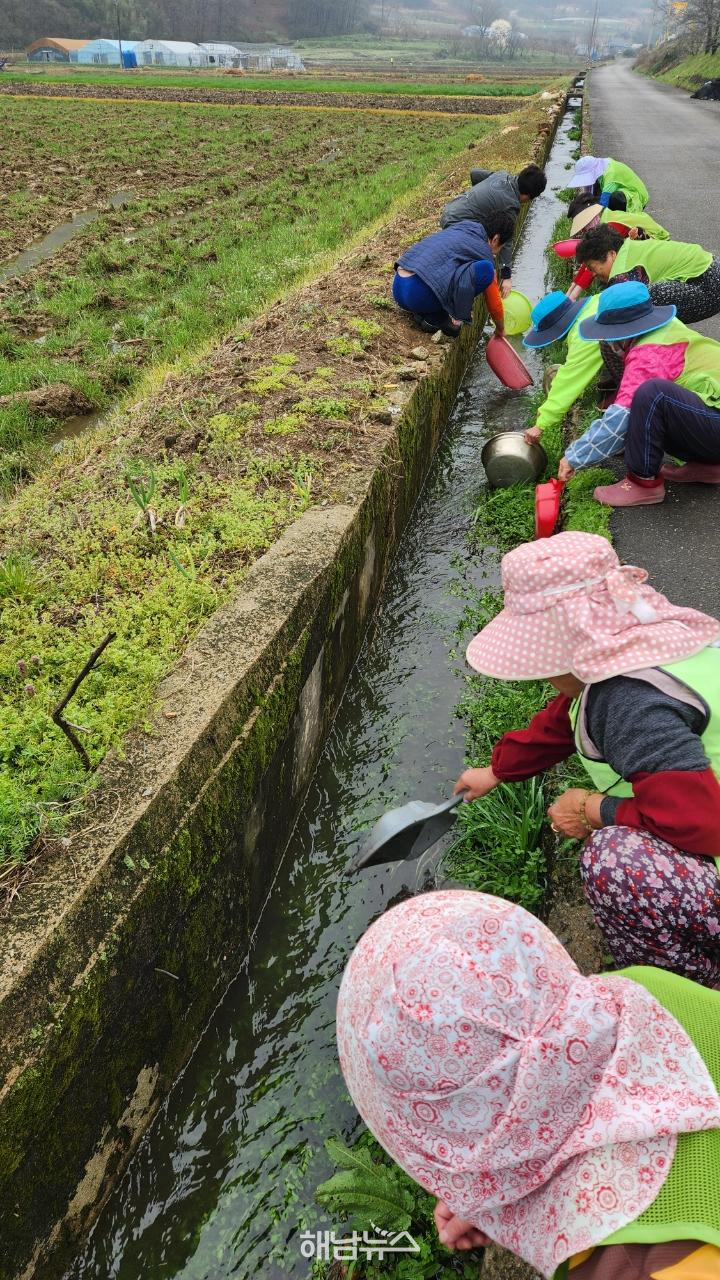 장성군 남면 배수로 왕우렁이 수거 / 사진제공=전남광주특별시 |
Apple Snails to Be Collected Intensively Through August to Prevent Damage to Young Rice Plants Next Year
Second-phase intensive collection campaign underway from July through August
Adult snails and pink egg masses to be removed from rice paddies and irrigation and drainage channels
Creating shallow waterways along paddy edges during midseason drainage makes collection easier
Barrier nets and proper water-level management needed to prevent escape into streams
Only officially approved organic farming materials may be used in certified organic paddies
Overwintering prevention measures implemented across 16,000 hectares in Haenam and Jindo last winter
“Collection results and regional data on overwintering and crop damage should also be disclosed”
【Jeonnam-Gwangju·Haenam=Haenam News】 haenamnews@kakao.com
The Jeonnam-Gwangju Special Metropolitan Government is carrying out an intensive collection campaign from July through August to prevent overwintering apple snails—used as a natural weed-control method in eco-friendly rice farming—from damaging crops.
Apple snails are effective at controlling weeds in rice paddies. However, if they are not properly collected after use, they can escape into irrigation and drainage channels or nearby streams, potentially affecting natural ecosystems. Snails that survive the winter may also feed on newly transplanted rice seedlings the following year.
Municipal and county governments have therefore drawn up their own collection plans and will intensively remove remaining apple snails and their egg masses from farmland and nearby irrigation and drainage channels through August. Farmers are also being urged to comply fully with management requirements, including collecting the snails and preventing their escape from paddies.
The midseason drainage period in July and August is considered a critical window for reducing apple snail populations. By creating shallow waterways along the edges of paddies in advance, farmers can concentrate the snails in one area and collect them more easily with scoop nets.
Measures to prevent the snails from escaping into the surrounding environment are equally important. Barrier nets should be installed at paddy drainage outlets and along irrigation and drainage channels. Farmers should also maintain appropriate water levels to prevent paddy water from overflowing during heavy rainfall.
Apple snails that have already escaped from paddies, as well as the distinctive pink egg masses attached to vegetation and structures around waterways, should be removed together to improve the effectiveness of the control campaign.
If large numbers of apple snails remain during the later stages of rice growth, preventive materials should be applied before the final drainage period in September and October to reduce their population density. In certified eco-friendly paddies, however, farmers must use officially approved organic farming products and follow all application standards and safety instructions.
Kim Young-seok, director of the Eco-Friendly Agriculture Division of the Jeonnam-Gwangju Special Metropolitan Government, said, “The use of apple snails is important for eco-friendly farming, but thorough collection and management are also necessary to prevent overwintering and damage to young rice plants.”
“With extreme heat continuing, we ask farmers to actively participate in collection activities during the cooler early-morning or evening hours rather than working in the midday heat,” he added.
From December last year through the end of February this year, the Jeonnam-Gwangju Special Metropolitan Government implemented overwintering prevention measures across approximately 16,000 hectares, primarily in high-risk areas such as Haenam and Jindo. The measures included drying rice paddies, growing winter crops and deep plowing.
Before apple snails were released into paddies this year, the government also conducted the first phase of its intensive collection campaign from April through June, targeting snails that had survived the winter. According to the government, these preventive measures have helped avert any large-scale damage to young rice seedlings so far.
The collection campaign, however, should not end as a one-time event. Because overwintering rates and population densities vary depending on temperature and water conditions, authorities need to continuously monitor the collection area and volume in each municipality and county, along with survey results on overwintering snails and damage to young rice plants.
In high-risk areas such as Haenam and Jindo, surveys should be expanded beyond farmland to include adjacent streams and irrigation and drainage channels. Authorities should also systematically manage the quantities of apple snails released by individual farms and their post-season collection records.
 해남뉴스 박충배 편집 및 논설위원 news@hbcnews.kr