| “해남의 미래를 묻는다.” 유휴농지 태양광·솔라시도 RE100·관광산업… 해남군수 후보들이 답해야 할 질문 해남뉴스 박충배 편집 및 논설위원 haenamnews@kakao.com |
| 2026년 03월 10일(화) 11:04 |
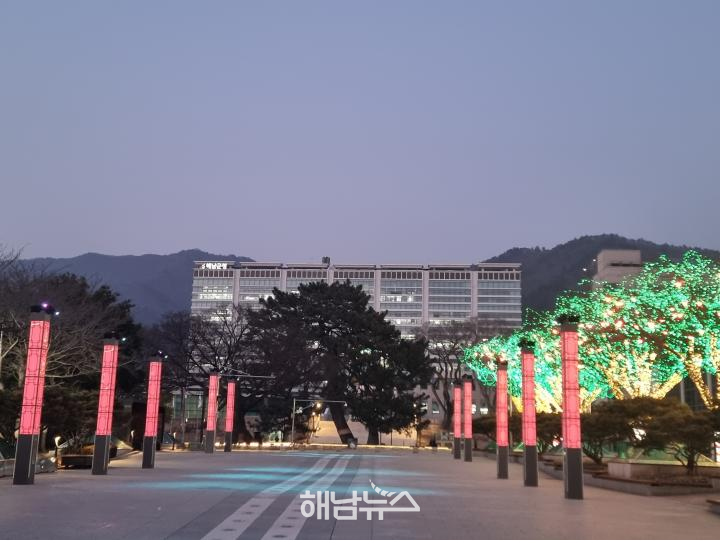 해남군청 전경 / 사진제공=해남뉴스 |
[해남=해남뉴스] haenamnews@kakao.com
해남이 지금 중요한 질문 앞에 서 있다.
“해남은 앞으로 무엇으로 먹고 살 것인가.”
이 질문은 단순한 지역 정책 논쟁이 아니다.
해남의 존립과 미래를 좌우할 문제다.
농촌 고령화와 인구 감소는 이미 현실이 됐다.
마을의 빈집은 늘고, 학교는 줄고, 농지는 점점 방치되고 있다.
지금까지의 방식으로는 이 흐름을 되돌리기 어렵다.
이제는 단순한 개발 사업이 아니라 지역 경제 구조를 바꾸는 전략이 필요하다.
다가오는 지방선거에서 해남군수에 도전하는 후보들이 반드시 제시해야 할 것은 바로 이 질문에 대한 답이다.
해남 들녘에는 경작되지 않는 농지가 빠르게 늘어나고 있다.
농촌 고령화와 노동력 부족 때문이다.
하지만 이 농지는 단순히 방치된 땅이 아니다.
에너지 전환 시대에는 새로운 경제 자산이 될 수 있는 공간이다.
최근 여러 지역에서 논의되는 대안이 영농형 태양광 발전이다.
농사를 지으면서 동시에 태양광 발전을 통해 추가 소득을 얻는 구조다.
이 방식은 농업을 포기하지 않으면서도 농가 소득을 보전할 수 있다는 점에서 새로운 농촌 모델로 주목받고 있다.
그러나 현실에서는 태양광 설치를 둘러싼 논쟁도 계속되고 있다.
특히 많은 지방자치단체가 태양광 발전 시설에 대해 거리 제한 규제를 두고 있기 때문이다.
이 규제의 이유는 대체로 경관 훼손 우려와 주민 민원, 난개발 방지다.
실제로 무분별한 태양광 개발이 농촌 경관을 훼손하거나 주민 갈등을 유발한 사례도 있다.
하지만 또 다른 질문도 제기된다.
재생에너지 확대와 탄소중립을 국가 전략으로 추진하면서 정작 현장에서는 태양광 설치를 막는 규제가 존재하는 것이 과연 합리적인가 하는 점이다.
특히 농민이 참여하는 영농형 태양광이나 주민 참여형 발전 모델까지 동일하게 제한하는 것은 농촌 경제 활성화의 기회를 스스로 좁히는 결과가 될 수 있다는 지적도 나온다.
결국 중요한 것은 규제를 없애느냐 유지하느냐의 문제가 아니라
지역 현실에 맞는 합리적인 기준을 어떻게 만들 것인가의 문제다.
---
해남의 미래를 이야기할 때 빼놓을 수 없는 공간이 있다.
바로 솔라시도 기업도시다.
솔라시도는 단순한 관광 개발 사업이 아니다.
재생에너지 기반 산업 도시로 성장할 가능성을 가진 지역이다.
세계 산업 구조는 지금 빠르게 변하고 있다.
특히 인공지능 산업과 데이터센터 산업은 막대한 전력을 필요로 한다.
대형 데이터센터 하나가 사용하는 전력은 작은 도시 하나의 전력 소비량과 맞먹는 수준이다.
이 때문에 글로벌 기업들은 지금 전력 확보가 가능한 도시를 찾고 있다.
해남은 태양광과 해상풍력 등 재생에너지 자원을 동시에 확보할 수 있는 지역이다.
여기에 RE100 산업단지가 결합된다면 해남은 새로운 산업 기회를 맞이할 수 있다.
에너지가 있는 곳에 산업이 오고 산업이 오는 곳에 사람이 온다.
이는 단순한 산업 정책이 아니라 인구 감소 문제를 해결할 수 있는 하나의 전략이 될 수 있다.
해남은 산업뿐 아니라 관광에서도 큰 잠재력을 가지고 있다.
두륜산과 대흥사, 땅끝마을, 고산 윤선도 유적지, 편백 치유 숲 등은 이미 전국적으로 알려진 관광 자원이다.
하지만 관광 역시 체계적인 전략이 필요하다.
두륜산과 대흥사는 치유 관광과 산림 치유 산업으로 땅끝마을은 대한민국 남쪽 끝 상징 관광으로 농촌 지역은 체험형 농촌 관광으로 해안 지역은 해양 관광으로 지역 특성을 살린 관광 전략을 구축해야 한다.
관광은 단순히 방문객 숫자를 늘리는 것이 아니라 숙박과 음식, 체험과 문화 산업이 함께 성장하는 지역 경제 모델이어야 한다.
결국 해남의 미래는 하나의 산업으로 해결될 수 없다.
농업, 에너지, 산업, 관광 이 네 가지 축이 연결될 때 해남의 새로운 성장 모델이 만들어질 수 있다.
유휴농지는 에너지 자산이 되고 솔라시도는 산업 거점이 되며, 관광은 지역 경제의 또 다른 축이 될 수 있다.
다가오는 지방선거에서 해남군수 후보들에게 군민들이 묻고 있는 질문은 단순하다.
해남은 앞으로 무엇으로 먹고 살 것인가.
유휴농지는 어떻게 활용할 것인가.
태양광 거리 규제는 어떤 기준으로 재 조정할 것인가.
솔라시도는 어떤 산업 도시로 만들 것인가.
관광은 어떻게 지역 경제와 연결할 것인가.
군민들이 듣고 싶은 것은 화려한 공약이 아니다.
해남의 미래를 설계할 구체적인 전략이다.
지금 해남은 선택의 시간 앞에 서 있다.
그 선택이 해남의 다음 세대를 결정하게 될 것이다.
[Haenam News Policy Proposal Feature]
“Asking About Haenam’s Future”
Idle Farmland Solar Power, Solasido RE100, and Tourism Industry… Questions Candidates for Haenam County Governor Must Answer
[Haenam = Haenam News] haenamnews@kakao.com
Haenam now stands before a crucial question.
“What will Haenam live on in the future?”
This is not simply a debate about local policy.
It is a question that will determine the survival and future of Haenam itself.
Rural aging and population decline are no longer distant concerns.
They have already become reality.
Vacant houses are increasing in villages.
Schools are closing.
Farmland is being left uncultivated.
The current approach will not be enough to reverse this trend.
What is needed now is not simply development projects, but a strategy that fundamentally transforms the regional economic structure.
As the upcoming local elections approach, candidates running for Haenam County governor must present clear answers to this question.
Across the fields of Haenam, uncultivated farmland is steadily increasing.
This is largely due to rural aging and labor shortages.
Yet these lands are not merely abandoned fields.
In the era of energy transition, they can become valuable economic assets.
One widely discussed solution in many regions is agrivoltaics, or farming-based solar power generation.
This system allows farmers to cultivate crops while simultaneously generating electricity through solar panels, creating an additional source of income.
It has attracted attention as a new rural model because it allows agriculture to continue while stabilizing farm income.
However, controversies surrounding solar installations persist.
Many local governments impose distance restrictions on solar power facilities, limiting how close they can be installed to residential areas, roads, or village boundaries.
The reasons for these regulations generally include concerns about landscape damage, resident complaints, and the prevention of uncontrolled development.
Indeed, there have been cases where poorly planned solar developments harmed rural landscapes or triggered conflicts among residents.
Yet another question emerges.
While the national government promotes renewable energy expansion and carbon neutrality, is it reasonable for local regulations to simultaneously restrict solar power installations?
Some critics argue that applying the same restrictions to agrivoltaics or community-owned solar projects may unintentionally limit opportunities for revitalizing rural economies.
Ultimately, the key issue is not simply whether to abolish or maintain regulations.
The real challenge is how to establish rational standards that reflect local realities.
When discussing Haenam’s future, one place cannot be overlooked.
That place is Solasido Enterprise City.
Solasido is not merely a tourism development project.
It has the potential to grow into a renewable-energy-based industrial city.
The global industrial structure is changing rapidly.
In particular, artificial intelligence and data center industries require enormous amounts of electricity.
A single large-scale data center can consume as much power as a small city.
As a result, global companies are now searching for cities capable of securing stable energy supplies.
Haenam possesses a rare advantage in this regard.
It has the potential to simultaneously develop solar power, offshore wind energy, and other renewable energy resources.
If combined with an RE100 industrial complex, Haenam could open new industrial opportunities.
Where energy exists, industries follow.
Where industries grow, people gather.
This is not merely an industrial policy.
It can also become a strategy to address population decline.
Haenam also holds significant potential in the tourism sector.
Duryunsan Mountain and Daehungsa Temple, Ttangkkeut Village, the historic sites of poet Yun Seondo, and the cypress healing forests are already nationally recognized tourist resources.
Yet tourism also requires a systematic strategy.
Duryunsan and Daehungsa could develop into centers for healing tourism and forest therapy industries.
Ttangkkeut Village could strengthen its identity as the symbolic southernmost point of Korea.
Rural areas could promote experiential rural tourism, while coastal regions could expand marine tourism.
By developing tourism strategies tailored to each region’s characteristics, Haenam can build a stronger tourism ecosystem.
Tourism should not simply focus on increasing visitor numbers.
It must create a regional economic model where accommodation, food, cultural experiences, and local industries grow together.
Ultimately, Haenam’s future cannot be built upon a single industry.
Agriculture, energy, industry, and tourism must work together.
When these four pillars connect, a new growth model for Haenam can emerge.
Idle farmland can become an energy asset.
Solasido can evolve into an industrial hub.
Tourism can serve as another engine of the regional economy.
As the local elections approach, the question residents are asking candidates for Haenam County governor is simple.
What will Haenam live on in the future?
How will idle farmland be utilized?
How should solar power distance regulations be adjusted?
What kind of industrial city will Solasido become?
How will tourism connect with the local economy?
What residents want to hear are not flashy promises.
They want concrete strategies for designing Haenam’s future.
Haenam now stands at a moment of choice.
The decisions made today will determine the fate of the next generation.
 해남뉴스 박충배 편집 및 논설위원 haenamnews@kakao.com