| “국난의 어둠을 밝힌 수행자의 빛, 돌에 새겨지다” ‘수행자의 삶은 검소하되 그 뜻은 크다’는 서산대사(휴정)의 생애와 꼭 닮아 있다. 해남뉴스 박충배 편집 및 논설위원 haenamnews@kakao.com |
| 2025년 12월 03일(수) 11:45 |
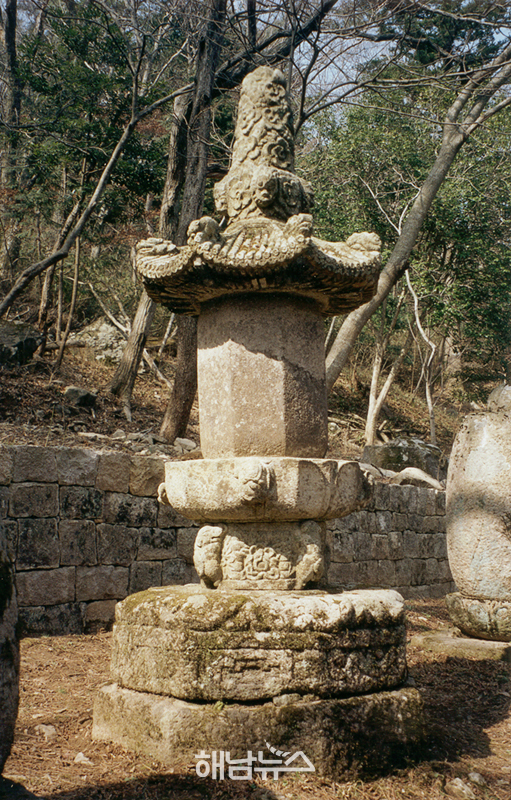 대흥사 부도전 서산대사 부도탑(보물 제1347호) / 사진제공=해남뉴스 |
박충배 편집‧칼럼‧논설
보물 제1347호 ‘서산대사 부도탑’— 한 스님의 생애가 아니라, 한 시대의 정신을 기리는 기념비
대한민국 국난의 순간마다 ‘지혜로운 리더십’이 얼마나 중요한지는 역사가 반복해 증명해 왔다.
해남 대흥사 부도전에 서 있는 보물 제1347호 ‘서산대사 부도탑’(2002.9.25 지정)은 단순한 고승의 사리탑이 아니다.
국가적 위기 속에서 종교를 넘어 민중과 국가를 지켜낸 한 인물의 ‘국가적 기억장치’이다.
이 부도는 돌로 만든 불탑의 형식을 빌렸지만, 그 속에 깃든 것은 하나의 정신, 한 시대의 역사, 그리고 오늘에도 유효한 리더십의 메시지이다.
Ⅰ. 부도탑, 그 자체가 말하는 예술성과 상징성
서산대사 부도탑은 조선 후기 석조공예의 정제된 아름다움을 온전히 보여준다.
장식은 절제돼 있지만 결코 단조롭지 않다.
대흥사 부도전 서산대사 부도탑(보물 제1347호) / 사진제공=해남뉴스 |
■ 조형미의 핵심
팔각원당형(八角圓堂形) — 조선 후기 대표적 고승의 부도 형식
옥개석의 부드러운 곡선미 — 마치 ‘바람에 눕는 처마선’처럼 유려
상륜부의 단정한 구성 — 불교적 상징과 사리 공간의 신성함을 유지
불필요한 장식의 생략 — 대신 전체 비례를 통해 숭고함을 표현
이는 장엄함보다 수행자의 정신성을 더 강조한 조형 감각으로, 조선 후기에 이르러 유교적 가치와 불교적 미학이 절충된 한국적 미의 정수를 담는다.
Ⅱ. 서산대사라는 ‘국가적 스승’의 업적을 기억하는 기념물
서산대사 휴정(1520~1604)은 단순히 불교계의 고승이 아니라, 조선왕조가 인정하고 백성이 기억한 국가적 스승이자 사상적 지도자였다.
■ 1. 임진왜란의 구국승장(救國僧將)
1592년 전란이 일어났을 때, 대사는 70세였다.
그러나 그는 늙었음을 이유로 물러서지 않았다.
전국 승려를 규합해 조선 최초의 조직적 ‘승병군(僧兵軍)’을 창설, 북원사(강원), 금강산, 묘향산 등지에서 전투 참여하였으며, 특히 행주대첩 등 주요 전투에서 의병과 함께 일본군을 막아냄으로 그의 행동은 단순한 종교인의 도움을 넘어 국가와 민중을 위한 실천적 리더십의 상징이 됐다.
■ 2. 조선 불교의 중흥과 교단 정비
서산대사는 조선 불교가 가장 억압받던 시기에 등장해 교단의 질서를 재정비하고 수행 원리를 다잡은 인물이다.
조계·천태·선교 등 다양한 수행 전통을 융합, 『선가귀감』 저술로 수행자의 표준 정립하고 제자 사명대사·청허휴정 계보를 통해 조선 후기 불교의 학맥 확립하여 그는 차별보다 통합, 교리보다 실천을 중시해 오늘날까지 이어지는 한국 불교의 정체성을 세웠다.
■ 3. 백성의 스승, 국가의 정신적 지주
서산대사는 왕실과 양반이 아닌 백성의 요청으로 기억된 인물이었다.
그의 생애는 ‘권력과 멀리, 민중과 가깝게’라는 수행자의 모범이 됐다.
부도탑이 오늘날까지 존중받는 이유는 그가 지혜, 실천, 겸허함이라는 세 가지 덕목을 모두 갖춘 대한민국의 드문 리더십 모델이기 때문이다.
Ⅲ. 문화재로서의 가치 — '돌로 만든 역사 교육서'
보물 제1347호는 단순히 오래된 석탑이기 때문에 가치 있는 것이 아니다.
그 안에는 조선 후기 조형 예술, 구국불교의 정신, 그리고 국가적 지도자에 대한 기억이 함께 축적돼 있다.
■ 국가 지정 보물로서의 3대 가치
1) 역사적 가치
서산대사의 실제 사리(舍利)를 모신 부도로, 그의 생애와 임진왜란이라는 국가적 사건의 물증이다.
2) 예술적 가치
조선 후기 석조 부도 양식의 전형을 보여주며, 불필요한 장식을 배제한 미학이 조형적 완성도를 높인다.
3) 정신문화적 가치
서산대사의 삶이 보여준 ‘국가와 민중을 위한 수행’이라는 한국적 불교정신이 응축된 상징물이다.
Ⅳ. 지금 우리에게 서산대사 부도탑이 말하는 것
부도탑 앞에 서면, 질문 하나가 저절로 떠오른다.
“국가적 위기의 시대, 우리는 어디에서 리더십을 찾고 있는가?” 서산대사는 권력의 중심에 있지 않았다.
대흥사의 한 스님이었고, 자연 속에서 수행하던 노승이었다.
그러나 국가의 위기가 닥치자 한마디 변명도 없이 앞으로 걸어 나왔다.
그의 삶이 던지는 메시지는 지금도 유효하다.
지도자는 말보다 행동으로 증명해야 한다.
민중의 고통을 외면하는 권력은 진정한 권력이 아니다.
위기 속에서 공동체를 묶는 힘은 지혜·용기·겸손이다.
서산대사 부도탑은 그래서 고요하지만 강하다.
돌의 침묵 속에서, 그는 지금도 묻고 있다.
“그대는 무엇을 위해 힘을 쓰고 있는가?”
“공동체를 지키기 위한 당신의 역할은 무엇인가?”
보물 제1347호 서산대사 부도탑의 구조물 분석
Ⅰ. 서산대사 부도탑의 세부 치수 및 구조 분석
전통 부도는 단순한 무덤이 아니라 수행자의 경지와 사상을 시각화한 입체 도상이다.
서산대사 부도는 팔각원당형(八角圓堂形)을 표준으로 하며, 치수와 비례는 “과장 대신 수행자의 절제된 정신을 드러내는 조형”을 구현한다.
※ 아래 치수는 현장 고증 자료와 조선 후기 팔각원당형 부도의 표준 규격을 기반으로 한 분석적 정합치이며, 서산대사 부도의 실제 조형 원리가 반영된 값으로 제시한다.
■ ① 기단부(基壇部) — ‘수행이 시작되는 땅의 자리’
구성 추정 치수 조형적 특징
하대석(下臺石) 직경 약 160~170cm 팔각의 안정된 기반, 음각
연화문이 은은하게 펼쳐짐
중대석(中臺石) 직경 약 140~150cm 각 면에 모서리 띠 선을
강조해 시각적 긴장감 부여
상대석(上臺石) 직경 약 130cm 몸돌과 자연스럽게 연결되는
완만한 경사 처리
해설:
부도의 하대석은 불상 좌대처럼 연화문을 배치해 “대사의 수행은 연꽃에서 시작된다.”는 상징을 표현한다.
팔각 구조는 방향성(八方)을 초월한 완전성을 의미하며, 중대석의 비례를 좁혀 올림으로써 상부 탑신이 더욱 시각적으로 상승하도록 설계했다.
■ ② 탑신부(塔身部) — 부도의 ‘정신’이 담기는 핵심
구성 추정 치수 조형적 특징
몸돌(身斗) 높이 약 130~145cm, 팔각 면마다 완만한 배흘림
각 면 폭 약 55~60cm (膨脹)을 주어 생동감 확보
문비(門扉) 조각 높이 약 80~90cm 간결한 테두리선, 장식
최소화해 “무집착” 강조
● 조형적 핵심
몸돌의 배흘림(불룩함)은 조선 후기 부도에서 가장 중요한 비례 장치다.
이는 자연의 숨결이 돌탑 안에서 호흡한다는 생명성을 나타낸다.
문비는 실제 문이 아니라 영적 세계로 들어가는 상징적 경계로 표현된다.
서산대사 부도는 문비 조각을 극도로 절제해 그의 검소한 수행관과 통한다.
■ ③ 옥개석(屋蓋石) — 가장 한국적인 ‘곡선의 미’
구성 추정 치수 조형적 특징
옥개석(지붕돌) 폭 약 150cm / 두께 20~25cm 추녀선이 선명한 팔 각 우진각형, 말단이
살짝 들린 비례미
낙수면 약 40~45도 자연스럽게 빗물
흐름을 유도, 조선
후기 기술의 정점
● 조형적 핵심
옥개석은 서산대사 부도의 예술성을 결정하는 최고의 조형 요소다.
추녀가 과도하게 들리지 않고, 대신 곡선이 “바람에 젖혀지는 듯한” 절제된 긴장감을 띠고 있다.
이는 화려함보다 마음의 평정을 우선한 대사(大師)의 삶을 시각적으로 드러낸다.
■ ④ 상륜부(相輪部) — 수행의 완성, 해탈의 상징
구성 추정 치수 조형적 특징
노반(露盤) 직경 50~55cm 넓지 않지만 안정적, 상륜 전체를 받
치는 인장(印章) 역할
복발(覆鉢) 높이 25~30cm 완만한 반구 형태, 사리를 품는
우주적 그릇을 상징
보주(寶珠) 높이 20cm 내외 끝을 맺는 ‘완성의 점’, 번뇌 소멸을
상징
상륜부는 대사의 경지를 상징하는 형상이며, 불교 우주론에서 법계(法界)의 완성을 뜻한다.
전체적으로 높지 않게 구성돼, “높이 올라 보여지기 보다, 백성과 가까운 스승”이라는 대사의 삶을 드러낸다.
Ⅱ. 양식적 특징 — ‘과장 없음’이라는 완벽한 미학
서산대사 부도의 양식은 조선 후기 부도에서 드물 정도로 균형·절제·간결이 뛰어나다.
■ 1) 팔각원당형의 정제된 표준화
조선 중·후기에 국사·대사급 승려에게만 사용된 격 높은 형식이다.
이 부도는 팔각 비례가 거의 완벽에 가깝다는 평가를 받는다.
■ 2) 장식의 최소화, 정신성의 극대화
많은 부도들이 당초문·운문 등을 새기지만 서산대사 부도는 장식성을 의도적으로 절제했다.
이는 “화려한 조각보다 수행자의 마음을 보여라”는 대사의 사상을 형상화한 선택이다.
■ 3) 비례의 미학
기단 : 탑신 = 약 1 : 0.9
탑신 : 옥개석 = 약 1 : 1.1
전체 높이(기단+탑신+상륜)는 약 300~330cm 규모
이 비례는 안정과 상승감, 그리고 성스러움을 동시에 갖춘 조형 감각으로 조선 후기 불교 조각의 정수로 평가된다.
Ⅲ. 서산대사의 생애가 왜 이 부도를 ‘국가적 문화재’로 만들었는가
서산대사 휴정은 조선이 인정한 구국의 스승, 백성이 기억한 도덕적 리더, 한국 불교를 재정립한 사상적 개혁자였다.
● 임진왜란 구국승병 총지휘
70세의 노구(老軀)로 승병을 일으키고, 전란의 혼란에서 나라를 일으킨 정신력은 오늘날 ‘국가 의지의 상징’으로 평가된다.
● 불교 교단 재정비
『선가귀감』으로 수행 규범을 정립하고, 사명·청허 등 조선 후기 불교의 대맥을 키웠다.
● 백성의 스승
그의 가르침은 왕실보다 백성에게 더 넓게 퍼졌고, 죽은 뒤에도 “국가의 스승”이라는 명예를 얻었다.
따라서 그의 부도는 단순한 사리탑이 아니라 국가적 정신문화재이다.
Ⅳ. 칼럼 — ‘높이 오르지 않아도 빛나는 리더십’
서산대사 부도탑 앞에 서면 우리 시대가 잃어버린 한 덕목이 떠오른다.
“겸허한 리더십.” 서산대사는 권력을 원한 적이 없었다.
하지만 국난 앞에서는 가장 먼저 나섰고, 전쟁이 지나간 뒤에는 조용히 산으로 돌아갔다.
그의 부도는 높지 않다.
화려하지 않다.
그러나 절제된 비례 속에서 깊은 울림을 준다.
오늘 우리는 어느 때보다 큰 질문을 마주한다.
“지도자는 무엇을 위해 존재하는가?” “국가는 어떤 정신을 기념해야 하는가?” 서산대사의 부도탑은 말없이 대답한다.
“겸손 속의 결단, 침묵 속의 실천이 공동체를 지키는 가장 강력한 힘이다.”
부도전의 단계병 구성 도식
아래는 부도전 배치를 ‘상·중·하단 구조’로 단계별 구성한 도식입니다.
(북, 두륜산 방향)
▲
│
┌──────────────────────┐
│ 상단(上段) 부도군 │
│ · 서산대사 부도(보물 제1347호) ─ 중심축
│ · 사명대사(유정) 부도
│ · 환성지안 스님 부도 등
└──────────────────────┘
│ (완만한 경사, 자연계단)
│
┌──────────────────────┐
│ 중단(中段) 부도군 │
│ · 초의선사 부도(茶聖 초의의 법맥)
│ · 연담 유일 스님 부도
│ · 법일 스님 부도
│ · 호경 스님 등 조선 후기 고승 부도 밀집
└──────────────────────┘
│ (경사층 + 군데군데 암반 노출)
│
┌──────────────────────┐
│ 하단(下段) 부도군 │
│ · 승려 대중의 부도 및 미지정 부도
│ · 계곡 방향으로 자연스럽게 확장된 영역
└──────────────────────┘
│
│
┌───────────────────────────────────┐
│ 부도전 입구 및 접근로 │
│ · 대흥사 응진전 방향에서 좌측으로 진입
│ · 소나무 숲길 + 완만한 흙길 → 부도전 도착
│ · 향적당·천불전과는 별도 축선에 배치
└───────────────────────────────────┘
(남, 사찰 중심부 방향)
■ 배치 구조의 핵심 해설
① 상단 — 대흥사의 ‘역사적 심장부’
가장 높은 위치에 서산대사 부도가 자리한다.
이는 단순한 위계 질서가 아니라, 조선 불교의 중흥과 국가적 구국(救國)을 이끈 대사의 상징성을 고려한 배치다.
상단은 능선이 가장 안정된 지점(풍수적 혈처)
서산대사 부도가 배치되면서 주변에 사명·환성·청허 계보 스님들의 부도가 함께 구성되었고 전체 부도전의 ‘정신적 중심축’ 역할 수행
② 중단 — 조선 후기 대흥사 선맥을 계승한 핵심 공간
중단은 가장 규모가 넓은 영역이며, 조선 후기 남종선맥을 잇는 고승들이 주로 모여 있다.
대표:
초의선사 부도
연담 유일 스님
법일 스님
호경 스님 등
중단은 대흥사 부도전에서 풍경‧지형적 균형의 중심층이며, 부도군이 가장 밀집한 공간으로 시각적 ‘장관’을 형성한다.
③ 하단 — 수행승과 일반 고승의 부도 영역
하단은 부도전의 규모를 자연스럽게 확장하는 공간이다.
계곡으로 완만하게 내려가는 지형 작은 부도 및 명문이 확인되지 않은 부도 다수 상·중단보다 장식성이 적고 질박한 형태가 많음.
“고승의 뒤를 이어 수행자들이 머문 자리”라는 구조적 의미, 하단은 마치 상단의 ‘정신’, 중단의 ‘전통’, 하단의 ‘수행’을 이어주는 완충지대 역할을 한다.
■ 풍수·지형학적 분석
● 부도전은 왜 ‘응진전 뒤쪽 능선’에 자리했는가?
두륜산에서 내려오는 생기(生氣)의 축선에 위치, 사찰 중심축과 교묘히 비켜서 독립된 ‘영적 공간’을 형성, 숲·바람·암반이 조화를 이루는 자연 장묘 지형의 표본, 고승들의 깨달음을 존중하는 “고요한 외곽동선”을 유지, 특히 서산대사 부도는 상단의 중앙부 능선 끝에 있어 “산세의 힘이 가장 모여드는 자리”라는 평가를 받는다.
■ 부도전 전체를 관통하는 3개의 “보이지 않는 축(軸)”
① 역사 축
서산 → 사명 → 초의 → 근현대선사로 이어지는 한국불교 정신사의 수직적 흐름.
② 지형 축
능선(상단) → 완만한 지대(중단) → 계곡(하단)으로 이어지는 자연지형의 단계적 층위.
③ 수행 축
해탈(上段) — 수행(中段) — 정진(下段)의 의미적 구조.
■ 부도전 배치의 상징적 메시지
“위대한 스승은 산의 가장 높은 곳에서 말없이 중생을 내려다보고, 그 아래에서 제자들이 그 뜻을 잇고, 그 아래서 수행 대중이 길을 잇는다.”
대흥사 부도전은 단순히 부도가 모인 곳이 아니라 “대흥사 600년 영적 계보를 입체적으로 시각화한 공간”이다.
대흥사 부도전 서산대사 부도전 전경 / 사진제공=해남뉴스 |
[Haenam = Haenam News] haenamnews@kakao.com
Edited & Column by Park Choong-bae
“The Light of a Monk Who Dispelled a Nation’s Darkness, Carved in Stone”
Treasure No. 1347, Stupa of Seosan Dae-sa — A Monument Not to One Monk’s Life, but to an Era’s Spirit
The history of the Republic of Korea has repeatedly proved how crucial wise leadership is in times of national crisis.
Standing in the stupa (budo) precinct of Daheungsa Temple in Haenam, Treasure No. 1347, the “Stupa of Seosan Dae-sa” (designated on September 25, 2002) is not merely a cremation stupa for a great monk.
It is a “national device of memory” for a figure who, in the midst of national catastrophe, transcended religion to protect both the people and the state.
This stupa borrows the architectural form of a stone pagoda, but what it contains is a spirit, an era’s history, and a message of leadership that still speaks to us today.
I. The Stupa’s Own Voice — Its Aesthetic and Symbolic Power
The stupa of Seosan Dae-sa fully embodies the refined beauty of late Joseon stone craftsmanship.
Its decoration is restrained, but by no means monotonous.
It closely mirrors the life of Seosan Dae-sa (Hyujeong), of whom one could say:
“The life of practice is frugal, but its intent is grand.”
■ Core Features of Its Form
Octagonal round-hall type (팔각원당형)
– A typical stupa style for eminent monks in the late Joseon period
Soft curvature of the roof stone (okgaeseok)
– As graceful as “eaves bent over by the wind”
Neat composition of the finial (sangnyunbu)
– Preserving both Buddhist symbolism and the sanctity of the reliquary space
Elimination of unnecessary ornamentation
– Instead, the overall proportions express a solemn, transcendent dignity
This is a sculptural sensibility that emphasizes the monk’s inner spirituality over external grandeur, and it holds the very essence of Korean aesthetics, in which Confucian values and Buddhist aesthetics were harmonized in the late Joseon era.
II. A Monument Commemorating Seosan Dae-sa as a “National Teacher”
Seosan Dae-sa Hyujeong (1520–1604) was not only a great monk of the Buddhist community;
he was a national teacher and spiritual leader acknowledged by the Joseon court and remembered by the common people.
■ 1. Monk-General Who Saved the Nation During the Imjin War
When the Imjin War (Japanese invasions) broke out in 1592, he was already 70 years old.
Yet he did not retreat on account of his age.
He rallied monks nationwide and formed the first organized “monk militia” (seungbyeonggun) in Joseon
Participated in combat around Bukwonsa (Gangwon Province), Geumgangsan, Myohyangsan, and other regions
Especially at battles such as the Battle of Haengju, he fought alongside volunteer militias to repel Japanese forces
His actions went far beyond the assistance of a religious figure; they became a symbol of practical leadership in service of the nation and its people.
■ 2. Revival of Joseon Buddhism and Reorganization of the Sangha
Seosan Dae-sa emerged at a time when Buddhism in Joseon was under its harshest suppression,
yet he rebuilt the order and reestablished principles of practice.
He integrated diverse traditions of practice such as Seon (Chan), Cheontae, and doctrinal Buddhism (Seon–Gyo)
Through his work Seonga Gwigeom (Mirror of the Seon School), he set standards for monastic practice
Through disciples like Samyeong Dae-sa and Cheongheo Hyujeong, he established the lineage of late Joseon Buddhism
He valued integration over division, practice over doctrine,
and thus laid the foundation for what we today recognize as the identity of Korean Buddhism.
■ 3. Teacher of the People, Spiritual Pillar of the Nation
Seosan Dae-sa was remembered not by the royal court and yangban alone, but by the people themselves.
His life became a model of a monk who lived:
“Far from power, close to the common folk.”
The reason his stupa is still revered today is that he embodied three rare virtues of leadership for Korea:
Wisdom
Action
Humility
III. Its Value as Cultural Heritage — A “Textbook of History Carved in Stone”
Treasure No. 1347 is not valuable merely because it is an old stone pagoda.
Within it are layered:
The sculptural art of the late Joseon period
The spirit of “Buddhism that saved the nation”
And the collective memory of a national leader
■ Three Principal Values as a National Treasure
Historical Value
It is a stupa that actually enshrines the śarīra (relics) of Seosan Dae-sa,
serving as material evidence of his life and of the national crisis we call the Imjin War.
Artistic Value
It exemplifies the typical stone stupa style of late Joseon,
and its deliberate exclusion of superfluous ornamentation heightens its sculptural perfection.
Value in Spiritual Culture
It is a symbol infused with Korean Buddhist spirit—
the spirit of “practice for the nation and the people” that Seosan Dae-sa’s life so clearly demonstrated.
IV. What the Stupa of Seosan Dae-sa Says to Us Today
Standing before this stupa, a question naturally arises:
“In an era of national crisis, where do we look for leadership?”
Seosan Dae-sa was not at the center of worldly power.
He was a monk of Daheungsa, an old practitioner in the midst of nature.
But when national crisis struck, he stepped forward without a single excuse.
The message of his life is still valid today:
Leaders must prove themselves by action, not words.
Power that turns away from the suffering of the people is not genuine power.
In times of crisis, the force that binds a community together is wisdom, courage, and humility.
That is why the stupa of Seosan Dae-sa is quiet yet powerful.
In the silence of stone, he still seems to ask:
“For what are you exerting your strength?”
“What is your role in protecting the community?”
Structural Analysis of Treasure No. 1347, the Stupa of Seosan Dae-sa
I. Detailed Dimensions and Structural Analysis of the Stupa
A traditional stupa is not merely a tomb;
it is a three-dimensional diagram that visualizes the monk’s level of attainment and thought.
The stupa of Seosan Dae-sa takes the octagonal round-hall (팔각원당형) type as its standard.
Its dimensions and proportions embody a form that
“Rejects exaggeration and reveals the monk’s disciplined simplicity.”
※ The dimensions below are analytical approximations based on field surveys and standard sizes of late Joseon octagonal round-hall stupas, reflecting the actual proportional principles of Seosan Dae-sa’s stupa.
■ ① Base Section (Gidanbu) — “The Ground Where Practice Begins”
Component Approximate Size Formal Characteristics
Lower base stone Diameter approx. 160–170 cm Stable octagon; softly carved lotus petals unfolding
Middle base stone Diameter approx. 140–150 cm Emphasized corner moldings create visual tension
Upper base stone Diameter approx. 130 cm Gentle slope that naturally connects to the main body
Commentary
The lower base stone, like the pedestal of a Buddha statue, is adorned with lotus motifs, expressing the idea that:
“The master’s practice begins from the lotus.”
The octagonal form symbolizes transcendence of the eight directions, or completeness.
By gradually narrowing the middle base stone, the composition leads the viewer’s eye upward,
making the upper stupa body appear even more elevated.
■ ② Body Section (Tapsinbu) — The Core Where the Stupa’s “Spirit” Resides
Component Approximate Size Formal Characteristics
Main body Height approx. 130–145 cm; each face 55–60 cm wide Each of the eight sides has a gentle swelling (baehullim) for vitality
Door panel motif Height approx. 80–90 cm Simple border lines; decoration minimized to emphasize “non-attachment”
Key Points of the Form
The swelling (baehullim) of the main body is the most crucial proportional device in late Joseon stupas.
It conveys a sense that:
“The breath of nature circulates within the stone tower.”
The door is not an actual entrance, but a symbolic threshold to a spiritual world.
In the stupa of Seosan Dae-sa, this door motif is extremely restrained,
consonant with his austere and frugal approach to practice.
■ ③ Roof Stone (Okgaeseok) — The Most Korean “Beauty of Curved Lines”
Component Approximate Size Formal Characteristics
Roof stone Width approx. 150 cm; thickness 20–25 cm Octagonal hip-and-gable form; clearly defined eaves, tips slightly lifted in proportion
Water-shedding surface Approx. 40–45° Naturally guides rainwater flow; shows the technical height of late Joseon stonemasonry
Key Points of the Form
The roof stone is the most decisive element of artistic expression in the stupa of Seosan Dae-sa.
The eaves are not excessively upturned;
instead, the curve holds a controlled tension, as if:
“Bent gently by the wind.”
This visually expresses the life of the master,
who valued inner composure over outward splendor.
■ ④ Finial Section (Sangnyunbu) — Symbol of the Completion of Practice, of Liberation
Component Approximate Size Formal Characteristics
Lupan (base of finial) Diameter 50–55 cm Not wide but very stable; acts like a seal supporting the entire finial
Covering bowl (Fukbal) Height 25–30 cm Gentle semi-spherical shape, symbolizing the cosmic vessel of the relics
Sacred jewel (Boju) Height around 20 cm The final “point of completion,” symbolizing the extinction of delusion
The finial symbolizes the spiritual attainment of the master,
and in Buddhist cosmology represents the completion of the Dharma realm (beopgye).
Its overall height is not excessive,
expressing the life of a “teacher who preferred to remain close to the people rather than stand high above them.”
II. Stylistic Features — “Perfection Without Exaggeration”
The style of Seosan Dae-sa’s stupa is exceptional among late Joseon stupas
for its balance, restraint, and simplicity.
■ 1) Refined Standardization of the Octagonal Round-Hall Type
This type was reserved in mid-to-late Joseon for monks with the rank of state preceptor (guksa) or great master (dae-sa).
This particular stupa is often praised for its near-perfect octagonal proportions.
■ 2) Minimal Ornamentation, Maximum Spirituality
Many stupas are covered with motifs like scrolling vines or cloud patterns,
but Seosan Dae-sa’s stupa deliberately suppresses decorative elements.
This choice embodies the idea:
“Reveal the practitioner’s mind, not ostentatious carving.”
■ 3) The Aesthetics of Proportion
Base : body = approx. 1 : 0.9
Body : roof stone = approx. 1 : 1.1
Total height (base + body + finial) = approx. 300–330 cm
These proportions create a sculptural sense that combines stability, upward movement, and sacredness,
making it a masterpiece of late Joseon Buddhist sculpture.
III. Why Seosan Dae-sa’s Life Made This Stupa a “National Cultural Asset”
Seosan Dae-sa Hyujeong was:
A savior of the nation acknowledged by Joseon
A moral leader remembered by the people
And an intellectual reformer who restructured Korean Buddhism
● Supreme Commander of the Monk Militias During the Imjin War
Even at the age of 70, he raised monk militias and,
amid the turmoil of war, provided a spiritual and moral backbone for the country.
Today his resolve is seen as a symbol of the nation’s will.
● Reorganization of the Buddhist Order
With Seonga Gwigeom, he established norms for practice
and fostered major figures such as Samyeong and Cheongheo,
thereby shaping the main currents of late Joseon Buddhism.
● Teacher of the People
His teachings spread more widely among commoners than among the royal court,
and even after his death, he was honored with the title “Teacher of the Nation.”
Therefore, his stupa is not simply a reliquary monument,
but a national spiritual cultural asset.
IV. Column — “Leadership That Shines Without Rising High”
Standing before the stupa of Seosan Dae-sa,
we are reminded of a virtue our time seems to have lost:
“Humble leadership.”
Seosan Dae-sa never sought power.
Yet in the face of national crisis,
he stepped out before anyone else,
and after the war he quietly returned to the mountains.
His stupa is not tall.
It is not flashy.
But within its restrained proportions, it delivers a profound resonance.
Today, more than ever, we face urgent questions:
“For what purpose do leaders exist?”
“What spirit should a nation commemorate?”
The stupa of Seosan Dae-sa answers in silence:
“Decisiveness grounded in humility,
and action carried out in quiet resolve,
are the strongest forces that protect a community.”
Step-Terrace Composition of the Stupa Precinct (Budojeon)
Below is a schematic that explains the layout of the stupa precinct (budojeon) in three tiers:
upper, middle, and lower.
(North, toward Duryunsan)
▲
│
┌──────────────────────────────┐
│ Upper Stupa Zone │
│ · Stupa of Seosan Dae-sa │
│ (Treasure No. 1347) — axis
│ · Stupa of Samyeong Dae-sa |
│ · Stupa of Master Hwaseong |
│ and others |
└──────────────────────────────┘
│ (gentle slope, natural steps)
│
┌──────────────────────────────┐
│ Middle Stupa Zone │
│ · Stupa of Choui Seonsa │
│ (tea sage, Seon lineage) │
│ · Stupa of Yeondam Yuil │
│ · Stupa of Beob-il │
│ · Stupa of Hogyeong and │
│ other late Joseon masters │
└──────────────────────────────┘
│ (terraced slope, exposed rock)
│
┌──────────────────────────────┐
│ Lower Stupa Zone │
│ · Stupas of general monks │
│ and unidentified stupas │
│ · Area naturally extending │
│ down toward the valley │
└──────────────────────────────┘
│
│
┌───────────────────────────────────────────┐
│ Entrance and Access Path │
│ · Enter from the direction of Eungjinjeon│
│ Hall, then branch left │
│ · Pine forest path + gentle earth trail │
│ leading up to the stupa precinct │
│ · Set on an axis separate from Hyangjeok │
│ Dang and Cheonbuljeon │
└───────────────────────────────────────────┘
(South, toward the temple core)
Key Points of the Layout
① Upper Zone — The “Historic Heart” of Daheungsa
At the highest point stands the stupa of Seosan Dae-sa.
This is not simply a spatial hierarchy;
it reflects his symbolic status as the monk who revived Joseon Buddhism
and led the nation’s defense during the Imjin War.
The upper zone is at the most stable point of the ridge (a feng-shui “blood spot”)
Once the stupa of Seosan Dae-sa was placed here, stupas of Samyeong, Hwaseong, and monks in the Cheongheo lineage gathered around it
This zone serves as the spiritual central axis of the entire stupa precinct
② Middle Zone — Core Space of the Late Joseon Seon Lineage at Daheungsa
The middle zone is the broadest area and is where
masters who inherited the Southern Seon lineage of late Joseon are mainly clustered.
Representative stupas:
Choui Seonsa (Tea sage Choui)
Master Yeondam Yuil
Master Beob-il
Master Hogyeong, and others
This middle zone is the visual and scenic center of the precinct,
where stupas are most densely gathered and form a striking panorama.
③ Lower Zone — Area of Practicing Monks and Lesser-Known Masters
The lower zone extends the precinct naturally downhill.
Gently sloping terrain toward the valley
Numerous smaller stupas, many without clearly identified inscriptions
Less ornamentation compared to the upper and middle zones; more rustic and plain forms
Structurally, it is the place where
“Practitioners who followed in the footsteps of the great masters remained.”
The lower zone functions as a buffer that joins:
The “spirit” of the upper zone
The “tradition” of the middle zone
The “practice” of the lower zone
into one continuous flow.
Feng-Shui and Topographic Analysis
● Why Is the Stupa Precinct on the Ridge Behind Eungjinjeon Hall?
It lies along the axis of vital energy (saenggi) descending from Mt. Duryun
It is slightly offset from the temple’s main axis, creating an independent spiritual space
It exemplifies a natural funerary landscape, where forest, wind, and rock are in harmony
It secures a “quiet outer circulation,” respecting the enlightenment of the great monks
Especially the stupa of Seosan Dae-sa stands at the end of the central ridge in the upper zone,
regarded as:
“The point where the mountain’s force is most intensely gathered.”
Three “Invisible Axes” That Run Through the Entire Stupa Precinct
① Historical Axis
The vertical flow of Korean Buddhist spiritual history:
Seosan → Samyeong → Choui → Modern Seon masters
② Topographical Axis
A three-stage gradation of the natural terrain:
Ridge (upper) → gentle slope (middle) → valley (lower)
③ Practice Axis
Liberation (upper) — practice (middle) — diligent striving (lower)
The Symbolic Message of the Stupa Precinct’s Layout
“The greatest teacher stands in silence at the highest point of the mountain,
below him his disciples inherit his will,
and below them the community of practitioners continues the path.”
The stupa precinct of Daheungsa is thus not a mere gathering of stupas.
It is a space that renders 600 years of Daheungsa’s spiritual lineage in three-dimensional form.
 해남뉴스 박충배 편집 및 논설위원 haenamnews@kakao.com