| 바람을 머금은 돌, 천년의 시간을 세우다 ― 해남 대흥사 응진전 앞 삼층석탑, 보물 제320호의 얼굴 ― 해남뉴스 박충배 편집 및 논설위원 haenamnews@kakao.com |
| 2025년 11월 17일(월) 13:41 |
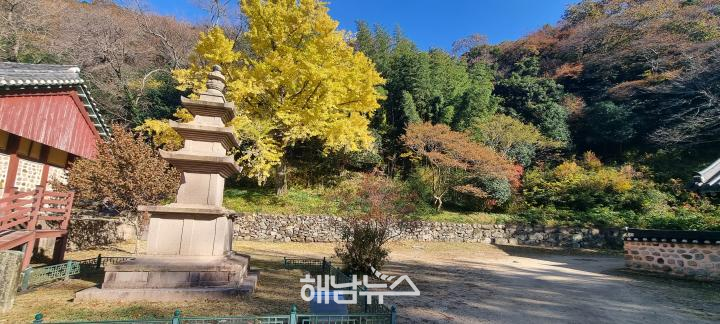 응진전 앞 삼층석탑 보물 제320호 / 사진제공=해남뉴스 |
해남 대흥사 응진전 앞마당에 서면, 크지 않은 돌탑 하나가 조용히 자리를 지키고 있다.
화려함이나 웅장함은 없다.
그러나 단정한 선과 묵묵한 비례 안에는, 천 년을 건너온 이 탑만의 품격이 또렷하다.
보물 제320호, 대흥사 삼층석탑이다.
■ 9세기, 서남해안에 닿은 신라 석탑의 흐름
이 석탑이 세워진 때는 통일신라 9세기 후반으로 추정된다.
나라의 중심은 흔들리기 시작했지만, 역설적으로 지방 사찰과 호족 세력은 새로운 힘을 갖기 시작하던 시기. 중앙 대신 지역이 스스로 문화의 중심이 되던 시대였다.
특히 해남·완도·진도로 이어지는 서남해안은 바다를 통해 불교 조형기술과 문화가 활발히 오가던 곳이었다.
그런 흐름 속에서 대흥사(옛 대둔사)는 지역의 종교적 중심이 되었고, 그 위상만큼이나 정제된 신라 석탑의 양식이 이곳에 자리 잡았다.
2단 기단 위에 정제된 비례로 쌓아 올린 3층 탑신, 네 단의 받침을 가진 옥개석, 그리고 맑게 솟은 상륜부.
이 모든 요소는 “남도의 끝까지 흘러온 신라의 조형미가 여기 있다”고 말하는 듯하다.
■ 돌 속에 숨겨진 또 하나의 얼굴
1967년 보수 과정에서, 이 탑은 자신이 품고 있던 비밀을 조용히 드러냈다.
기단부에서 작은 동조 여래좌상(높이 약 12cm) 이 발견된 것이다.
사리를 모시고 부처를 새긴 신앙의 유물.
이 석탑이 단순한 장식물이 아니라 “기도의 중심”, “신앙의 핵심” 이었음을 스스로 증명하는 순간이었다.
조용한 탑 속에서 천 년 동안 잠들어 있던 이 작은 불상은, 이 탑이 지역 신앙의 중심이자 수행 공간의 중심축이었다는 사실을 말없이 들려준다.
■ 1963년, 보물이 되다
1963년 1월 21일, 대흥사 삼층석탑은 보물 제320호로 지정되었다.
지정 사유는 간명하다.
첫째, 통일신라 석탑의 전형성을 가장 정제된 형태로 간직한 점.
둘째, 해남이라는 지리적 끝자락까지 신라 불교 조형 문화가 확산되었음을 보여주는 귀중한 증거라는 점.
셋째, 비교적 온전히 보존된 조형미와 내부 봉안 유물의 가치.
다시 말해, 이 석탑은 규모를 넘어선 ‘정확함’과 ‘조용한 완성’을 통해 스스로 보물임을 증명했다.
■ 천 년의 침묵이 들려주는 말
응진전 앞 삼층석탑은 화려하지 않다.
그러나 가까이 다가서면 알게 된다.
오랜 시간 견뎌낸 돌의 표면, 층층이 쌓인 비례, 그 안에 담긴 시대의 숨결은 조용한 목소리로 속삭인다.
“나는 이 땅에 신라의 시간과 남도의 바람을 세웠다.”
“천 년 전의 기도가 오늘을 지나 내일로 흐른다.”
해남 대흥사 응진전 앞 삼층석탑, 이 작은 돌탑은 과거의 유물이 아니라, 시간을 세워 우리 앞에 서 있는 살아 있는 역사 그 자체다.
[Haenam = Haenam News] haenamnews@kakao.com
A Stone That Holds the Wind, Raising a Thousand Years of Time
― The Three-Story Stone Pagoda in Front of Eungjinjeon Hall at Daeheungsa Temple, Treasure No. 320 ―
When you stand in the courtyard before Eungjinjeon Hall at Haenam’s Daeheungsa Temple, you find a small stone pagoda quietly guarding its place.
It is neither grand nor flamboyant.
Yet within its disciplined lines and calm proportions lies a dignity shaped by a journey of more than a thousand years.
This is the Three-Story Stone Pagoda of Daeheungsa, designated Treasure No. 320.
■ The Flow of Silla Stone Pagodas Reaching the Southwestern Coast in the 9th Century
This pagoda is believed to have been built in the late 9th century of Unified Silla.
It was a time when the central ruling power began to waver, but paradoxically, local temples and regional clans were rising in strength—an era when the periphery, not the center, became the cultural engine of the land.
The coastal region linking Haenam, Wando, and Jindo bustled with exchange, allowing Buddhist artistry and stone-working techniques to travel freely across the sea.
In this cultural tide, Daeheungsa Temple (then called Daedunsa) stood as the spiritual hub of the region, and with its stature came a stone pagoda that reflected the refined aesthetics of Silla.
A two-tier stylobate, a three-story body with exacting proportions, eaves stones with four-step supports, and a gracefully rising finial—
these elements together seem to whisper:
“Here, at the southern edge of the peninsula, stands the artistry of Silla.”
■ Another Face Hidden Within Stone
During restoration work in 1967, the pagoda quietly revealed a secret it had long kept.
From within the stylobate emerged a small bronze seated Buddha statue, just about 12 centimeters tall.
A relic of devotion—an image of the Buddha enshrined together with sacred relics.
It was a moment that proved this pagoda was never a simple ornament, but a center of prayer, a core of faith.
For a thousand years, the tiny Buddha had slept inside this silent structure,
whispering that this pagoda once stood at the very heart of local devotion and meditative practice.
■ 1963: Recognized as a Treasure
On January 21, 1963, the Three-Story Stone Pagoda of Daeheungsa was officially designated Treasure No. 320.
The reasons are clear:
It preserves, in its most refined form, the classical design of Unified Silla stone pagodas.
It stands as valuable evidence showing that Silla Buddhist architectural culture spread all the way to the southernmost coast.
Its harmonious proportions and the significance of the relics discovered inside add to its exceptional value.
In short, this pagoda proves its worth not through size, but through precision, serenity, and timeless completeness.
■ What a Thousand Years of Silence Tells Us
The pagoda before Eungjinjeon Hall does not dazzle.
But step a little closer and you begin to understand.
The weathered stone surface, the balanced layers, and the breath of the era held within quietly speak:
“I have raised the wind of the South and the time of Silla upon this earth.”
“The prayers of a thousand years flow from the past, through today, toward tomorrow.”
The Three-Story Stone Pagoda of Daeheungsa Temple—
this small monument is not a relic of the past,
but a living pillar of time standing before us today.
 해남뉴스 박충배 편집 및 논설위원 haenamnews@kakao.com