| 천관산을 떠났다가, 다시 소리를 찾다 대흥사 성보박물관 ‘탑산사명 동종(보물 제88호)’의 기적 같은 귀환 해남뉴스 박충배 편집 및 논설위원 haenamnews@kakao.com |
| 2025년 11월 16일(일) 15:06 |
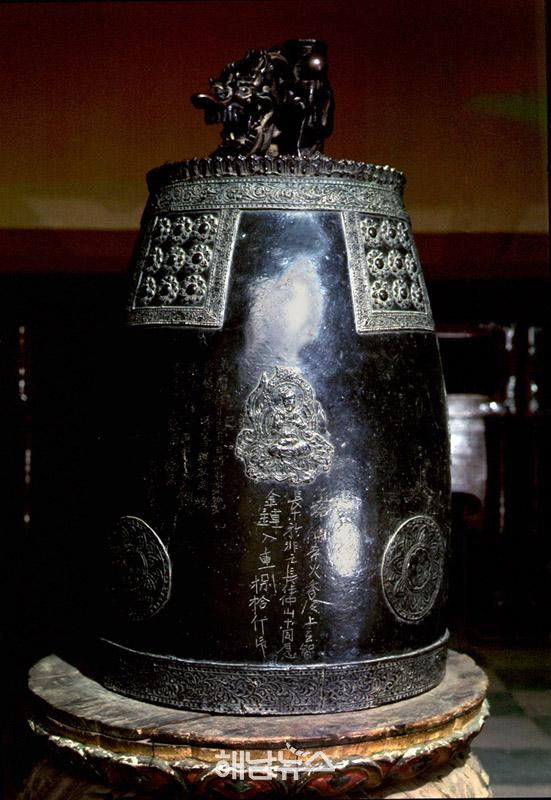 탑산사 동종 보물 제88호 / 사진제공=해남뉴스 |
해남 대흥사 성보박물관 한편에 조용히 놓여 있는 작은 범종 한 점 하지만 이 종이 걸어온 길은 결코 조용하지 않았다.
고려 후기 장인의 숨결, 임진왜란의 화염, 일제의 강탈과 해방의 혼란, 그리고 갯벌 속에서 들려왔다던 ‘자명(自鳴)의 소리’까지.
보물 제88호 ‘탑산사명 동종’은 그 자체가 한 편의 역사다.
■ 고려 후기의 정교함이 응축된 걸작
탑산사명 동종은 높이 79cm의 중형 범종이다.
크기는 작지만 조형의 밀도는 높다.
연꽃무늬를 두른 어깨띠, 사각 유곽 안으로 솟아난 9개의 유두, 여의주를 문 용뉴의 역동성은 고려 후기 범종의 정수를 보여준다.
국립문화유산연구원은 이 종을 “옛 수법을 잃지 않은 고려 후기의 대표작”이라 평가한다.
종의 몸체에 새겨진 명문에는 “탑산사 화향도 상현·지장 등이 계사년(고려 1233년) 발원하여 금종을 만들었다.”는 제작 사실이 기록돼 있다.
당시 장흥 천관산 탑산사에는 신도조직인 화향도(火香徒)가 활발히 활동했으며, 나라가 흔들리던 무신정권기와 몽골 침입 직전의 위기 속에서 불법(佛法) 수호와 안녕 기원을 담아 종을 조성했다는 해석이 가능하다.
■ 장흥 탑산사에서 해남 대흥사까지—전란과 화재가 남긴 이동의 역사
탑산사는 통일신라 애장왕 1년(800) 영통화상이 창건한 고찰이다.
천관산의 중심 사찰로 번성했지만, 이후 운명은 평탄치 않았다.
임진왜란 때 왜군이 침입해 대종을 녹여 총포를 만들었다는 기록이 남아 있으며, 조선 영조 연간에는 세 차례의 큰 화재가 사찰을 휩쓸었다.
1923년 일제강점기에는 암자까지 전소해 사찰이 사실상 폐사 상태에 놓였다.
이 과정에서 탑산사에 남겨져 있던 범종은 장흥을 떠나 해남 헌병수비대 → 대흥사 만일암 → 대흥사로 옮겨지며 오늘날의 자리에 이르게 된다.
역사적 소실과 이동 속에서도 살아남은 이 종은, 말 그대로 ‘생존한 문화재’다.
■ “종이 스스로 울었다”는 전해오는 이야기… ‘자명종’의 탄생
지역에는 또 하나의 전승이 남아 있다.
1945년 8월 15일, 패망한 일본군이 문화재를 싣고 도주하던 중 이 종을 바닷가 갯벌에 버리고 달아났다는 것이다.
며칠 뒤, 스님들의 귀에 종소리가 어렴풋이 들려와 그 소리를 따라가 보니 갯벌 속에 파묻힌 종이 모습을 드러냈다고 한다.
그래서 붙은 이름이 ‘자명종(自鳴鐘)’, 즉 “스스로 울린 종”이다.
공식 기록에 남겨진 사실은 아니지만, 지역민들에게 이 설화는 단순한 기적담이 아니다.
일제 강점기 강탈과 유실의 시대를 견디며, 결국 제자리로 돌아온 문화재에 대한 마음의 해석이 짙게 배어있다.
문화재 보존 전문가들은 “설화는 역사적 진실과 별개로, 지역민의 기억과 상처·회복의 감정을 담아내는 그릇”이라고 말한다.
■ 보물 제88호이지만, ‘국보급 가치’라는 평가도
탑산사명 동종을 두고 “원래 국보였다가 보물로 강등되었다”는 이야기가 종종 들리지만 이는 사실과 다르다.
1963년 문화재보호법 시행 후 1차 문화재 지정 때부터 일관되게 보물 제88호였으며, 국보로 지정된 적은 없다.
다만 번호 체계 때문에 혼란이 있다.
국보 제88호는 ‘경주 금관총 금제 허리띠’로, 전혀 다른 문화재다. 두 ‘88번’이 뒤섞이며 생긴 오해다.
그럼에도 학계에서는 탑산사명 동종이 작품성·양식미·명문 가치에서 국보급에 준하는 범종이라는 평가를 꾸준히 내놓고 있다.
남부 지역 범종 양식 연구에서도 중요한 기준작으로 인용된다.
■ 천년의 시간, 두 지역의 연결… 오늘의 의미
탑산사명 동종은 지금 해남 대흥사 성보박물관에서 조용히 관람객을 맞이하고 있다.
그러나 이 종의 몸체에는 여전히 선명히 “탑산사(塔山寺)”라는 글씨가 새겨져 있다.
장흥 천관산에서 태어나, 불타는 전란과 식민의 암흑을 건너, 때로는 갯벌 속에서 사람을 불러낸다는 설화까지 품었던 종.
그 소리는 지금도 해남과 장흥, 두 지역의 불교문화를 잇는 보이지 않는 다리처럼, “돌아온 문화재”의 품격과 신비를 조용히 울리고 있다.
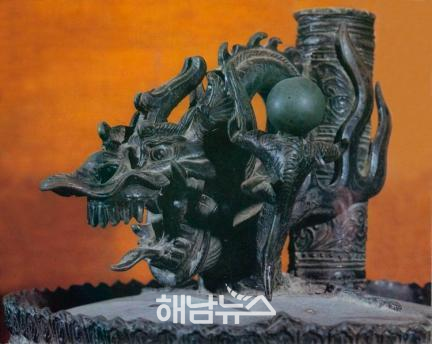 탑산사 동종 보물 제88호 / 사진제공=해남뉴스 |
[Haenam = Haenam News] haenamnews@kakao.com
**Lost in Mt. Cheongwan, Found Again in Silence
The Miraculous Return of the ‘Tapsansa Bronze Bell’ (Treasure No. 88) at Daheungsa Temple Museum**
Inside the Daheungsa Temple Museum in Haenam sits a small, quiet bronze bell.
Yet the path this bell has walked has been anything but quiet.
The craftsmanship of late Goryeo artisans, the flames of the Imjin War, the plunder of the Japanese occupation, the chaos of liberation, and even the legendary “self-ringing” sound said to have echoed from the tidal mudflats.
The ‘Tapsansa Bronze Bell’—designated as Treasure No. 88—is itself a chapter of history.
■ A Masterpiece Concentrating the Refinement of Late Goryeo
Standing just 79 centimeters tall, the Tapsansa Bronze Bell may be modest in size,
but its sculptural density is remarkable.
The lotus-petal band circling the shoulder, the nine raised knobs inside a square panel,
and the dynamic dragon-shaped bell hook (yongnyu) holding a sacred jewel
beautifully capture the essence of late Goryeo Buddhist bell-making.
The National Institute of Cultural Heritage evaluates this bell as
“a representative late-Goryeo bronze bell preserving classical craftsmanship.”
An inscription on the bell reads:
“In the cyclical year Gyeyu (1233), monks Sanghyeon and Jijiang of the Tapsansa Buddhist association (Hyangdo) offered prayers and cast this bronze bell.”
During that period, the Tapsansa Temple on Mt. Cheongwan in Jangheung served as a center of the Hyangdo lay Buddhist community.
Amid the turbulence of the military regime and the impending Mongol invasions,
the bell appears to have been cast as a prayer for protection and peace.
■ From Jangheung’s Tapsansa to Haenam’s Daheungsa
A History of War, Fire, and Relocation
Tapsansa was founded in 800 CE by the monk Yeongtong under King Aejang of Silla.
It flourished as a major temple on Mt. Cheongwan, but its fate grew uncertain.
During the Imjin War, Japanese forces reportedly melted the great temple bell
to forge weapons.
In the 18th century, the temple suffered three devastating fires during the reign of King Yeongjo.
By 1923, in the Japanese colonial period, the remaining hermitage burned down,
leaving the temple virtually abandoned.
It was during these events that the bronze bell was removed from Tapsansa
and relocated step-by-step:
Jangheung → Haenam Military Police Garrison → Daheungsa’s Manil Hermitage → Daheungsa Temple.
Surviving war, fire, and forced relocation,
the bell stands today as a “survivor artifact.”
■ “The Bell Rang by Itself”—The Birth of the Name Jamyeongjong
(Self-Ringing Bell)
Local lore preserves another powerful story.
On August 15, 1945, as Japan faced defeat, Japanese soldiers are said to have transported cultural artifacts while fleeing the peninsula.
In their escape, they abandoned the Tapsansa bell in a tidal mudflat along the coast.
Days later, monks reportedly heard the faint tolling of a bell.
Following the sound, they found the bronze bell partially buried in the mud.
From this tale came the name “Jamyeongjong (自鳴鐘),”
meaning “the bell that rang on its own.”
Although not recorded officially, the legend is more than a miracle story.
For local residents, it embodies the spiritual return of a cultural property
that endured loss, displacement, and colonial exploitation.
Cultural heritage experts note that:
“Legends, regardless of historical accuracy, serve as vessels for community memory—reflecting wounds, resilience, and the longing for restoration.”
■ Treasure No. 88 — Yet Considered by Many as “National Treasure Level”
Rumors persist that the Tapsansa Bronze Bell was once a National Treasure
and later “downgraded” to a Treasure.
But this is incorrect.
Since Korea’s Cultural Heritage Protection Act was enacted in 1963,
the bell has consistently been designated Treasure No. 88,
and it has never been listed as a National Treasure.
The confusion arises from the numbering system:
National Treasure No. 88 is actually the Gold Belt from the Geumgwanchong Tomb in Gyeongju,
a completely different artifact.
Nevertheless, many scholars regard the Tapsansa bell as
a near–National Treasure in artistry, stylistic merit, and inscriptional value.
It remains a key reference point for studying southern Korean Buddhist bells.
■ A Thousand Years Linking Two Regions
The Meaning of the Bell Today
The Tapsansa Bronze Bell sits quietly in Daheungsa Temple Museum today,
but the inscription “塔山寺 (Tapsansa)” remains clearly engraved on its body.
Born at Mt. Cheongwan in Jangheung,
having endured war, colonial oppression, and even a tale of calling out from the mud—
the bell still resonates as a symbolic bridge
linking the Buddhist cultures of Haenam and Jangheung.
Above all, it continues to ring—silently yet profoundly—
as a cultural treasure that found its way home.
 해남뉴스 박충배 편집 및 논설위원 haenamnews@kakao.com