| 걸어가는 산길 끝에서 만나는 천년의 얼굴 대흥사 북미륵암 마애여래좌상, 침묵의 시대가 남긴 가장 선명한 증언 해남뉴스 news@hbcnews.kr |
| 2025년 11월 14일(금) 13:06 |
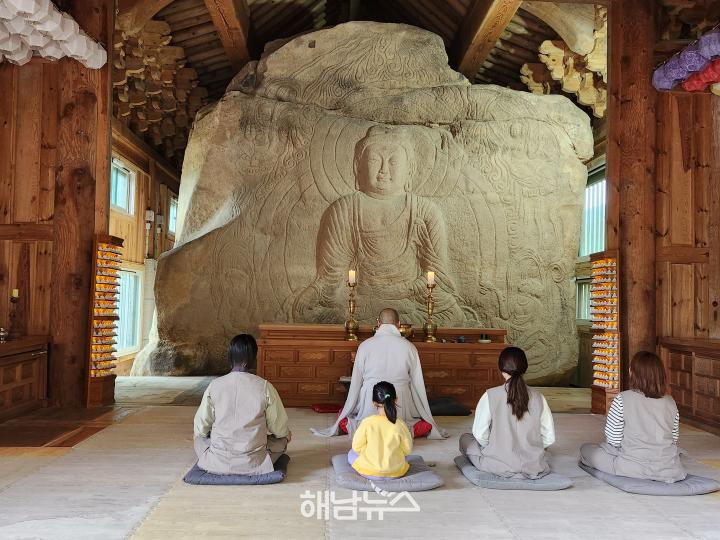 북미륵암 마애여래좌상(국보308호) / 사진제공=전라남도 |
해남 두륜산 남쪽 능선이 끝없이 펼쳐지는 숲길을 걷다 보면, 어느 순간 길은 조용해지고 새소리와 바람 소리가 가파른 암벽에 부딪혀 울린다.
이 고요한 자리에서 홀로 자리를 지키고 있는 것이 ‘대흥사 북미륵암 마애여래좌상(국보 제308호)’이다.
더 이상 주변엔 무엇도 요구하지 않는 침묵의 공간, 그러나 천년의 시간이 이 얼굴 앞에서만큼은 낯설지 않다.
■ 대흥사와 북미륵암 — 천 년의 숲 속에 남은 더 오래된 시간
대흥사(대한불교조계종 제22교구 본사)는 조선후기 사찰 중에서도 독특한 역사를 갖는다.
정조의 칭송을 받은 서산대제(西山大齋)와 연관되어 조선 후기 왕실의 보호를 받았지만, 그 경내엔 삼국·통일신라 시대의 불교 조형문화가 겹겹이 살아 있다.
특히 대흥사 북미륵암은 표면적으로는 작은 암자이지만, ‘미륵’이라는 이름이 말해주듯 한국 불교의 미륵신앙이 산중에서 어떻게 자리 잡았는지를 보여주는 현장이다.
북미륵암 뒤편 암반을 가득 채운 마애여래좌상은 이곳의 정체성을 결정짓는 핵심 유물이다.
전해지는 구전 설화에 따르면 이곳은 “삼 미륵의 자리”, 즉 북·남으로 나뉜 두 암자에 미륵의 현신을 새기고 기도해 온 자리로 알려져 왔다.
남쪽의 남미륵암이 현세적 기원을 상징했다면, 북미륵암은 신비·구원·내세의 미륵신앙을 상징하는 공간으로 기능했다.
■ 국보 308호(2005년 9월 28일 지정) 마애여래좌상 — 통일신라의 조형 언어가 남긴 흔적
학술적으로 이 좌상은 통일신라 9세기 후반에서 10세기 초반으로 추정된다.
이는 통일신라 불상 조각의 전형적 양식인 상체의 은근히 앞으로 기울어진 자세, 옷 주름의 완만한 곡선과 얕은 부조, 법의(法衣)가 흘러내리는 형태의 자연스러움, 원만한 인상(圓滿相)과 차분한 미소 등에서 그 근거를 찾을 수 있다.
특히 이 마애불의 특징은 암반 전체가 하나의 조형물처럼 구성되었다는 점이다.
불상이 새겨진 암벽은 주변 자연과 조화를 이루며, 일부 연구자들은 “당대 장인들이 불상만을 조각한 것이 아니라 자연 지형 전체를 하나의 법당으로 설계했다.”는 평가를 남긴다.
또 하나 주목할 점은 얼굴의 비대칭적 요소와 다소 평면적인 표현인데, 이는 ‘미완’이 아니라 당시 산지 마애불 양식의 특징이다.
자연 암반의 결을 살리면서도 최대한 거칠지 않게 조형미를 유지하려는 신라 말기 장인의 고민이 읽힌다.
■ 왜 이곳에 ‘좌상’인가 — 미륵신앙의 지형학
학자들은 북미륵암 마애여래좌상을 “단순한 여래불”이 아니라 미륵불(미래불)로 신앙되었을 가능성에 주목한다.
그 이유는 다음과 같다.
암자의 명칭 자체가 ‘미륵암’, 해남 일대에 고려·조선까지 이어지는 강한 미륵 신앙의 전통, 민중적 개벽사상과 결부된 남도 지역의 ‘다시 오실 부처’ 신앙, 좌상(坐像) 형태의 마애불이 미륵도솔천을 상징하는 경우가 많음, 특히, 남도 지역은 조선 후기까지도 미륵불을 기원하는 굿·염불·기도가 활발했다.
북미륵암의 좌상은 그 원형적 형태라 할 수 있다.
이 불상 앞에 앉아 기도하던 이들, 혹은 기우제나 마을 안녕을 발원하던 이들, 산중에서 홀로 수도하던 선승(禪僧)들의 그림자가 시대를 이어 이곳을 지켜왔다.
■ 고요의 미학 — ‘말 없는 가르침’이 남긴 메시지
북미륵암 마애여래좌상은 화려한 금동불처럼 정교하지 않다.
그러나 바로 그 때문에 한국 불교 조각의 본질, 즉 자연 속에서의 깨달음이라는 가치를 가장 충실히 보여준다.
산 자체가 불상이 되고, 암석의 결이 불상의 옷 주름이 되며, 빛과 그림자가 법문이 된다.
이 마애불은 세월이 씻어낸 장중함과 동시에, 자연이 빚은 성스러움을 함께 품고 있다.
천 년 전 조각가의 정은 이미 사라졌지만, 그가 남긴 선한 미소는 여전히 숲과 사람을 향한다.
그 미소 앞에서 오늘을 사는 우리도 잠시 멈추고 생각하게 된다.
넘어진 시대, 흔들리는 공동체, 그 속에서 무엇을 지키며 살아야 하는지.
■ 오늘의 북미륵암 — 문화재가 아니라 ‘살아 있는 기도처’
북미륵암 마애여래좌상은 국보로 지정되었다고 해서 박물관처럼 고정된 공간이 아니다.
대흥사를 찾는 수행자와 방문객, 마애불 앞에서 조용히 합장하고 내려가는 이들의 발걸음이 여전히 이어진다.
이곳은 기념물이 아니라 ‘현장의 성스러움’이 살아 있는 문화재다.
문화재 보존은 단순히 돌을 지키는 것이 아니라, 그 앞에서 기도하고 살아온 사람들의 마음과 서사(敍事)를 지키는 일이기도 하다.
북미륵암의 마애여래좌상은 말한다.
“천 년 전이나 지금이나, 걸어가는 길이 험하고 마음이 흔들릴수록 사람은 다시 산을 찾고, 다시 부처를 찾는다.”
오늘의 우리에게 이 마애불이 건네는 메시지는 단순하다.
고요 속에서 길을 찾으라. 그리고 그 길은 당신 안에도 있다.
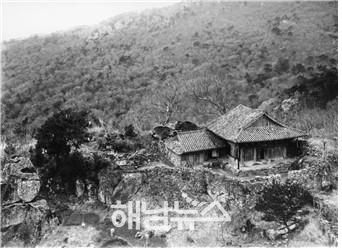 조선후기 북미륵암 전경 / 사진제공=해남뉴스 |
At the End of a Mountain Path, a Thousand-Year-Old Face Appears
*The Seated Rock-Carved Buddha of Daheungsa’s Bukmirukam –
The Clearest Testimony Left by an Age of Silence*
As one walks along the southern ridges of Duryunsan in Haenam, the forested path stretches endlessly before suddenly quieting. Birds and wind whisper against the steep rock walls, and the world grows still.
It is here, in this deep silence, that the Seated Rock-Carved Buddha of Bukmirukam—designated National Treasure No. 308—has kept solitary watch for a millennium.
Nothing is demanded of the visitor; nothing intrudes. And yet, before this ancient face, a thousand years feel strangely familiar.
■ Daheungsa and Bukmirukam — Older Time Resting Within a Thousand-Year Forest
Daheungsa Temple, the head temple of the Jogye Order’s 22nd District, holds a distinctive place among late Joseon Buddhist temples. Though it enjoyed royal favor—particularly through its association with the revered monk Seosan Daesa—its grounds preserve layers of Buddhist artistry stretching back to the Three Kingdoms and Unified Silla periods.
Bukmirukam, a seemingly small hermitage above the temple, reveals something deeper. Its very name, meaning “Maitreya Hermitage,” reflects how Maitreya devotion—one of the most enduring strands of Korean Buddhism—took root in these mountains.
Behind the hermitage, the great rock-carved seated Buddha defines the spiritual identity of the place. Local oral traditions speak of this site as “the abode of the three Maitreya Buddhas,” where both the northern and southern hermitages enshrined manifestations of Maitreya and served as prayer sites for generations.
If the southern hermitage symbolized worldly blessings, Bukmirukam embodied mystery, salvation, and the hope of the future Buddha.
■ National Treasure No. 308 — A Trace of Unified Silla’s Sculptural Language
Scholars generally date this seated Buddha to the late 9th or early 10th century, placing it in the transitional years of late Unified Silla.
Its stylistic clues are unmistakable:
a gentle forward inclination of the torso,
flowing robes rendered in shallow, soft relief,
naturally draped monastic garments,
a serene, rounded face marked by a subtle smile.
One of the sculpture’s most striking features is the way the entire rock face becomes part of the artwork. Rather than carving a figure onto the rock, the sculptor integrated the natural formation into a vast, open-air sanctuary. Some researchers suggest that the artisan “designed the whole mountainside as a temple.”
The slight asymmetry and somewhat flat modeling of the face are not signs of incompletion but typical of mountain rock-carving traditions of the period. They reflect a sculptor’s deliberate effort to preserve the natural grain of the stone while still achieving a refined expression.
■ Why a Seated Figure Here? — Reading the Geography of Maitreya Faith
Scholars have long noted the possibility that this is not merely a depiction of a historical Buddha but a manifestation of Maitreya, the Buddha to come.
The evidence is compelling:
the hermitage’s name, Mirukam,
the persistence of strong Maitreya traditions in the Haenam region through the Goryeo and Joseon eras,
the link between southern folk beliefs in cosmic renewal and the “future Buddha,”
the frequent use of seated rock-carved Buddhas to symbolize Maitreya in Tusita Heaven.
In southern Korea, Maitreya worship—including rituals, prayers, and communal rites—remained vibrant well into the late Joseon period. The Bukmirukam Buddha is likely an early archetype of this enduring faith.
Before this figure, countless supplicants knelt to pray—for rain, for peace in their villages, for personal salvation. Mountain monks meditated before it in silent communion. Their shadows, across centuries, remain part of this space.
■ The Aesthetics of Stillness — A Teaching Without Words
The Bukmirukam Buddha lacks the polished refinement of gilt-bronze sculptures. Yet it is precisely this restraint that reveals the essence of Korean Buddhist art:
awakening through nature.
The mountain becomes the Buddha.
The veins of the rock become the folds of his robe.
Light and shadow deliver the Dharma.
This rock-carved figure holds both the dignity shaped by centuries of weathering and the sacredness bestowed by nature herself.
The sculptor’s hand has long vanished, yet the gentle smile remains—still directed toward the forests and toward us.
Standing before this smile, we pause.
In an age unsettled, in communities shaken, the question arises: What must we hold on to?
■ Bukmirukam Today — Not a Museum Artifact, but a Living Sanctuary
Though designated a National Treasure, the Bukmirukam Buddha is hardly a static exhibit. Pilgrims, monks, and visitors continue to climb the path, quietly bow, and descend again.
This is a living sacred site, not a relic.
To protect such a heritage is not merely to preserve stone.
It is to honor the stories, prayers, and lives that have gathered here for centuries.
The Buddha of Bukmirukam seems to say:
“Whether a thousand years ago or today, when the path is rough
and the heart is unsteady,
humans return to the mountains—
and to the Buddha.”
The message he offers us is simple:
Seek your path in silence.
And know that the path lies within you.
해남뉴스 news@hbcnews.kr