| 한국농어촌공사, 수상태양광으로 여는 지속가능한 미래 기후위기 대응과 에너지 전환은 더 이상 미룰 수 없는 국가적 과제입니다. 해남뉴스 haenamnews@naver.com |
| 2025년 09월 15일(월) 14:20 |
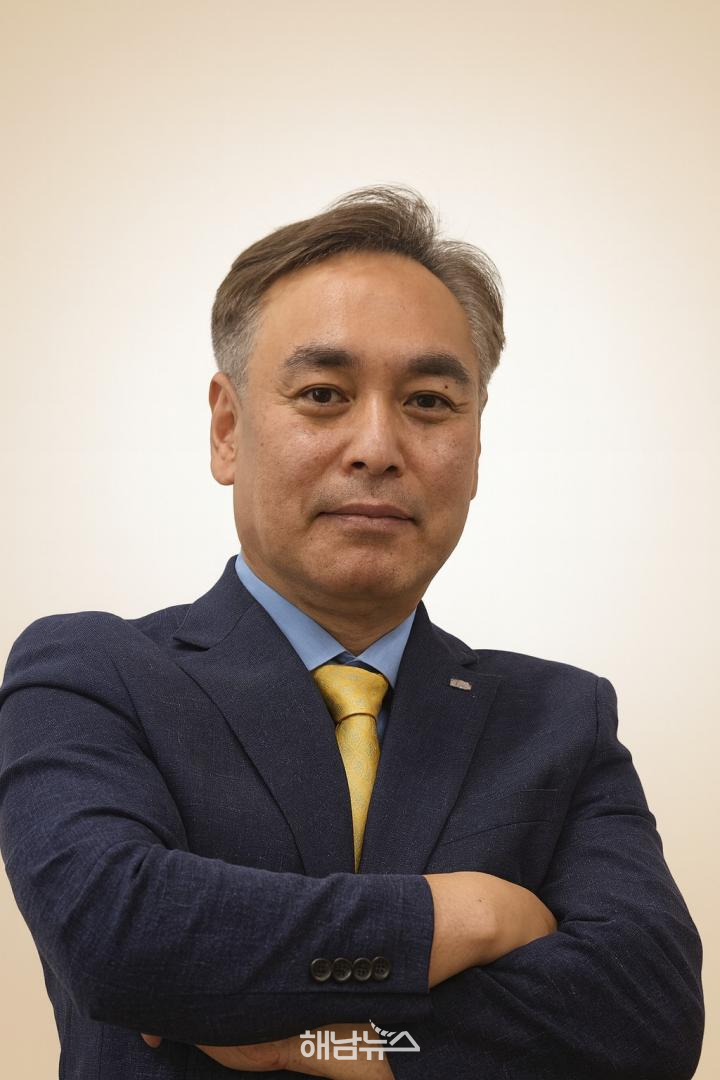 한국농어촌공사 해남완도지사장 김대성 / 사진제공=한국농어촌공사 해남군지사 |
ㅣ 기고문 ㅣ
우리나라는 에너지 자급률이 낮고 화석연료 의존도가 높은 구조 속에서, 탄소중립 달성과 에너지 안보 확보라는 두 가지 도전에 동시에 직면해 있습니다.
정부는 2050 탄소중립을 국가 전략으로 삼고, RE100, 분산형 전원 확대, 재생에너지 고속도로 구축 등 다양한 정책을 통해 에너지 전환을 가속화하고 있습니다.
이러한 정책 기조 속에서 농어촌은 중요한 역할을 맡고 있습니다.
산림과 농지를 보존하면서도 대규모 재생에너지 설비를 설치할 수 있는 최적의 입지를 갖추고 있기 때문입니다.
한국농어촌공사가 추진하는 수상태양광은 농지를 지키고 물을 아끼며, 지역과 함께 성장하는 대표적인 공익형 사업입니다.
수상태양광은 저수지와 담수호라는 유휴 수면을 활용해 산림과 농지를 훼손하지 않고 전력을 생산합니다.
농지를 잠식하지 않아 식량안보를 지킬 수 있으며, 수면 위 설치로 물 증발을 줄여 농업용수 확보에도 기여합니다.
또한 햇빛 차단 효과는 녹조 발생을 억제하고 수질을 개선하며, 수면 냉각은 발전 효율을 높이는 효과를 냅니다.
이처럼 수상태양광은 농지와 산림 보전, 용수 절약, 수질 개선, 발전 효율 향상, 지역경제 활성화, 주민소득 증대, 온실가스 감축 등 일곱 가지 이상의 효과를 거두는, 말 그대로 ‘1석7조의 사업’입니다.
안전성도 충분히 검증되어, 설치 자재는 중금속 유출 위험이 없고 전자파와 빛 반사율 또한 안전 기준을 준수합니다. 실제 운영 사례에서도 수질에 부정적인 변화는 관찰되지 않았습니다.
전남 고흥호 사례가 이를 잘 보여줍니다.
대규모 수상태양광이 설치되어 수십만 가구가 사용할 전력을 공급하면서도, 발전 과정에서 수질 변화는 거의 없었고 지역 주민의 참여와 이익 공유가 이루어졌습니다.
3㎿ 마을발전소의 발전 수익은 장학금과 마을 발전기금으로 환원되며, 공동체 신뢰를 쌓아가고 있습니다.
한국농어촌공사는 전국에 걸쳐 대규모 수상태양광 프로젝트를 추진할 수 있는 자원을 갖추고 있습니다.
특히 서남해안의 간척사업으로 생성된 담수호인 영암호, 금호호, 화성호, 탄도호, 아산호, 새만금호, 부사호, 간월호 등은 간척농지에 농업용수를 공급하면서 대규모 수상태양광 개발이 가능한 핵심 자원입니다.
이는 국가 재생에너지 전환을 뒷받침하는 중요한 자산입니다.
특히 해남은 수상태양광과 더불어 솔라시도 AI 에너지 신도시와 RE100 산업단지 조성이라는 미래 비전을 품고 있습니다.
AI와 재생에너지를 결합한 첨단산업 육성과 인구 10만 명 규모의 신도시 조성을 목표로 한 이 사업은, 대규모 투자와 일자리 창출을 통해 국가 성장 동력으로 자리매김할 것입니다.
해남은 이 두 축을 바탕으로 대한민국 재생에너지의 중심지로 도약하고 있습니다.
물론 과제도 있습니다. 정책 기조의 변동, 복잡하고 지연되는 인허가 절차, 지역별 한전계통용량의 부족과 한계 등 불확실성이 사업 추진의 큰 걸림돌로 작용합니다.
여기에 수질 오염, 경관 훼손, 전자파 등 과학적 근거가 부족한 우려가 일부 지역에서 확산되며 주민 수용성을 저해하기도 합니다.
따라서 객관적 데이터를 기반으로 한 소통 강화, 제도 개선, 일관된 정책 추진이 반드시 필요합니다.
앞으로는 국가·지자체·공공기관이 추진하는 공익형 재생에너지 사업에 대해 원스톱 인허가 체계를 마련하고, 추진 절차를 표준화해 사업의 불확실성을 해소하고 예측 가능성을 높여야 합니다.
이를 통해 사업 기간을 단축하고 비용을 절감한다면, 수상태양광은 농어촌과 국가 모두를 살리는 지속가능한 성장 동력으로 자리매김할 수 있습니다.
수상태양광은 단순한 발전사업이 아닙니다.
농지를 보호하고, 수자원을 보전하며, 농어촌 경제를 활성화하고, 국가 에너지 안보를 강화하는 공익적 사업입니다.
한국농어촌공사는 이 사업을 통해 농어촌의 미래를 밝히는 희망의 에너지를 만들고, 대한민국의 에너지 전환을 선도하는 길을 걸어갈 것입니다.
Korea Rural Community Corporation: Floating Solar Power Lighting the Path to a Sustainable Future
Addressing the climate crisis and transitioning to renewable energy are no longer optional—they are urgent national priorities for South Korea. The nation faces a dual challenge: achieving carbon neutrality while securing energy independence, all within a context of low energy self-sufficiency and high reliance on fossil fuels. To tackle this, the government has made 2050 carbon neutrality a national strategy, promoting initiatives such as RE100, expanding distributed power sources, and developing renewable energy highways to accelerate the country’s energy transition.
Within this framework, rural areas play a pivotal role. They offer optimal sites for large-scale renewable energy installations while preserving forests and farmland. The Korea Rural Community Corporation (KRC) has turned this potential into reality with its floating solar projects, a model public-interest initiative that safeguards farmland, conserves water, and fosters local economic growth.
Floating solar systems utilize idle water surfaces such as reservoirs and freshwater lakes to generate electricity without encroaching on agricultural land or damaging forests. This approach helps maintain food security while reducing water evaporation, ensuring a more reliable supply for agriculture. The shading effect of floating panels also mitigates algal blooms, improves water quality, and the cooling effect of water beneath the panels enhances generation efficiency.
The benefits of floating solar are substantial. Beyond generating renewable energy, these projects contribute to farmland and forest preservation, water conservation, water quality improvement, enhanced generation efficiency, local economic revitalization, increased resident income, and greenhouse gas reduction—a truly “seven-in-one” solution. Safety has been rigorously verified: installation materials pose no risk of heavy metal leakage, while electromagnetic waves and light reflection remain within safe limits. Operational cases confirm that water quality remains unaffected.
A notable example is Goheung Lake in South Jeolla Province. Here, large-scale floating solar installations supply electricity to hundreds of thousands of households while maintaining water quality. The project actively involves local residents, sharing profits through scholarships and village development funds, thereby reinforcing community trust.
KRC is equipped to expand floating solar projects nationwide. Key resources include freshwater lakes formed by southwest coast reclamation projects, such as Yeongam Lake, Geumho Lake, Hwaseong Lake, Tando Lake, Asan Lake, Saemangeum Lake, Busa Lake, and Ganwol Lake. These lakes, essential for supplying water to reclaimed farmland, are ideal for large-scale solar development and play a crucial role in supporting the nation’s renewable energy transition.
Haenam County stands out as a model for the future. Alongside floating solar projects, the region is planning the Solarsido AI Energy New Town and an RE100 industrial complex. By integrating artificial intelligence and renewable energy, these projects aim to foster advanced industries and create a new town accommodating 100,000 residents. Large-scale investment and job creation in these initiatives are expected to establish Haenam as a national growth engine and a central hub for renewable energy in South Korea.
Challenges remain, however. Policy fluctuations, complex and delayed permitting procedures, and limitations in local grid capacity create uncertainty in project implementation. Concerns about water pollution, landscape impact, and electromagnetic waves—though often lacking scientific basis—can reduce local acceptance. To overcome these hurdles, it is essential to strengthen communication based on objective data, improve regulatory frameworks, and maintain consistent policy direction.
Looking ahead, public-interest renewable energy projects led by the government, local authorities, and public institutions should adopt a one-stop permitting system and standardize procedures to reduce uncertainty and enhance predictability. Shortening project timelines and lowering costs will allow floating solar initiatives to emerge as a sustainable growth driver, benefiting both rural communities and the nation.
Floating solar power is more than an energy generation project. It is a public-interest initiative that protects farmland, conserves water, revitalizes rural economies, and strengthens national energy security. Through these efforts, the Korea Rural Community Corporation is not only illuminating the future of rural communities but also leading South Korea toward a resilient and sustainable energy transition.
해남뉴스 haenamnews@naver.com